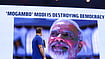
Rahul Gandhi and Arvind Kejriwal questioned the government's decision to ban Telegram.
Both leaders argued that law enforcement agencies should target criminals misusing digital platforms rather than imposing blanket restrictions on all users.
The issue has reignited debate over digital regulation, online freedom, cybersecurity, and the balance between public safety and civil liberties.
A fresh political controversy erupted after Congress leader Rahul Gandhi and Aam Aadmi Party chief Arvind Kejriwal criticised the government's decision to ban the messaging platform Telegram, accusing authorities of targeting an entire platform instead of focusing on those allegedly involved in unlawful activities.
Questioning the rationale behind the move, the opposition leaders argued that the government's approach amounted to penalising millions of ordinary users for the actions of a limited number of offenders. In remarks that quickly gained traction on social media, they suggested that law enforcement agencies should identify and prosecute those responsible for criminal activity rather than restricting access to a communication platform used for legitimate purposes by businesses, students, professionals, and civil society groups.
The criticism comes amid a broader debate over how governments should regulate digital platforms that are increasingly central to communication, commerce, and information-sharing. Telegram has become one of the world's most widely used messaging services, offering encrypted communication, large community channels, and content-sharing features that have made it popular across multiple countries.
Government authorities have maintained that action against online platforms may be necessary when concerns arise regarding illegal activities, cybersecurity threats, misinformation, financial fraud, or violations of domestic regulations. Supporters of stricter regulation argue that technology companies must be held accountable for preventing misuse of their services and cooperating with law enforcement investigations.




The remarks by Rahul Gandhi and Arvind Kejriwal also reflect a wider political contest over issues relating to digital governance, privacy, and freedom of expression. Opposition parties have increasingly accused the government of adopting restrictive measures that could impact civil liberties, while the government has defended its actions as necessary for maintaining public order and national security.
The controversy has sparked discussions among legal experts, technology policy analysts, and digital rights advocates about the balance between security concerns and individual freedoms in the digital age. Questions have also been raised about the mechanisms available to governments when dealing with global technology platforms that operate across multiple jurisdictions.