






Leadership tensions between Amarinder Singh Raja Warring, Charanjit Singh Channi and Partap Singh Bajwa have reopened factional divides
The dispute recalls Congress’ 2021 turmoil, which preceded its heavy defeat in the 2022 Punjab election
Unless the high command resolves the leadership question, internal conflict could weaken Congress before 2027
The Congress in Punjab is once again confronting a familiar problem, a leadership dispute that has surfaced just as the party begins preparing for the 2027 Assembly election. The immediate trigger is the decision of the Congress high command to retain Amarinder Singh Raja Warring as Punjab Congress president while keeping Partap Singh Bajwa as Leader of the Opposition. Former chief minister Charanjit Singh Channi, meanwhile, has been made chairman of the party’s campaign committee.
The arrangement was intended to balance competing ambitions. Instead, it has exposed the divisions that the Congress hoped to contain. Channi’s supporters have publicly demanded a change in the state leadership and have objected to Warring continuing as the Punjab Pradesh Congress Committee chief. Some leaders from the Channi camp have stayed away from meetings called by the party’s Punjab in-charge Bhupesh Baghel, signalling that the dispute is no longer confined to closed-door discussions.

Why Is Punjab Congress Facing Another Internal Crisis?
At the centre of the crisis is the unresolved question of who will lead the Congress into the 2027 election. Warring controls the party organisation, Bajwa remains the principal legislative face, and Channi has a major campaign role as well as a claim to broader political relevance after having served as chief minister.

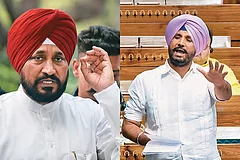
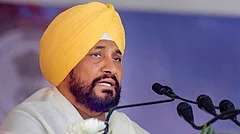

The problem is not merely about posts. It is about authority, ticket distribution, caste representation and the eventual chief ministerial face. Punjab Congress has several senior leaders with their own regional support bases, and the party high command has often tried to manage them through accommodation rather than a clear command structure.
How Is This Similar To Congress’ 2021 Punjab Collapse?
The comparison with 2021 is unavoidable. Ahead of the 2022 Assembly election, the Congress replaced Captain Amarinder Singh as chief minister after a prolonged confrontation between him and Navjot Singh Sidhu. Charanjit Singh Channi was chosen as the compromise successor, but the transition came only months before polling.
The leadership change weakened the government, divided the organisation and gave the Aam Aadmi Party an opening to project itself as a more coherent alternative. Congress was reduced to 18 seats in the 117-member Assembly in 2022, while AAP won 92.
This time, the high command appears determined not to repeat the mistake of a late leadership overhaul. By retaining Warring and Bajwa, it has chosen continuity. But continuity without acceptance from rival camps can create its own difficulties.
Who Is Fighting Whom Inside Punjab Congress?
The most visible contest is between the Channi camp and Warring. Channi’s supporters believe he deserves a larger role in the state unit and have pressed for Warring’s replacement. Warring has maintained that the party will decide its chief ministerial face and has said he would support any leader chosen by the high command.
Bajwa has attempted to position himself as a senior unifying figure, arguing that personal ambitions cannot be placed above the party’s interests. Yet his continued presence as Leader of the Opposition also makes the leadership structure more complicated. Punjab Congress now has several power centres, each with its own expectations.

Why Is The Leadership Question Still Unresolved?
The Congress is trying to avoid choosing one leader too early, fearing that an open declaration could alienate the others. It has instead distributed responsibilities across Warring, Bajwa, Channi and others.
However, the formula has not settled the basic question of who has the final political authority in Punjab. The AICC has said it will not bow to pressure and has stood by Warring’s continuation, but the public dissent suggests that the issue may return repeatedly as ticket selection approaches.
Can Congress Repeat Its 2022 Mistakes In 2027?
Congress does not face the same circumstances as it did in 2022. It is now the principal opposition party in Punjab and can target the AAP government on governance, jobs, farm distress, debt and law and order. But an opposition party must first convince voters that it can govern as a united force.
If leaders continue to challenge one another publicly, the party risks spending its political energy on internal battles rather than building a statewide campaign. The longer the uncertainty persists, the harder it may become to prevent factional rivalries from affecting candidate selection and local mobilisation.
What Does This Mean For Punjab’s 2027 Election?
Punjab’s contest is still more than a year away, and the Congress has time to repair the damage. But the leadership dispute has already revived memories of its last election collapse. The party’s challenge is not only to keep Warring, Channi and Bajwa in the same structure, but to make that structure function on the ground.
For Congress, the 2027 election may depend less on finding another compromise formula and more on enforcing discipline before its internal divisions become a campaign issue for its rivals.















