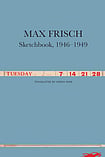
Max Frisch explored identity, responsibility and moral ambiguity in modern life.
He is widely read for works such as Homo Faber and The Fire Raisers.
His works explore themes of identity, individuality, moral responsibility, and political commitment in modern life.
Our host Frank tells me about an incident during the Russian occupation that had a greater impact on many women’s nerves—and many men’s too—than the bombings.
His description:
May 1945, West Berlin, the cellar of a handsome and largely unscathed house; upstairs the Russians, noise, dancing, laughter, victory parties; hiding down in the cellar are the woman and her husband, a Wehrmacht officer who has escaped from captivity, has no other clothes and cannot afford to be spotted.
One day, a man comes downstairs in search of wine and smashes in the laundry door. The woman has to open up. Her husband hides. The lad, an orderly, is pretty drunk. Of course, she has to go upstairs.
Does the commanding officer understand German? The lad says he does. Her hope is to save herself by talking. He goes on about the many wonderful books. She begs for half an hour. Her husband doesn’t want to let her go; but what if the Russians come down and see him? She puts on her best dress, an evening dress; they swear to commit suicide together if it doesn’t work.





Upstairs, she runs into a bunch of fairly drunken officers. She acts the grande dame. After quite a lot of groping, which she manages to fend off with some slaps, she does get to talk to the colonel alone. Her concerns, her request for humane treatment, and so forth. He says nothing.
Urged on by his silence, which she can only construe as strong suspicion, she goes so far as to reveal her husband’s story to extract his trust. Eventually realizing that the colonel doesn’t understand a word of German, she breaks down. She knows she’s trapped.
The colonel sends for the lad to translate: at that moment she grabs hold of a gun which she hides under her dress, hoping it’s loaded. Then her desperate offer: if he will send the others out of the house for good, she will consent, she says in somewhat euphemistic terms, every day at a set hour. This way, at least she buys herself a little time; as for the rest, she is determined to shoot if he lays a finger on her. (Him or herself?) But nothing happens.
For a week she goes upstairs every evening to keep the colonel company, so to speak, always in her evening dress; down in the cellar, she pretends that he does in fact speak German and invents conversations she has had with the Russian, conversations about Russia and so on. Her husband is somewhat reassured, although he senses that she isn’t averse to going upstairs, that she seldom looks him in the eye, that she combs her hair properly to make sure she looks pretty and so forth.

As time goes by (the tale is very disjointed), they apparently fall in love and act upon that love. All without words. The end comes when the colonel suddenly receives orders to leave Berlin; they hope to see each other again. He never came back. The husband, whose life has been saved, always talks about the Russians with comradely respect; he seems to have been largely won over by his wife’s reports, down there in the cellar, about the conditions and facilities in Russia. Where did she get her knowledge from, given that the colonel spoke only Russian and she only German? From the Russian broadcasting in German she listened to while her husband was being held prisoner in the east . . .
Max Frisch, the Swiss novelist and playwright, explored identity, responsibility and moral ambiguity in modern life. He is widely read for works such as Homo Faber and The Fire Raisers.
(Excerpted with permission from Seagull Books)