MoS L Murugan said the government is ready to support radio growth, with 839 FM stations and 532 community radios already operational.
The Centre is encouraging FM expansion into Tier-3 cities and offering licences to strengthen the sector.
Broadcasters and device makers are backing a shift from analog to HD Radio, signalling a major digital transformation.
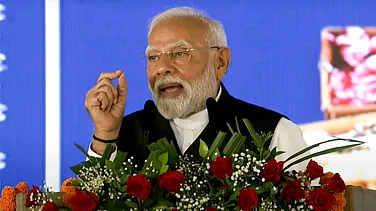
Union Minister of State for Information and Broadcasting L Murugan on Saturday said the government was ready to support further expansion of the country's radio ecosystem.
Speaking at the Broadcast Engineering Society Expo, he claimed that even in Tier-3 cities, the government supported the growth of FM radio.
"We have 839 FM stations in 313 cities. Community radio stations, too, are growing fast. We have 532 community radio stations. The government is ready to support the radio sector by granting licences," Murugan said.
India's FM radio ecosystem may be heading towards its biggest transformation in decades, with private FM broadcasters and consumer device manufacturers signalling readiness to transition from analogue to Digital FM using HD Radio.
Strong industry alignment was evident during the expo's discussions. Broadcasters supported HD Radio as a scalable and tested technology, and device manufacturers were ready to incorporate digital radio receivers into smartphones, feature phones, Bluetooth speakers, and cars—as long as the Ministry of Information and Broadcasting provided policy certainty.
The Electronics Design and Testing Centre in Noida has already indigenously developed consumer electronics products such as standalone radio receivers and Bluetooth speakers integrated with HD Radio. These devices will guarantee widespread acceptance and a strong receiver ecosystem for digital radio, starting at entry-level prices.



"While most broadcasters have chosen HD Radio as the platform of choice, India's widespread mobile adoption means technology choices must serve mobile-first listeners as well as in-car users," said Nisha Narayanan, Director and COO, Red FM.
She said from a broadcaster's lens, the transition must be cost-effective, ensuring active participation by existing broadcasters, while lowering entry barriers for new players to join the digital radio ecosystem.
The India Cellular and Electronics Association echoed this view, stressing the adoption of a proven technology, ecosystem readiness and market-driven approach.