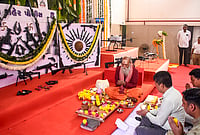
While AIIMS represents world-class medical expertise, the blood donation centre reflects serious gaps in donor welfare—no waiting area, seating, toilets for women, or basic comfort—undermining the dignity and safety of voluntary blood donors.
Rigid lunch-hour shutdowns, standing queues, lack of transparency around biometric data collection, and fear of repercussions for complaining reveal an unresponsive administrative system that treats donors as expendable rather than as partners in life-saving care.
Basic infrastructure such as shaded seating, clean toilets, hydration, and clear consent-based data practices are minimal, low-cost reforms essential to sustaining voluntary blood donation and upholding the standards expected of a national public institution.
India rightly takes pride in institutions like the All India Institute of Medical Sciences (AIIMS). It is routinely invoked as proof that the Republic can build and sustain world-class clinical expertise. Yet a nation is judged not only by the brilliance of its surgeons and physicians, but also by the dignity with which it treats those who make healthcare possible. My recent experience at the blood donation Center of AIIMS, Delhi, revealed an uncomfortable truth. While AIIMS’ clinical excellence is beyond question, the conditions under which voluntary blood donors are forced to go through reflect gaps in basic infrastructure, donor welfare, and administrative sensitivity.



I write this not as a disgruntled visitor, but as a citizen 59 years of age, who has donated blood close to forty times over the years, and as a social worker who has seen how one unit of blood can determine whether a patient’s treatment proceeds or stalls. This is also why the incident that took me to AIIMS matters. When I learned that a patient from the Northeast could not undergo a scheduled surgery due to non-availability of blood, I immediately went to donate, accompanied by an associate donor. What should have been a simple act of civic responsibility became a lesson in systemic indifference.
I reached the blood donation centre around 12.30 PM. After biometric verification of my left thumb, Aadhaar details, and an initial examination, I was informed at about 12.45 pm that I would have to wait outside until 2.00 pm, because the lunch interval runs from 1.00 to 2.00 pm and processing resumes only after that. The rule, as practised, effectively penalises any donor who arrives before 1.00 PM. You may complete preliminary formalities, but you must then stand outside and wait for over an hour until the post-lunch queue begins to move.
Lunch break is non-negotiable and mind you, this shouldn’t be perceived as a point of contention. But a rigid shutdown without a functional waiting area produces precisely what one would expect. Long queues of prospective donors standing, undermines the very logic of voluntary donation. A hospital that depends on citizens to come forward cannot afford to treat donors as expendable bodies to be managed, rather than as partners in a life-saving public service.
The indignity did not end there. When I attempted to sit briefly inside the blood bank, security staff asked me to leave. I then spoke to senior nursing officials, who stated—candidly—that there is no waiting area for donors within the blood bank, and that repeated requests have been made to the authorities for such a facility, without result. This admission is the heart of the matter: the administration is not unaware; it is simply unresponsive.
As I spoke with staff, I also found myself confronting a fear that complaining about deficient infrastructure could, in some indirect way, affect the treatment of the very patient for whom I was donating. Ideally Public institutions should not create conditions where a citizen must choose between speaking up and safeguarding a patient’s interest.
Outside the blood bank, there was no seating arrangement whatsoever, not even a single chair. Donors were expected to stand in the open for extended periods, irrespective of weather, fatigue, or the simple fact that blood donation requires physical stability, rest, and hydration. Donor welfare is not a courtesy but a safety requirement. Subjecting donors to physical strain immediately before donation increases the risk of dizziness, fainting, and complications. It also sends a clear message to the donors that your time, comfort, and wellbeing do not matter at all.
Equally troubling was the absence of a public toilet for women in the vicinity of the blood bank. In 2026 and in one of India’s most premium public hospitals, this is not a mere oversight but a failure of basic, gender-sensitive planning.
Aggrieved by all these conditions, I left a written complaint in the complaint box inside the blood bank. But individual complaints, however sincerely made, cannot substitute for institutional reform. AIIMS is not a small clinic constrained by local limitations, it is a national institution funded by the public exchequer, symbolically and materially tasked with setting standards for the rest of the country. When it normalises donor discomfort, it legitimises neglect across the public health system.
There is another dimension that demands urgent attention about the collection of biometric data before donation, without adequate explanation. Voluntary blood donation is an altruistic act and it should not come with complex and opaque demands for personal data that donors do not even understand. In many reputed private hospitals in Delhi, blood donation does not require biometric capture as a routine prerequisite. If AIIMS believes such a collection is necessary, it should explicitly mention to the donors the purpose and safeguards against misuse? And what alternatives are available for those who are unwilling to give biometrics?
I also want to state it very clearly that this should not be seen as an indictment of doctors, nurses, or other medical staff, as I am sufficiently aware about how they often operate under pressure, with limited resources, and with admirable commitment. The fault lies somewhere else with administrative choices and policy priorities. If India truly aspires to become a Viksit Bharat, we must stop confusing development with spectacle. A developed nation is one where systems work with dignity, predictability, and accountability, especially in public hospitals.
The reforms required are not extravagant. What's needed is a basic shaded, ventilated waiting area with adequate seating for the blood donors, access to clean toilets, including for women, basic hydration support, and transparent data practices with written explanations and consent protocols. These are minimal standards and not luxuries. They would cost little compared to what the system loses when voluntary donors are discouraged, delayed, or distressed.
Good intentions alone cannot save lives and a system that relies on citizens’ generosity must, at the very least, honour that generosity with care. Needless to mention that I donated blood and would continue to donate blood in future.
Jyotika Kalra is a advocate in the Supreme Court of India and former member of the National Human Right Commission.