






Commercial shipping has become a frontline in the Iran-US rivalry, with attacks on merchant vessels disrupting global trade and energy flows
The conflict echoes the 1980s Tanker War, but now features drones, missiles and advanced surveillance technologies
Rising shipping risks increase costs, driving up insurance, fuel prices, supply chain disruptions and global inflation
As tensions between Iran and the United States continue to simmer in the Gulf, commercial shipping has once again found itself at the heart of geopolitical confrontation. Attacks on merchant vessels, threats to close strategic waterways, and the growing use of drones at sea have revived fears of a "new Tanker War"—a term borrowed from one of the most dangerous phases of the Iran-Iraq conflict in the 1980s.
Unlike conventional naval battles, modern conflict targets the global economy. Oil tankers, container ships and cargo vessels have become strategic assets whose disruption can affect energy prices, supply chains and inflation worldwide.

The Original Tanker War Explained
The term "Tanker War" refers to the maritime phase of the Iran-Iraq War between 1984 and 1988. As neither side could achieve a decisive military victory on land, they began attacking oil tankers and merchant vessels linked to each other's economies in the Persian Gulf.
More than 400 commercial ships were attacked during the conflict. Iraq initially targeted Iranian oil exports, while Iran retaliated by striking ships associated with Gulf states that supported Baghdad. The conflict threatened one of the world's busiest energy corridors, forcing several countries to seek naval protection.
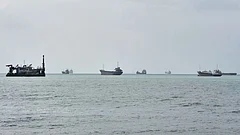


The crisis eventually prompted the United States to launch Operation Earnest Will, escorting Kuwaiti tankers through the Gulf under the American flag to ensure uninterrupted oil supplies.
Why Commercial Ships Are Strategic Targets
Commercial vessels are attractive targets because they are central to global trade but relatively vulnerable. Nearly one-third of the world's seaborne crude oil and a significant share of liquefied natural gas pass through the Strait of Hormuz, making it one of the most strategically important maritime chokepoints.
Disrupting commercial shipping allows adversaries to impose economic costs without directly engaging in large-scale military confrontation. Even isolated attacks can raise insurance premiums, force shipping companies to alter routes and create uncertainty in energy markets.
Modern attacks often involve missiles, sea mines, armed drones or small fast boats capable of harassing large commercial vessels while avoiding direct confrontation with powerful navies.

How The US Navy Protects Shipping Routes
The US Navy maintains a continuous presence in the Gulf through its Fifth Fleet, headquartered in Bahrain. Along with allied naval forces, it conducts surveillance, escorts high-risk vessels and responds to maritime emergencies.
American warships are supported by maritime patrol aircraft, satellites and intelligence-sharing arrangements with partner nations. These assets monitor suspicious activity around critical shipping lanes, particularly near the Strait of Hormuz and the Gulf of Oman.
Naval coalitions have also expanded joint patrols following repeated attacks on merchant shipping in recent years, aiming to deter further strikes while reassuring commercial operators that sea lanes remain open.
The Rise Of Maritime Drones
One of the biggest differences between today's maritime confrontation and the Tanker War of the 1980s is technology.
Iran and its regional allies increasingly rely on inexpensive unmanned aerial vehicles, uncrewed surface vessels and explosive drone boats capable of striking ships from long distances. These systems are cheaper than conventional missiles and can overwhelm defensive systems through coordinated attacks.
Meanwhile, the United States and allied navies are deploying artificial intelligence-enabled surveillance drones and autonomous patrol vessels to detect threats earlier and improve maritime domain awareness.
The result is a rapidly evolving contest between increasingly sophisticated offensive drones and advanced naval defence systems.
What Happens If Shipping Costs Double?
Even without widespread naval conflict, higher shipping costs can ripple across the global economy.
If insurance premiums and freight charges double because of persistent insecurity, the immediate impact would be higher transportation costs for crude oil, LNG and manufactured goods. Import-dependent economies would face rising fuel prices, while businesses could experience delays and increased logistics expenses.
Consumers would ultimately bear much of the burden through higher prices for fuel, food and imported products. Central banks could also face renewed inflationary pressures, complicating efforts to stabilise economic growth.
For that reason, safeguarding commercial shipping has become more than a military objective. It is now a crucial element of global economic security, making merchant vessels an increasingly important frontline in the broader Iran-US strategic rivalry.
















