Iran's Persian Gulf Strait Authority has made online clearance via the PGSA.ir portal mandatory for all vessels transiting the Strait of Hormuz.
The new rules follow a Pakistan-mediated Islamabad memorandum of understanding signed between the United States and Iran to normalise maritime traffic.
Ship operators must submit detailed transit requests at least 48 hours before arrival, with approved permits valid for a single transit up to five days.
Iran's newly established Persian Gulf Strait Authority (PGSA) announced mandatory online clearance procedures for vessels navigating the Strait of Hormuz, following a memorandum of understanding (MoU) between the United States and Iran.
The PGSA says the only official channels for passage requests are its website and the email address listed on it. Operators must now secure permission via the PGSA.ir portal to transit the maritime chokepoint, Indian Express reported. The corridor handles one-fifth of global oil and liquefied natural gas flows.
"With reference to the signing of the Islamabad MOU and the issuance of directives by the authorities, all applicants intending to passage through the Strait of Hormuz are hereby informed that during the period specified in the MOU, vessels that submit their passing requests to the PGSA in compliance with the following points will be cleared for passage promptly. Official Website for submitting passage requests: PGSA.ir. Email for follow-up inquiries: info@PGSA.ir," the PGSA posted on X.
Vessel movements through the narrow corridor ground to a halt in early March after the West Asia war broke out following US-Israeli strikes on Iran on February 28. The Pakistan-mediated initial pact between the US and Iran is expected to help maritime traffic through the strait pick up and normalise over the coming weeks and months.

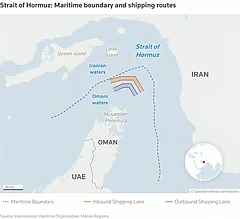
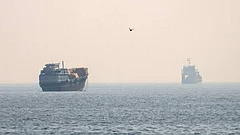

New Transit Rules
Ship operators must submit transit requests to the authority at least 48 hours before arriving at the strait.
During the first 60 days of the MoU, the Iranian government will pay the tariffs and service charges, and no fees will be collected from ships. Before the war, crossing the strait was free and did not require permission, but Tehran now wants to charge for maritime security, navigation assistance, environmental protection and insurance.
The 14-point US-Iran MoU says passage will be free only for 60 days. Iran will hold talks with Oman and other Gulf littoral states to decide the future administration and maritime services in the Strait of Hormuz, in line with international law and the sovereign rights of coastal states.
"To avoid delays at the entrance or exit of the Strait of Hormuz, it is essential that passing requests, complete with all required information, are submitted at least 48 hours prior to arriving at the strait area. During the 60-day period, tariffs for security, safety, and environmental services, as well as related Iranian insurances, will not be collected from shipowners and will be borne by the government of the Islamic Republic of Iran," a PGSA notice said.
The authority said mine-affected areas and the need to prevent collisions require vessels to stick to the designated route and scheduled timing before approaching the strait.
"Due to the presence of mine-affected areas and the necessity of ensuring safe passage and preventing collisions, coordination of the designated route and scheduled passage time for each vessel Prior to moving toward the strait is mandatory; failure to comply shall be the responsibility of the vessel owner," the PGSA notice said.
The Application Process
The PGSA website has only a form for vessels seeking permission to cross the Strait of Hormuz. The digital clearance form requires extensive vessel data.
The form asks for vessel name, flag, IMO number, type, deadweight capacity, draft, cargo type, registered owner, ship-management firm and contact details. It also requires cargo quantity and value, dangerous-goods declarations, origin and destination ports and countries, crew numbers and nationalities, insurance details, intended route and the expected date of crossing.
The standard review and response time is 48 hours, and the authority can approve the request, mark it incomplete for further review or reject it. Approved permits cover a single transit and remain valid for a maximum of five calendar days. The PGSA map sets a mandatory route close to Iran's Larak island.
"Any deviation from or use of alternative routes is strictly prohibited and will be treated as a violation…The owner and master assume full responsibility for any damages, fines, or accidents arising from such violations," the PGSA terms said.
Ships will receive final instructions shortly before moving through the corridor.
"The master will receive final coordination and precise route details via VHF/online call within 24 hours prior to the scheduled departure…" the terms said.
Applicants must also sign a legal declaration surrendering their ability to contest the authority's rulings.
"…I formally acknowledge that my application and the subsequent issuance of the passage permit are strictly conditional upon my full acceptance of the attached documents," the PGSA declaration read. "I irrevocably waive any right to object, dispute, or challenge PGSA’s decisions regarding this permit, the enforcement of the passage rules, or the application of the insurance policy at any time now or in the future. This consent is final and binding."