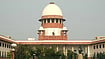
The Supreme Court ruled that safe, accessible footpaths are protected under Article 21 as part of the fundamental right to life and dignity.
States and Union Territories must create pedestrian-friendly policies and maintain obstruction-free footpaths.
The judgment elevates pedestrian safety to a constitutional obligation, potentially reshaping urban planning, accessibility standards and road-safety governance across India.
In a significant ruling that could reshape urban infrastructure across India, the Supreme Court has reaffirmed that the right of pedestrians to use safe, unobstructed and disability-friendly footpaths is a fundamental right protected under Article 21 of the Constitution, which guarantees the right to life and personal liberty. The court has also pressed governments to establish comprehensive rules and guidelines to protect pedestrians and improve footpath infrastructure nationwide.
The order was passed by a bench of Justices A.S. Oka and Ujjal Bhuyan while hearing a road-safety matter concerning the lack of proper footpaths, widespread encroachments and the dangers faced by pedestrians.
The court observed that when footpaths are absent or unusable, people are forced to walk on roads, exposing them to accidents and serious safety risks.
Referring to earlier constitutional jurisprudence, including the landmark case of Olga Tellis v. Bombay Municipal Corporation, the bench stated that pedestrian access to footpaths is inseparable from the right to live with dignity. It held that maintaining footpaths in good condition and ensuring they remain free from obstructions are constitutional obligations of public authorities.



The Supreme Court directed all states and Union Territories to formulate policies and guidelines for creating and maintaining pedestrian-friendly footpaths. These guidelines must draw from directions previously issued by the Bombay and Karnataka High Courts, which have laid down standards for accessible and obstruction-free pedestrian infrastructure.
The court also stressed that footpaths should be accessible to persons with disabilities and that removal of encroachments is mandatory. In addition, the Union government was instructed to place on record its policies and guidelines concerning pedestrian rights and safety. The bench further ordered the Centre to constitute the National Road Safety Board within a fixed timeframe, signalling the judiciary's growing concern over road-safety governance.
Urban planners, disability-rights advocates and road-safety experts have welcomed the ruling, describing it as a major step towards making Indian cities more inclusive and walkable. The judgment elevates pedestrian infrastructure from a municipal concern to a constitutional imperative, potentially influencing future transport and urban-development policies across the country.
What Does the Judgment Mean?
The Supreme Court has not created a new fundamental right; instead, it has clarified that safe access to footpaths is already protected under Article 21's guarantee of life and dignity. The ruling recognises that walking is a basic mode of transport and that citizens cannot exercise their freedoms safely if public spaces are inaccessible or dangerous.
The judgment means governments can no longer treat footpaths as optional urban amenities. States and local bodies will be expected to build, maintain and protect pedestrian infrastructure, remove encroachments and ensure accessibility for persons with disabilities. Failure to do so could increasingly be challenged as a violation of constitutional rights.
For ordinary citizens, the decision strengthens demands for safer streets, better urban planning and accountability from civic authorities. If implemented effectively, it could lead to wider footpaths, barrier-free access, stricter enforcement against encroachments and a stronger focus on pedestrians in transport policy. More broadly, the ruling signals a shift in Indian urban governance, from prioritising vehicles to recognising pedestrians as rights-bearing citizens entitled to safe public spaces.