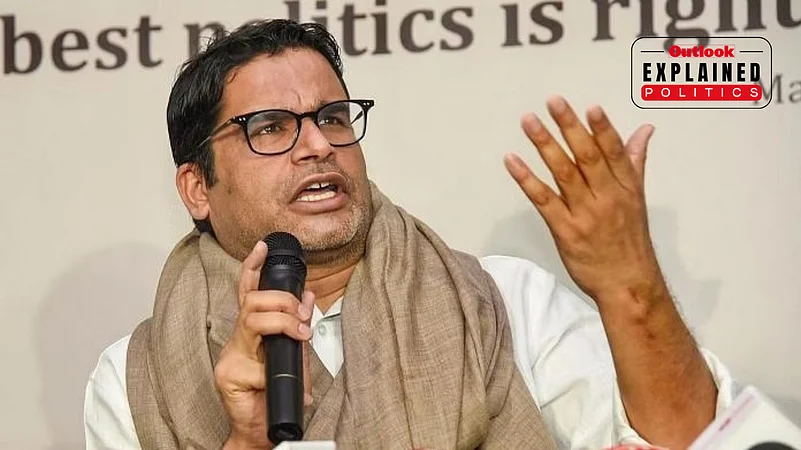
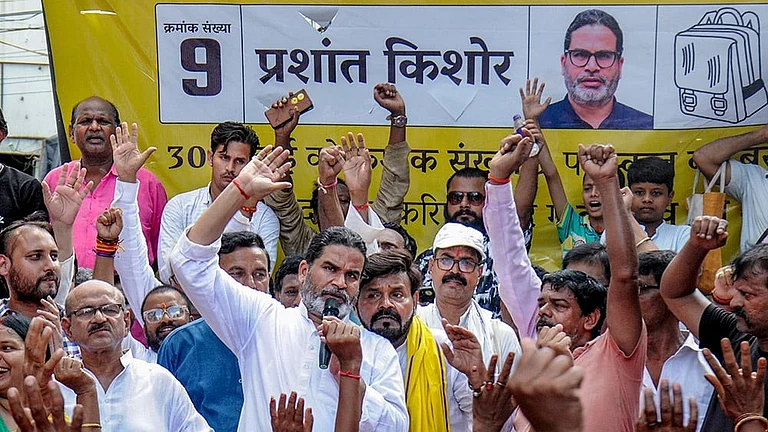
Prashant Kishor has defeated the BJP in Bankipur by 19,324 votes, ending the party’s uninterrupted hold over the Patna seat since 1995.
The victory signals the emergence of Jan Suraaj as a potential new force challenging Bihar’s traditional caste-based political arithmetic.
But converting a single urban bypoll victory into a statewide movement ahead of the 2027 Assembly election remains Kishor’s biggest test.
The result was never particularly in doubt after the first few rounds of counting. By mid-morning on August 3, Jan Suraaj Party founder Prashant Kishor had established a lead of more than 10,000 votes over the BJP's candidate, and the margin only widened as the afternoon wore on. By the time results were officially declared, Kishor had 63,203 votes to Neeraj Kumar's 44,250 — a margin of 19,324 in a seat the BJP had held since 1995.
The Bankipur seat had drawn significant attention as it marked Kishor's electoral debut in the BJP's stronghold, which the party had never lost since 1995. The RJD candidate Rekha Kumari finished a distant third with 14,085 votes. BJP Bihar minister and former deputy chief minister Vijay Kumar Sinha acknowledged the result gracefully.
"This is the land of democracy, and we respect the people's mandate," he told reporters.

Why Bankipur Is More Than A Bypoll
Bankipur is not an ordinary constituency. It is the seat formerly held by Nitin Nabin — the BJP's current national president, who vacated it to enter the Rajya Sabha. The seat was also previously held by Nabin’s father, electing a BJP legislator for an unbroken 30 years.


Choosing Bankipur for his electoral debut was Kishor's deliberate statement: he was not going to begin his political career in a friendly or marginal seat. He was going to try to take the BJP's own president's constituency.
Shiv Sena (UBT) leader Arvind Sawant framed the BJP’s defeat as the result of dissatisfaction among the people towards the ruling party.
“This result reflects the dissatisfaction among the people. People have realised that the BJP leaders make false promises," he told PTI.
Bankipur is also an upper-caste urban constituency, considered the BJP’s core voter base, which makes the victory even more impressive.
From Strategist To Elected Politician
Prashant Kishor's political journey has been among the most closely watched and contested in India's recent political history. He designed Narendra Modi's 2014 campaign, Nitish Kumar's 2015 and 2020 campaigns, Mamata Banerjee's 2021 campaign, the Congress's 2022 Punjab campaign, and then left the consultancy world to build a political party from scratch in Bihar. He founded Jan Suraaj and spent over two years conducting a padyatra, a walking campaign through Bihar's villages, meeting residents, documenting grievances, and building a ground-level organisational presence.
In the November 2025 Bihar Assembly election, Kishor chose not to contest personally, instead fielding candidates across almost every constituency. But, Jan Suraaj's results were devastating, the party failed to win any seats, registering a measly 3.44% vote share.
Kishor’s decision to not contest at the time was debated heavily among political circles and was thought to be a strategic misstep. The consultant turned analyst later accepted that not contesting could have been considered a ‘mistake’.
Why Chandrashekhar Azad And Owaisi Matter In Bihar
Bankipur's result is not being read in isolation. Bihar's political map is being simultaneously contested by multiple new forces who are each trying to build a constituency outside the traditional RJD-NDA binary. Chandrashekhar Azad's Azad Samaj Party (ASP) has been expanding its Dalit mobilisation in Bihar's Seemanchal and Mithila regions, positioning itself as a post-caste politics alternative to the RJD which has historically absorbed most Dalit-Other Backward Class votes under the Lalu Prasad umbrella. AIMIM under Owaisi has similarly tried to convert Muslim dissatisfaction with the RJD into a distinct electoral bloc, with mixed results.
The AIMIM has won 5 seats in back to back assembly elections but remain limited to the Seemanchal region while the Azad Samaj Party made no significant electoral imprint in the previous polls only receiving around 96,000 votes.
But the ASP performed very well in the Datia bypoll in Madhya Pradesh which was being held simultaneously with the elections in Bankipur. The party’s candidate did finish third but gathered a significant 14% of the vote in the constituency, highlighting its growing influence over the Dalit voterbase.
Though, none of these forces has yet demonstrated that it can transcend a specific identity constituency to build the kind of cross-caste coalition that winning Assembly elections in Bihar requires. But, they could very well emerge as key coalition partners who you’d rather have than not.
After all Bihar’s political spectrum is littered with small identity based party’s who define electoral arithmetic. The only difference is that the AIMIM and the ASP represent communities with a far more significant share of the voter base than their identity based political counterparts.
Is The Traditional Caste Arithmetic Changing?
Bihar's politics has been structured by caste arithmetic since Mandal — the post-1990 period when Lalu Prasad's consolidation of Other Backward Classes and Dalits created a new electoral logic. The NDA has responded with its own caste arithmetic: combining upper castes with Extremely Backward Classes (EBCs) and Scheduled Castes through specific political alliances. The question Bankipur asks is whether a political force built on governance, accountability, and youth anger can disrupt that arithmetic in an urban setting.
The answer from one bypoll is: possibly, in urban constituencies with mixed demographics. The 34% voter turnout — seven points below the November 2025 Assembly election — suggests that Kishor's victory was driven as much by a collapse in BJP motivation as by a genuine surge in Jan Suraaj enthusiasm. A large number of the BJP's voters appeared to have simply stayed home. Whether that reflects durable disillusionment or bypoll-specific apathy will only become clear in 2027.
Senior Journalist Prabhu Chawla framed the contest as more of a clash between personalities.
“Bankipur saw a clash between two personalities. It was a giant Prashant Kishor vs an unknown pigmy some Sinha. And a non performing Chief minister made it easier for JSP to walk away with a trophy. No big lessons emerge from this non battle,” he said on X.
Can New Political Forces Survive Beyond One Election?
Bihar's history of new political formations is not encouraging. Multiple parties have won seats, attracted media attention, and then dissolved back into the existing binary with their leaders absorbed by either the NDA or the Mahagathbandhan within one or two electoral cycles. The AIMIM in 2020 won 5 seats, but soon after the elections 4 of its legislators joined the RJD.
The structural challenge for Jan Suraaj is the same as for any new party: converting padyatra presence into booth-level organisation, retaining candidates between elections without access to patronage networks, and maintaining voter loyalty in a state where caste identity is overarching.