Lok Sabha debates anti-paper leak Bill on Tuesday as government defends stricter penalties and faster investigations.
Jitendra Singh highlights tougher punishments, past leaks, and need for examination integrity reforms.
Opposition leaders question implementation, criticise government record, and demand deeper education reforms.
The Lok Sabha on Tuesday witnessed a heated debate over the Public Examinations (Prevention of Unfair Means) Amendment Bill, 2026, with the government defending tougher punishments for examination fraud and the Opposition questioning its record on preventing paper leaks.
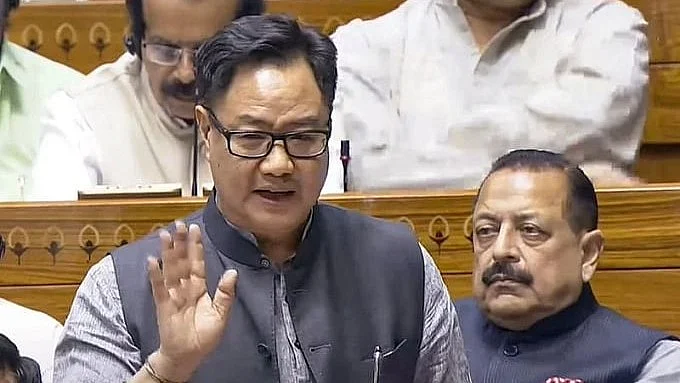
Parliamentary Affairs Minister Kiren Rijiju said the government was willing to extend the duration of the discussion on the Bill if members required more time.
Rijiju said he had spoken with leaders of various parties, including the Congress Chief Whip, the Samajwadi Party Chief Whip, the DMK and the NCP, and that there was agreement to extend the discussion beyond the scheduled six hours.
He said the government had no objection to further extending the debate if required, adding that discussions could continue for up to 10 hours.
Stricter Penalties
Union Minister Jitendra Singh said the amendment was aimed at making the existing law more stringent and restoring credibility in public examinations.
Calling the Bill a reaffirmation of the government’s commitment towards protecting students and young people, Singh said the legislation was an important step to prevent anyone from compromising examination systems.
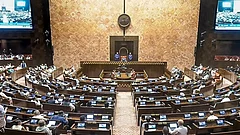
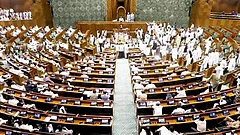
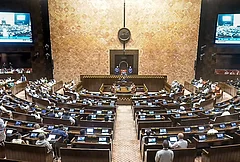

“This bill can be described, in a way, as a milestone legislation in the history of Indian Parliament,” Singh said.
Explaining the proposed changes, Singh said the amendment would increase punishments for individuals involved in unfair means. Under the proposed changes, imprisonment would increase from three to five years to five to ten years, while fines would rise from up to ₹10 lakh to ₹50 lakh.
For examination service providers, Singh said the penalty would increase from ₹1 crore to ₹5 crore. He added that the period during which such providers could be barred from conducting examinations would be extended from four years to eight years.
Singh said cases involving organised examination mafias would attract stricter punishment, with imprisonment proposed to increase from five to ten years to seven to ten years, and the fine increasing from ₹1 crore to ₹10 crore.
He also said the government would establish special fast-track courts for examination-related offences and that investigations would have to be completed within two months.
Singh Cites Earlier Paper Leak Cases
During the debate, Singh referred to several past cases of examination irregularities while arguing for the need for dedicated legislation.
He cited incidents including the Railway Recruitment Board examination in 2009, All India Engineering Entrance Examination in 2011, AIIMS New Delhi entrance paper leak in 2012, Maharashtra Secondary Certificate Examination in 2013, the B.Ed. Entrance Examination in Uttar Pradesh in 2010, Tamil Nadu Public Service Commission examination in 2012 and West Bengal Joint Entrance Examination in 2009.
Singh said the government had recognised the need for a dedicated examination agency and pointed out that the National Testing Agency (NTA) was established in 2017.
He said recommendations for a common national testing agency had been made earlier as well, including in 1992 and during the UPA government in 2010, but were not implemented at the time.
Congress Calls Bill A ‘Charade’
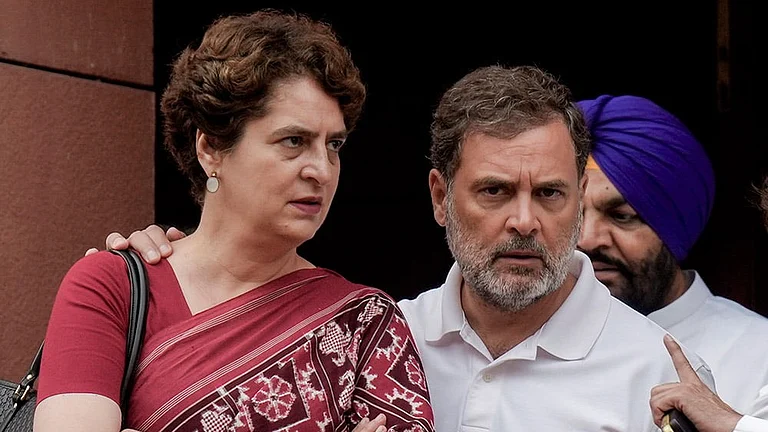
Congress MP Gaurav Gogoi criticised the government’s approach, alleging that the Bill did not address the larger problems affecting the education sector.
Gogoi said the legislation was merely a “charade” and questioned the government’s handling of the NEET-UG 2024 paper leak investigation.
Referring to reports on the status of the case, Gogoi said that out of 45 people charge-sheeted in the matter, 44 had received bail.
He argued that introducing another law without addressing implementation issues would not solve the examination crisis.
Gogoi also raised concerns over student deaths linked to examination pressures and criticised the government over its handling of education-related issues.
He said that 21 children had lost their lives and questioned the response of the government after the resignation of former Education Minister Dharmendra Pradhan.
Akhilesh Yadav Targets Govt
Samajwadi Party chief Akhilesh Yadav also criticised the government during the debate.
Referring to protests over examination irregularities, Yadav said the slogans raised after the protests reflected public anger against the government. He also targeted the government over the return of former Education Minister Dharmendra Pradhan to Parliament following his resignation.
“When the Minister arrived at Parliament, he was welcomed outside the House,” Yadav said, adding that the situation had created political embarrassment for the government.
He made a political remark, saying, “By removing one ‘Pradhan’, you effectively saved the ‘Pradhan Mantri’.”