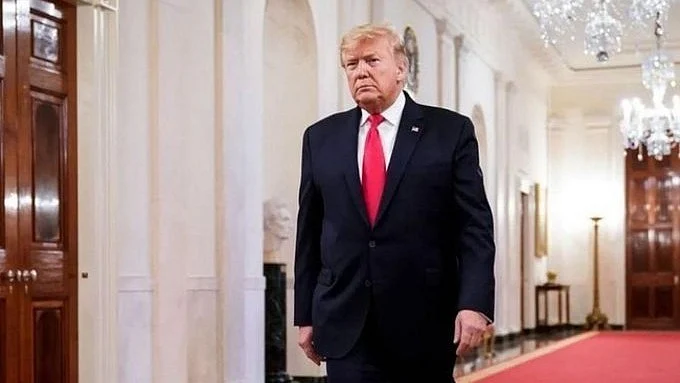
Trump reportedly considered fresh military strikes on Iran but has decided to continue diplomatic efforts, even if a final nuclear deal is not reached by the August 18 deadline.
Despite ongoing negotiations, tensions remain high.
Iran and the U.S. continue to clash over the Strait of Hormuz and deny plans for direct high-level talks.
United States President Donald Trump considered resuming military action against Iran but has opted to continue pursuing diplomacy for now, despite reported discussions within his administration over possible fresh strikes if negotiations fail, according to a Wall Street Journal report.
The newspaper, citing U.S. officials, said Trump recently held discussions with Defence Secretary Pete Hegseth and Chairman of the Joint Chiefs of Staff General Dan Caine on whether Washington should press ahead with negotiations or launch another round of military strikes. According to the report, some officials described any renewed attack on Iran as "finishing the job."
However, Trump has decided against immediate military action, believing that reigniting the conflict would neither dismantle Iran's nuclear programme nor improve the chances of securing a lasting diplomatic agreement. He also reportedly told advisers that it would not be a problem if a final nuclear deal was not concluded by the August 18 deadline marking the end of the agreed 60-day negotiation period.
The report said Trump is also not inclined to respond militarily to Iranian violations of the memorandum signed between the two countries, preferring to keep diplomatic channels open.
According to an unnamed White House official quoted by the Journal, the deconfliction channel established between Washington and Tehran — involving representatives from Iran's Islamic Revolutionary Guard Corps (IRGC) and the U.S. Army's Central Command, has already been used by both sides. The United States designates the IRGC as a Foreign Terrorist Organisation.


Hormuz dispute clouds diplomacy
Developments on Tuesday underscored the continuing tensions between the two sides despite the ongoing diplomatic effort.
U.S. envoys Steve Witkoff and Jared Kushner arrived in Doha for talks with Qatari mediators aimed at advancing negotiations with Iran. However, both Doha and Tehran denied that any high-level meeting between U.S. and Iranian officials had been scheduled, contradicting Trump's assertion a day earlier that Iran had agreed to talks.
Iran's chief negotiator, Mohammad Bagher Ghalibaf, maintained that Tehran remained open to diplomacy but warned it was prepared for conflict if negotiations failed.
"We are pursuing dialogue, but if the dialogue is not implemented, we are also prepared for war and will respond accordingly," Ghalibaf said in an interview with Iranian state television.
He also claimed Iran's oil exports had recovered following the easing of the blockade.
"By contrast, during the previous 50 to nearly 60 days, we were genuinely unable to export even a single barrel of oil," he said, adding that exports had since increased significantly.
The Strait of Hormuz remains another major sticking point in negotiations.
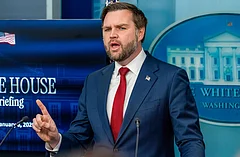
U.S. Vice President JD Vance said Iran would not be allowed to impose tolls or exercise control over the strategic waterway.
"This is not going to end in a place where the Iranians are collecting tolls on ships going through the Strait of Hormuz," Vance said in an interview released Tuesday.
Iran, however, reiterated its claim over the waterway. Ghalibaf said, "The sovereignty of the Strait of Hormuz lies with Iran and Oman, and traffic in the strait is subject to arrangements determined by Iran."
The conflicting positions highlight the challenges facing the 60-day negotiations, with both sides still divided over the framework agreement that links financial incentives for Iran to restrictions on its control over the Strait of Hormuz.