India will likely see more intense heatwaves due to the El Niño condition. In the past, heatwaves have caused health hazards and hundreds of deaths across the country
World Meteorological Organisation says this El Niño will peak a month or two earlier than late fall or early winters
These conditions are being driven by unusually warm ocean temperatures in the Pacific
“El Niño conditions have now formed in the tropical Pacific Ocean, and are likely to intensify to historic levels in the near future,” said the United States National Oceanic and Atmospheric Administration (NOAA) on Thursday.
This climate phenomenon which affects weather patterns across the world is predicted to be the strongest of the century this year, giving it the name “Super El Niño”. António Guterres, Secretary-General of the United Nations (UN), has called it an “urgent climate warning”.
What is El Niño?
NOAA describes El Niño as a complex weather pattern in the Equatorial Pacific Ocean resulting from abnormal warming of surface waters, impacting weather, wildfires, ecosystems and economies worldwide. It naturally occurs every two to seven years and lasts for up to nine to twelve months at a time. It also has an opposing ‘sister’ phase called the La Niña, characterised by colder-than-normal ocean surface temperatures.
In an El Niño Southern Oscillation (ENSO) update shared in May, NOAA said that this year’s El Niño will likely affect the Northern Hemisphere during the winter of 2026-27, with significant implications for tropical countries, including India. This means that 2027 will be another record-warm-year disrupting global weather, food supplies and economies, the BBC noted.


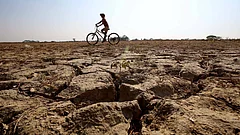

Arriving after La Niña which ended earlier in 2026, this year’s El Niño has a 63% chance of intensifying in late fall and early winters, NOAA reported. It is likely to rank “among the largest El Niño events in the historical record going back to 1950”.
‘Super El Niño’
With several climate scientists forecasting 2027 to be the hottest year on record due to the phenomenon, The Guardian reports that this year’s El Niño has acquired nicknames ranging from “super” to “Godzilla” even before it has officially formed.
A World Meteorological Organisation (WMO) press release stated that strong signs have emerged in the past few weeks showing that this El Niño will peak a month or two earlier than late fall or early winters. These conditions are being driven by unusually warm ocean temperatures in the Pacific, the press release added.
The specialised UN agency forecasts global temperatures between June and August to be above average, with the impact likely to continue through November. Globally, we will see higher temperatures, heatwaves, erratic rainfall, droughts, stress on food and water systems and other extreme weather conditions due to moderate to strong El Niño conditions, WMO noted.

‘Impact not the same all across the world’
NOAA’s National Weather Service (NWS) Director, Ken Graham, in a statement discussing the variable impact of each El Niño on global weather patterns, said “Every El Nino is not the same; each one is unique with its own imprint on our weather.”
As he described the role of NWS in making predictions and issuing warnings about future climate events to The Guardian, the director said, “Advanced monitoring and an improved understanding of El Niño patterns allow the NWS to better predict and better prepare the public and our core partners for what is to come.”
Effect of El Niño on India
India will likely see more intense heatwaves due to the El Niño condition. In the past, heatwaves have caused health hazards and hundreds of deaths across the country.
Researchers point out that while several major drought years in India have coincided with strong El Niño events in the past, it has not been the case each time. This implies that monsoons in India are influenced by several climate factors and not just El Niño alone. India recorded only 86% of its long-period average rainfall during the last super El Niño which occurred in 2015-16.

How does the effect of El Niño vary by region?
Abby Frazier, a climate scientist told The Guardian, that the El Niño can increase hurricane activity in the Pacific making Hawaii and other islands vulnerable to danger. BBC reported that in northern Peru and southern Ecuador, too, flooding is common with the potential to reach parts of East Africa, and Central Asia.
However, the El Niño is also known to suppress hurricane season activity in the Atlantic which can give the US’s east and the Gulf coasts a break from disasters. The condition could benefit the West Asian nations.
Meanwhile, The Guardian reported that North-eastern Africa is set to experience a weather whiplash leading to extreme conditions ranging from intense droughts to heavy rains, according to climate scientist and El Niño expert Muhammad Azhar Ehsan.
According to reports, parts of western South America are likely to receive heavy rainfall and floods, along with an extra warm summer.
The Guardian also highlighted that forecasts predict the US will experience the greatest impact in the winters. The South will get wetter due to flooding, and the Pacific north-west will get warmer and drier. The condition also leads to wetter winters in California, according to the reports.
The US agriculture industry will experience relief as El Niño will turn conditions favourable for grains, seeds including soybeans, in 18 major growing states, however, it can lead to mixed , The Guardian noted.
Additionally, reports say that droughts, wildfires, and heatwaves might threaten Australia. In the United Kingdom, El Niño could “increase the likelihood of more unsettled conditions later in the year, including a higher chance of milder, wetter and windier weather during autumn and early winter”, said the country’s national weather service.
Experts warn of a shock to the global food supply. With crops such as maize and rice being vulnerable to El Niño conditions and drought, reports suggest that food production across South Africa, India, Indonesia, Vietnam and Brazil is likely to reduce.