“I thought I had simply slept wrong.”
At 25, Rohan (name changed) never thought his mild back pain was serious. It started as morning stiffness. He blamed his office chair, long travel hours, and weekend cricket. He also noticed that sometimes he woke up with one eye very red and painful.
Painkillers gave temporary relief. Stretching helped a bit. But the stiffness kept coming back, especially after rest. After a few months, bending became difficult, and night pain disturbed his sleep. That’s when he finally saw a doctor.
The diagnosis was early-stage ankylosing spondylitis (AS). It is not the same as rheumatoid arthritis (RA), but both are long-term inflammatory joint diseases. AS mainly affects the spine.
Though AS is considered a rare disease, such cases are increasing. Many young adults in their 20s and 30s complain of constant back pain, joint stiffness, and swelling. These symptoms are often ignored as simple muscle strain or tiredness, said Dr. Ranjan Gupta, Senior Rheumatologist at the All India Institute of Medical Sciences (AIIMS), New Delhi.
The exact cause of AS is not known. Many patients have a gene called HLA-B27, but not everyone with this gene develops the disease. Experts believe that AS may start after an infection or due to an abnormal immune response. It also runs in families, so the risk is higher if a close relative has the condition.

Dr. Gupta said the main symptom of ankylosing spondylitis is inflammatory back pain caused by inflammation in the spine. It has many associated symptoms, such as peripheral arthritis, uveitis, and inflammatory bowel diseases.
Dr. Gaurav Sharma, Senior Orthopaedic Surgeon from MCD-affiliated Swami Dayanand Hospital in Delhi, added that these signs may appear minor and easy to ignore. But they can also be the body’s earliest warning signals of rheumatoid arthritis (RA), Dr. Sharma said, cautioning that such conditions can potentially lead to permanent disability if untreated.
According to government data, nearly three percent of the country’s population is living with some form of autoimmune rheumatic disease (ARD), with AS being one of them.
The doctors emphasise that the window for intervention in AS is early in the disease. The sooner a diagnosis is confirmed, the faster treatment can begin to slow or halt immune-driven damage. Prompt therapy significantly reduces the risk of deformities, chronic pain, and permanent loss of joint function. Early care can mean the difference between a manageable condition and lifelong disability.
Awareness, therefore, becomes the first treatment.
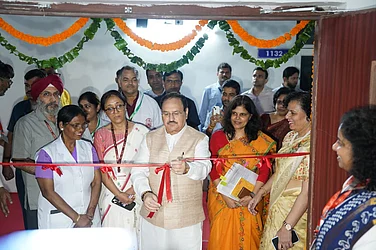
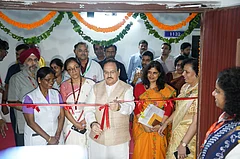
“Awareness is the first and most powerful step toward prevention and early diagnosis,” said Dr. Narottam Das, the then Medical Superintendent of Swami Dayanand Hospital, which had organised an awareness seminar a few days ago in the national capital in collaboration with Cass India Foundation.
Dr. Sharma explained that AS and rheumatoid arthritis (RA) are not the same, although both are chronic, inflammatory autoimmune conditions that cause joint pain and damage. “While RA typically targets smaller joints, such as the hands and wrists, symmetrically, AS primarily affects the spine and sacroiliac joints in the lower back. Over time, untreated AS can lead to fusion of the vertebrae, resulting in reduced flexibility and a stooped posture.”
AS warrior and President of Caas Foundation, Ankur Shukla, also emphasised the urgent need to spread awareness about the condition and other rheumatologic and orthopedic diseases so that treatment can begin on time and further damage can be slowed.
If the proper diagnosis is given, then the patient can subsequently receive the proper therapy. This allows them to avoid procedures or medications that won’t help them and can even cause lasting negative effects, with spinal surgery acting as an example, said Dr. Jainet, Head of the Department of Medicine.
“Modern therapies can effectively control inflammation and pain, but patients must seek medical advice early.”
She emphasized that delayed management increases the risk of joint deformity.
She added that immune-mediated disorders require long-term supervision.
According to rheumatologists, AS diagnosis includes clinical examination, HLA-B27 testing, MRI/X-rays, and inflammatory markers. At the same time, treatment options include NSAIDs, DMARDs, biologics (like TNF-alpha blockers), physiotherapy, and lifestyle modifications.
Dr. Bithi Choudhary, Senior Ophthalmologist at Swami Dayanand Hospital, said that people living with AS often do not realise that their eyes can also be affected. Nearly three to four out of ten patients may develop uveitis or iritis—an inflammatory eye condition—at some point.
And it can begin abruptly.
“A patient may wake up with one intensely red eye. There may be deep pain, watering, blurred vision, and sharp discomfort while looking at light. Many describe it as a stabbing or aching sensation inside the eye,” she explained.
Because it usually affects one eye at a time, people sometimes mistake it for an infection or allergy and attempt self-medication with over-the-counter drops. That can be risky.
Doctors strongly advise against self-medication or relying solely on spectacle shop assessments. “Prompt consultation with an ophthalmologist is crucial,” asserted Dr. Bithi.
Standard treatment often includes steroid eye drops to control inflammation quickly. In recurrent cases, rheumatologists and ophthalmologists may prescribe systemic medications to control the underlying immune disorder. When treated early, most patients recover well, and vision can be preserved.
A healthy diet, treatment adherence, and exercise ensure a quality life, said the doctors.
According to the WHO, AS prevalence varies across regions. Per 10,000 people, it affects about 23.8 in Europe, 16.7 in Asia, 31.9 in North America, 10.2 in Latin America, and 7.4 in Africa.
The global burden of AS—like other musculoskeletal disorders—is expected to rise significantly. Cases are projected to increase by at least 50 percent between 2020 and 2050, reflecting population growth, ageing, and improved detection, as per the WHO.