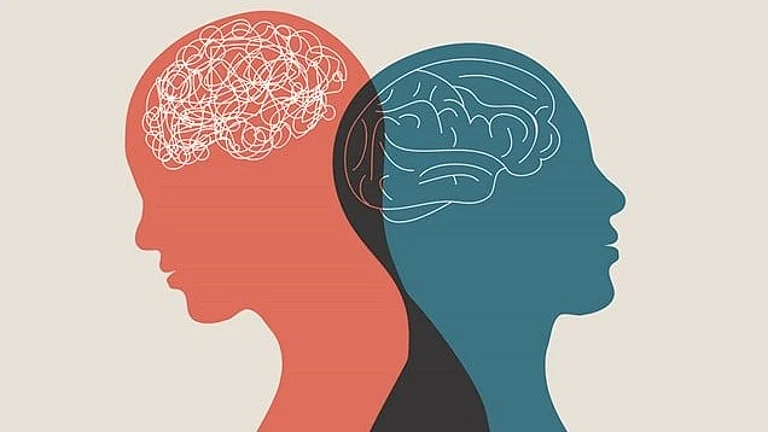
Even as the National Mental Health Survey (NMHS) reveals that over 85 percent of people with common mental disorders do not receive treatment, nearly 60 percent of these conditions are now being diagnosed in people below 35 years in India, painting a disturbing picture of the country’s mental health landscape.
The data were shared at the recently held four-day 77th Annual National Conference of the Indian Psychiatric Society (ANCIPS 2026), where leading mental health experts expressed concern that mental illness is no longer confined to later stages of life but is increasingly affecting adolescents, young adults, and people in their most productive years.
Data from a large international meta-analysis published in Molecular Psychiatry, tracking more than 700,000 individuals across multiple countries, show that 34.6 percent of mental disorders begin before age 14, 48.4 percent before 18, and 62.5 percent by age 25. These findings underline that for a majority of patients, mental illness begins well before full adulthood, influencing academic outcomes, career opportunities, relationships, and overall quality of life.
The Indian Psychiatric Society (IPS) cautioned that when mental disorders begin early and remain untreated, they often become chronic, leading to long-term disability and significant social and economic consequences.
Dr. Deepak Raheja, Organising Secretary of ANCIPS Delhi and Director, Hope Care India, said the findings call for urgent policy and systemic action. “When 60 percent of mental disorders are affecting people below 35 years of age, it becomes clear that India’s mental health crisis is unfolding far earlier than we once believed. These are the years when individuals are studying, building careers, and contributing to society. Early identification, school- and college-based mental health programmes, and destigmatisation are no longer optional; they are essential.”

The vulnerability of young people was further underscored by suicide trends discussed during the conference. Mental health experts emphasised that youth mental health challenges are now a major public health concern, driven by multiple overlapping stressors, including academic pressure, unemployment, social isolation, digital overexposure, substance use, and unresolved emotional distress.
Recent data have also pointed to a sharp rise in psychological distress among young adults, particularly in the post-pandemic period. Experts noted that the Covid-19 pandemic, combined with economic uncertainty and rapidly changing social structures, has intensified stress, anxiety, and depressive symptoms among young populations.
Dr. Nimesh G. Desai, Chairperson of the Organising Committee of ANCIPS 2026 and former Director of the Institute of Human Behaviour and Allied Sciences (IHBAS), warned about the long-term consequences of ignoring early-onset mental illness. “Excess use of digital devices and dependency on the virtual world will further increase mental health issues in the future. One of the main reasons for rising cases in India is lack of awareness on timely treatment.
“If reported on time, almost all mental disorders can be treated successfully, and patients can lead a normal life. Mental disorders that begin in youth often follow a lifelong course if not treated early. This impacts not just the individual, but families, workplaces, and the country’s overall productivity. Psychiatry in India must move from a reactive approach to a preventive and early-intervention-driven model,” he stated.
Highlighting pressures faced by urban youth, Dr. Savita Malhotra, President of the Indian Psychiatric Society, said rapid social change has transformed the lived experiences of young people. “Today’s youth are dealing with intense academic competition, constant digital comparison, loneliness despite connectivity, and uncertainty about employment and relationships. Mental health services must adapt to these realities and become more accessible, youth-friendly, and stigma-free.”
Calling for mental health to be placed at the centre of national development planning, Dr. TSS Rao, President-Elect of the Indian Psychiatric Society, said, “India cannot hope to harness its demographic dividend if its youth are silently suffering. Mental health must be integrated into primary healthcare, educational institutions, workplaces, and community systems. Investment in mental health is not an expense; it is an investment in the nation’s future.”