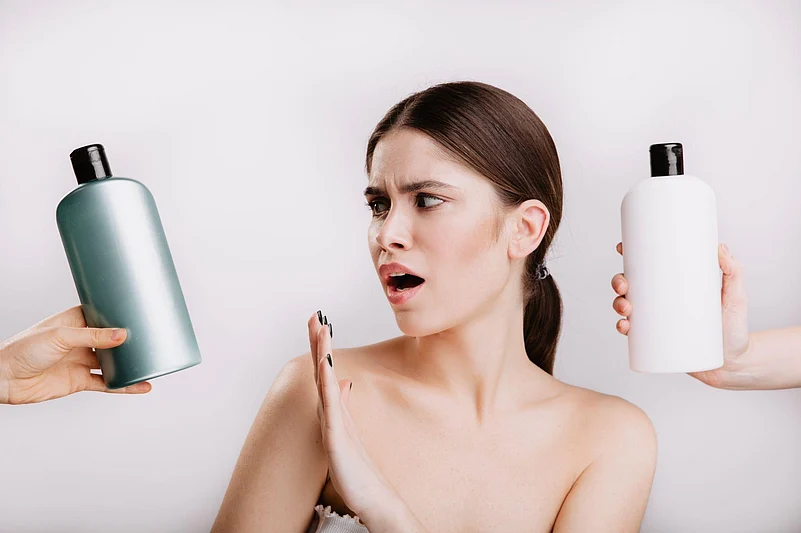
Walk down any shampoo aisle and you'll spot "sulfate-free" labels everywhere. They're on budget bottles and premium ones alike, often marketed as the gentler, healthier choice. But is sulfate-free shampoo actually better for your hair, or is it just clever positioning? The answer depends on your hair type, scalp condition, and what you're actually trying to fix.
What Are Sulfates and What Do They Do?
Sulfates are cleansing agents — the most common being sodium lauryl sulfate (SLS) and sodium laureth sulfate (SLES). They're surfactants, which means they attract both oil and water at the same time. When you lather up, sulfates bind to the sebum, dirt, and product buildup on your scalp and hair, allowing water to rinse it all away cleanly.
That foamy lather you associate with a "good wash"? Sulfates are responsible for that. They're effective, inexpensive, and have been used in shampoos for decades.
Why Do Sulfates Get a Bad Reputation?
The issue isn't that sulfates clean your hair — it's that they sometimes clean too well. Sulfates don't distinguish between excess sebum and the natural oils your scalp needs to stay balanced. Over-stripping the scalp of its moisture barrier can lead to:
Dryness and irritation, especially in sensitive skin types
Frizz and roughness, particularly in curly or textured hair
Color fading in chemically treated or dyed hair
Increased scalp sensitivity over time
People with dry scalps, eczema, or coarse hair often find that regular sulfate shampoos leave their hair feeling brittle and their scalp feeling tight after every wash. That's the real concern — not that sulfates are inherently harmful, but that they may be too harsh for certain hair and scalp profiles.
Who Actually Benefits From Sulfate-Free Shampoos?
Sulfate-free shampoos use milder cleansing agents like cocamidopropyl betaine or sodium cocoyl isethionate. They clean without the aggressive stripping action, which makes them a better fit for specific groups:
People with color-treated or chemically processed hair
Those with naturally dry, coarse, or curly hair
Individuals with scalp conditions like seborrheic dermatitis or psoriasis
Anyone who washes their hair daily and wants a gentler routine
That said, sulfate-free shampoos don't lather as much and may not feel as "clean" after the first few washes. This is partly a perception issue — we've been conditioned to associate foam with cleanliness, when in reality foam has nothing to do with how well a shampoo cleans.
When Regular Shampoos With Sulfates Make More Sense
If your scalp produces a lot of oil, you work out frequently, or you use heavy styling products, sulfate-free shampoos might leave residue behind. A mild sulfate-based formula may actually be the better option here because it removes buildup more efficiently.
Similarly, if you're dealing with dandruff caused by a fungal imbalance (which is the case for most people), you need a shampoo formulated specifically to address that — and the sulfate vs. sulfate-free debate becomes secondary to having the right active ingredients. Choosing a traya shampoo designed for scalp health means looking at what's actually in the formula, not just what's been left out.
The Role of Scalp Health in Hair Loss
Here's something most people overlook: shampoo choice can indirectly affect hair growth. A chronically irritated, over-dried scalp creates an environment that's not ideal for healthy follicles. Inflammation, product buildup, or persistent dandruff can all contribute to weaker hair roots over time.
Some approaches, like Traya's treatment model, focus on identifying whether hair fall is rooted in scalp conditions, hormonal shifts, nutritional gaps, or internal health factors — rather than treating it as a single surface-level problem. Ingredients like redensyl have also gained attention for supporting follicle health at a deeper level, which is worth understanding if thinning is part of the picture.
Final Thoughts
Neither sulfate-free nor regular shampoo is universally better. The right choice depends on your scalp type, hair texture, how often you wash, and what specific problem you're trying to solve. If your scalp feels tight, dry, or irritated after washing, switching to a sulfate-free formula is a reasonable first step. If your scalp is oily or prone to buildup, a gentle sulfate-based shampoo may serve you better.
The real takeaway is this: pay more attention to your scalp's response than to marketing claims. Healthy hair starts at the root — literally.
Disclaimer: This is a sponsored article. All possible measures have been taken to ensure accuracy, reliability, timeliness and authenticity of the information; however Outlookindia.com does not take any liability for the same. Using of any information provided in the article is solely at the viewers’ discretion.