There will come a time in the future when strange-looking people will look back at these days that have just gone by and wonder what it would have felt like to have lived through the fortnight. The series was a rare classic in colour amidst all those famous snapshots of black-and-white times. In the background of cricket as a tool of peace and the security risks that the outing involved, the series is unparalleled. But if this history is ever given in full, people of another age will also read about the shadow of match-fixing under which the series was played.
The International Cricket Council’s anti- corruption unit rightly refused to say anything on the speculation, considering it unworthy of comment. When a journalist asked Rahul Dravid at the end of the fourth one-dayer, "What do you have to say about the impression this match was fixed," India’s vice-captain, who usually shows evidence of good breeding, muttered into the microphone, "Somebody get this guy out of here." To a similar question from a television channel, Pakistan’s captain Inzamam-ul-Haq is reported to have said, "Shut up." Those who have fought the five battles since March 13 are wondering what they must do to tell ‘people’ that magical moments like the many during the series could not have been predetermined, that good things sometimes do happen to the subcontinent, that if Pakistan wanted to throw matches, why would they amass huge totals like 344 and 293 in two of the games that they lost, and a courageous 253 in the last game? A total batting collapse is easier to stage.


The final scorecard of the fifth one-dayer, undead but inanimate, does not tell the whole story. Curiously, it was in this match that India started as the bookies’ favourite for the first time in the series. With all complex factors evening out, the toss decided the favourite in the other four matches, but in the last game, though Inzamam won the toss yet again, the power of a rising Indian side rendered them the more probable team to win the series. "In a way it’s like the final of a tournament," Dravid had said before the match. Seen that way, history was against the Indians, the most persistent runners-up in the modern game. But on March 24, the famed depth of Indian batting obliterated the laws of probability. President Pervez Musharraf chose the wrong night to become a live spectator. As a tribute to his sudden arrival at the Gaddafi stadium, two fours raced to the ropes in consecutive balls.
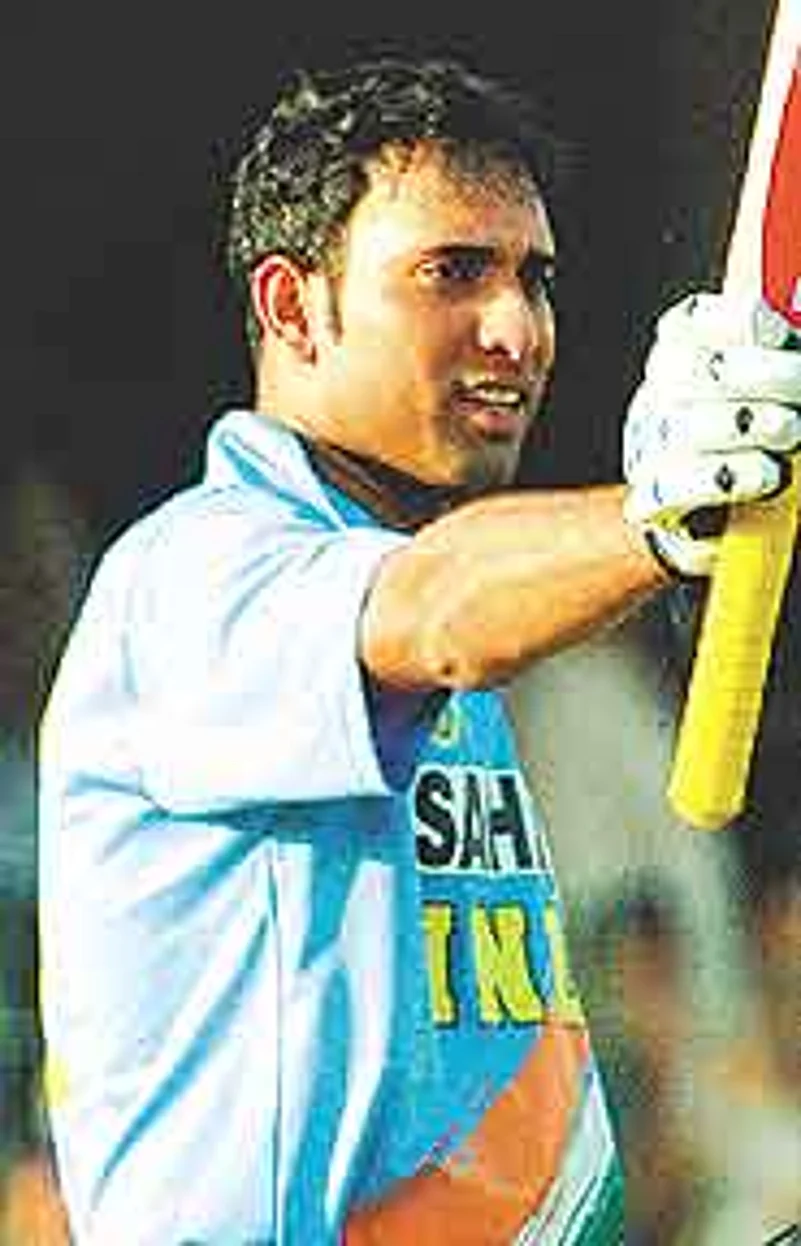
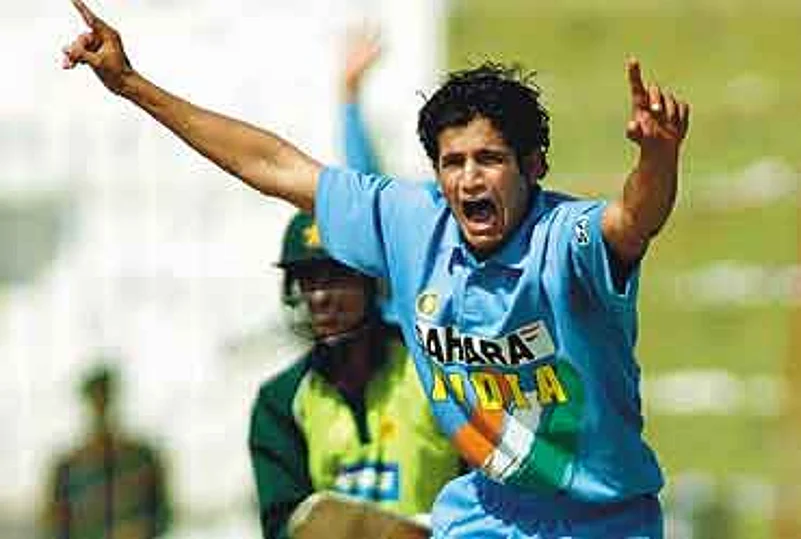
Laxman’s 107 off 104 balls in that game was scored through some shots that made senior cricketers in their special boxes shake their heads and wonder how a man could treat a cricket ball so gently yet banish it with such contempt to the ropes. It’s not clear what human intellect had considered him unworthy of being in the World Cup squad but Laxman’s emphatic return to the one-day side is a reminder of the fact that there are no good theories against real talent. But it was a match that Moin Khan and Shoaib Mallik almost hijacked under a sprawling white haze and the dew giving soap-like properties to the white ball. So Irfan Pathan’s early spell that ripped through three of Pakistan’s top order was crucial. For India to win, Pakistan had to collapse when the ball was dry. Pathan did that job. "In my opinion," Ganguly said after the match, "Irfan has been the best among the bowlers from both sides."
The final encounter was perilously similar in character to the fourth match, also played under the lights on the same ground. While Pakistan made 293 batting first in the fourth match, India made the same score in the fifth. But when India was close to perishing in the fourth match—and the series—at 94 for four, Dravid commandeered all the forces of his reputed anchorage. Around him went worker bee Mohammed Kaif. A slice of his bat was bombed out by Sami. Kaif has kept the splinter as a souvenir of an innings that saved the series for India.
If a wicket had fallen when Dravid and he were conducting lifelike responsible middle-class fathers, Indian batting may have disintegrated. Ganguly would have had to explain the dropping of Ramesh Powar who had earlier shown the useful valour of a foot-soldier though no traces of an endorsing model. India’s hunt for the 293 was conducted at a time when the old notion of Indians being poor chasers had long been laid to rest. "It was an area we had starting working on two years ago," said Dravid.
India’s defeat in the third one-dayer at Peshawar was in a contest that was seemingly the least nerve-tickling but it was a deceptively close encounter. At four for 65, Pakistan seemed far from the goal of 245 before the 15th over was even completed. But in the end, Abdul Razzaq and Moin Khan stood defiantly to deny India a peep at their tail. In a series that has abolished the whole concept of safe scores in the subcontinent, 244 was too paltry to defend. Pakistan almost failed defending 329 in the second one-dayer in Rawalpindi. The Indians were short by just 12 runs in possibly their best failed chase ever. Sachin Tendulkar matched his reputation only once in the series and it was in the battle for Rawalpindi. Always accused of deserting the team "when it mattered the most", as though some matches do not matter, Tendulkar made 141 off 135 balls in a statistically improbable second inning epic. So when he was asked after the match about being "historically a bad finisher", Tendulkar dropped the cloak of statesmanship in a rare undressing and rudely told the inquirer, "Go look at the scorecard."

Before all this, the drama had to begin. The first one-dayer in Karachi was an omen. India almost derailed the peace process after amassing 349. Karachi’s cricketing crowds till that day had a reputation of leaving their seats and heading for their guests. But they signaled the end of that era. They even clapped in awe when they witnessed the fiery beginnings of the Indian innings. Virender Sehwag belted 79 from 57 balls. Dravid went after a solid stay, one short of a 100. Pakistan gifted 10 wides and 20 no-balls, five full additional overs. Pakistan’s reply was hard to believe. Inzamam batted with no regard for cricketing conventions. When a subcontinental team chases 349, the tradition is to collapse fast so that everybody could go home early and reinvent old theories. But Inzamam is unmindful of native wisdom. The first indication that he will grow into a long captain. When he was asked by eccentric journalist Harpal Bedi, "With so many of your old captains giving advice on when to bowl, when to bat, what to do, don’t you ever get confused," the Pakistani captain didn’t answer for a few seconds. Then a thin smile ran across his misleadingly angelic face. "I don’t read papers. And when I watch television, I keep the volume off." It was this unlearned view of the game he so loves that made him play the way he did at Karachi. He made 122 off 102 balls in a match that Pakistan would have won but for Nehra’s sudden transformation from human status to machine precision.
On the night of March 24 as the Indian team left in a dark windowed bus, following an identical decoy vehicle, there were only howling Indians in the stadium, the locals having dispersed calmly. They have been perfect hosts. Hundred and sixty extras in five matches deserve at least a "thank you".