
Sometimes a film can turn out to be like its maker. The Attacks of 26/11 assimilates within itself the schizophrenia that has come to characterise Ram Gopal Varma. It shows a wee glimmer of creativity—the stuff of Varma’s distant past—but gets weighed down by an enormously mind-numbing mediocrity that he so effortlessly and smugly embodies these days.
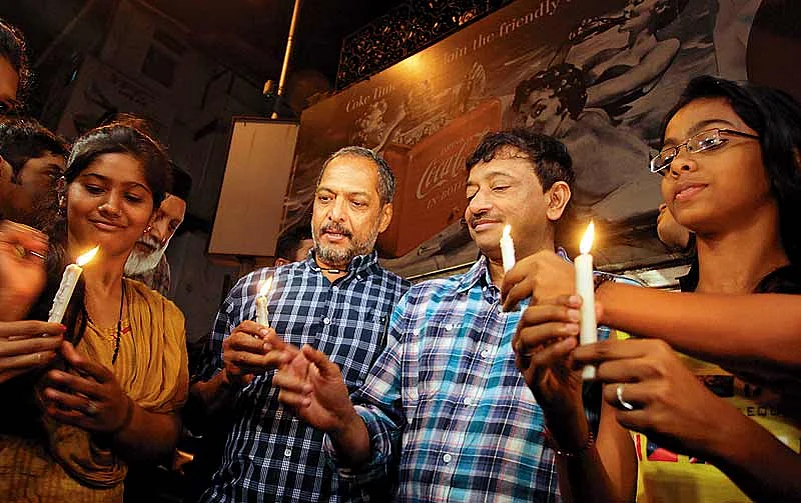
The film, based on the 2008 Mumbai terrorist attacks, flickers with ingenuity for a very short while when Nana Patekar—as joint commissioner of police Rakesh Maria, in charge of interrogating the only captured attacker, Ajmal Kasab—delivers a persuasive, perceptive and impassioned speech on religion, indoctrination and terrorism. This speech may not have happened in reality (cinema, after all, is not necessarily about facts but their interpretation) but it does reveal that RGV still has remnants of a winning imagination provided he chooses to exercise it.
And it was an imagination that was once a force to be reckoned with. It shined in a range of interesting films, cutting across genres—from the horror of Raat, romance of Rangeela to mafia and crime in Satya and Company. It was iconoclastic, it defied norms, it set new benchmarks. It was also an imagination that supported and fired the imagination of other talents—from Sriram Raghavan’s Ek Haseena Thi to Shimit Amin’s Ab Tak Chhappan. After all, wasn’t RGV the original indie spirit, the team leader of young, cutting-edge cinema before his own protege Anurag Kashyap took the movement under his wings?

The problem today is RGV doesn’t seem to exercise that imagination anymore, and quite superciliously so. Also, when he does, things turn out all stilted. So a film like Not A Love Story—inspired by the tragic murder of Mumbai TV producer Neeraj Grover, for which Kannada actress Maria Susairaj’s boyfriend Emile Jerome Mathew was convicted—is reduced from a tragedy about ambition and perversity to mere cinema of titillation. The 26/11 film is also basically a thoughtless, automated portrayal of the massacre. The turgidity and tawdriness put it in the same substandard league as the anti-smoking ads interspersed in-between. Indeed, it’s the nauseating, graphic “detailing” that Varma brings in with his camera that makes his cinema sink to lower depths. Extreme violence, brutality and bloodshed are not markers of any real-life carnage. It’s how you recreate that atrocity that matters. The brain-smashing bullets, fountains of blood, men being butchered like halaal goats and the camera lingering on child victims—it’s exploitative and gratuitous rather than sensitive and considerate to the victims as well as the viewer. RGV casts a voyeuristic gaze on a tragic event and he objectifies it, quite like how he has framed his women in recent films, be it a Jiah playing with the hosepipe in a transparent shirt in Nishabd or the camera sliding on Nisha Kothari’s thighs and butt in Aag. To the accompaniment of an ominous, sinister background score, he reduces a savage, bottomless reality into a kitschy horror film. With 26/11, terrorism literally came to our drawing rooms with 24/7 TV coverage. It is a tragedy that’s part of the nation’s recent memory and collective consciousness. RGV scratches these fresh wounds and it’s this abrasiveness that doesn’t just disappoint but enrages.
It gets worse if you see it in the light of his tactless, unfeeling terror tour of the Taj Hotel in the aftermath of the tragedy (with then CM Vilasrao Deshmukh). At the time, he had denied he was planning a film on the attacks. Now he defends his then comments by issuing a statement: “...I never ever intended to make a film on those attacks when I went to the Taj. Now after all these years, after the whole truth has been uncovered by the investigators and by the virtue of extensive knowledge I have gathered from various sources...I developed a desire to film the actual story of those attacks.”
On an even sadder note, it seems 26/11 is not the end. Things look unlikely to get better if the shoddy promos of his forthcoming Satya 2 are anything to go by. Before every new film, we wonder if he’ll deliver. Some of us still like to repose our faith. Others keep wondering who funds his flop films. We keep writing his obits, we keep asking him to take a sabbatical. But like a cussed kid, he keeps making films just for the heck of it. So much so, his own legacy of good cinema is now in danger of extinction in the face of these second-rate factory goods he’s been churning out of late. It’s time RGV sent an SOS to himself.