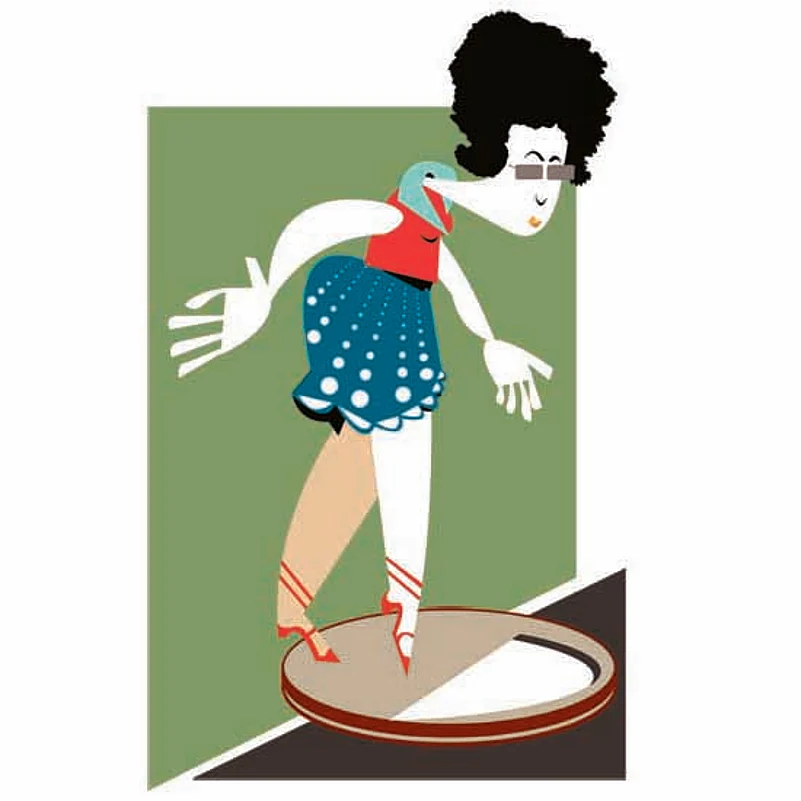

Our body weight has nothing to do with our health, fitness and well-being, but we continue being obsessed with it. And weighing scales remain eternally popular, even though they are no measure of fitness. In spite of numerous studies pointing towards this fact, they continue to dominate our psyche.
Weighing scales score on the fact that no experts are required for reading them—they are cheap, non-invasive, offer an instant result and are readily available, even if they score very poorly on both validity and reliability. Your weight cannot tell you if you have gotten more or less flexible in your hips, if your resting heart-rate has slowed down, or if your blood sugars are behaving better. You could have worked out diligently in the gym and improved on all fitness parameters—flexibility, cardio-respiration, endurance, strength, etc; you are even feeling lighter and better, but if that scale says no change or a gain of 2 kg (highly possible, as you make gains in lean mass and bone mineral density), your world comes crashing down! From enjoying the benefits of exercise, you needlessly reduce yourself to a number on the scale.
So you need to have the insight to understand that early morning low body weight could simply be a function of dehydrated status because of overnight fasting, that for progress you need to look at something real, meaningful and tangible. The number on the scale doesn’t account for contribution of fat weight to total body weight; therefore, 70 kg 10 months earlier and 70 kg today even after so much running, yoga, weight training doesn’t mean zero fat loss. It simply means the machine is stupid.