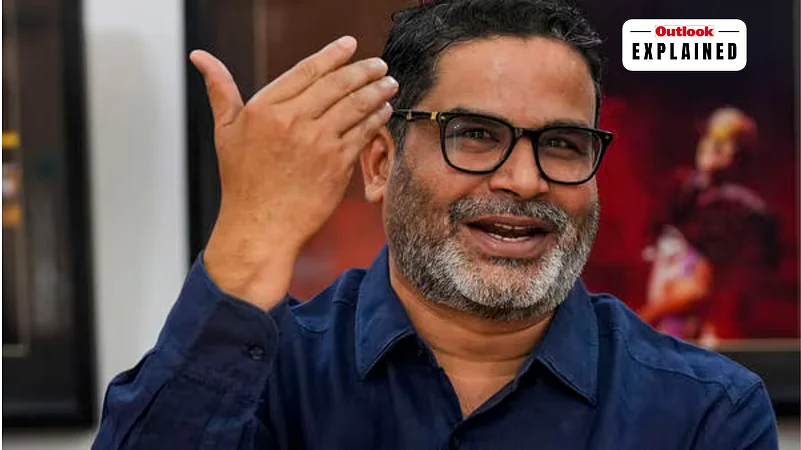
Prashant Kishor defeated BJP by 19,324 votes, ending its 30-year Bankipur rule.
Jan Suraaj secured its first Assembly win, emerging as Bihar’s third force.
RJD’s fall to 14,273 votes exposed dissatisfaction within Bihar’s traditional Opposition.
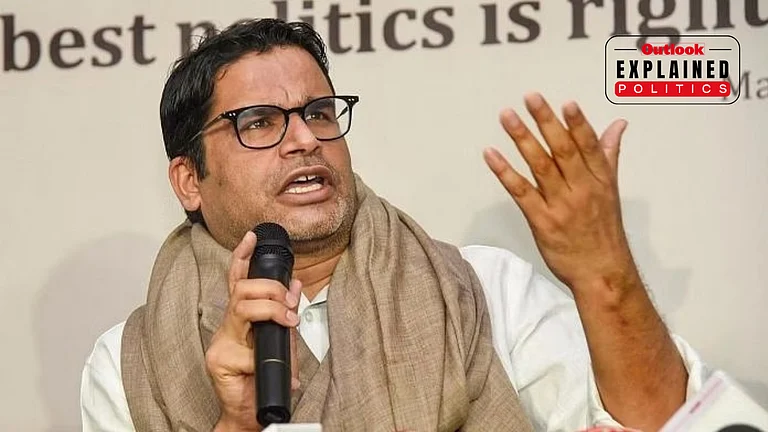
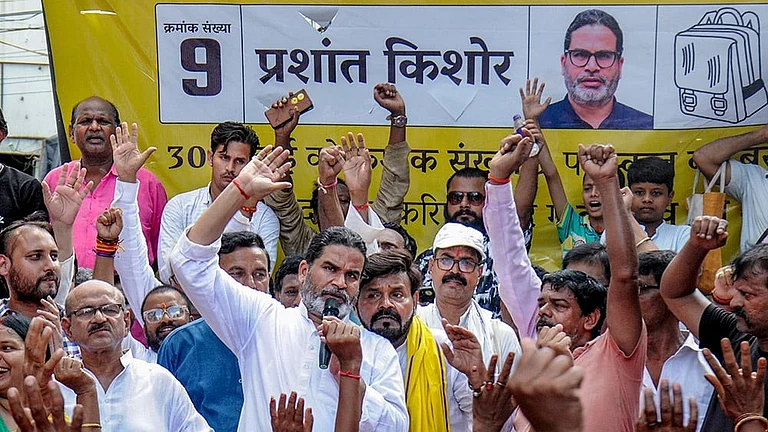
Prashant Kishor’s victory in the Bankipur Assembly bypoll has given the Jan Suraaj Party its first electoral breakthrough while ending the BJP’s three-decade hold over one of its strongest urban constituencies in Bihar.
Kishor secured 64,151 votes, defeating BJP candidate Neeraj Kumar Sinha by 19,324 votes. Sinha received 44,827 votes, while RJD candidate Rekha Kumari finished a distant third with 14,273 votes. The result marked Kishor’s first victory as a candidate and Jan Suraaj’s first Assembly seat.
Why Bankipur Matters Beyond One Seat
Bankipur had remained with the BJP since 1995 and was represented for several terms by Nitin Nabin. The bypoll was necessitated after Nabin moved to the Rajya Sabha following his appointment as BJP national president. His repeated victories had made Bankipur one of the party’s most dependable seats in the state.
The BJP’s defeat is therefore symbolically greater than the loss of a single MLA. Kishor did not begin his electoral career from a politically safe constituency. He chose a BJP bastion and framed the contest as a referendum on the state government’s leadership and its promises on education, employment and migration.


Following the result, Kishor sought to maintain that broader framing.
“This is the victory of the people of Bankipur. As we stated during the election campaign, this was not just an election to choose an MLA. It was an attempt by the people of Bihar to send a message to the BJP’s central leadership that they should appoint a good person as the Chief Minister of Bihar,” he told reporters.
“They do not want a person with a criminal background or questionable conduct, character, or reputation to lead Bihar. They want a good Chief Minister who can improve education, create employment opportunities for the youth, and ensure that the children of Bihar do not have to migrate elsewhere for work,” he added.
The victory allows Kishor to enter the Assembly and use it as a platform for the issues around which Jan Suraaj has attempted to build its identity. It also gives the party organisational credibility after its poor performance in the 2025 Assembly election, when it failed to win a seat.
In Bankipur itself, Jan Suraaj’s rise was dramatic. Its candidate Vandana Kumari had received only 7,717 votes in 2025. Kishor’s personal candidature, combined with local dissatisfaction and the importance attached to the contest, transformed the party’s performance within months.
How Jan Suraaj Disrupted Bihar’s Political Equations
Bihar’s political system has largely revolved around two competing formations: the NDA led by the BJP and its allies, and the RJD-led Opposition.
Jan Suraaj’s victory introduces a third claimant to the political space occupied by voters who are dissatisfied with the government but unconvinced by the established Opposition.
The RJD’s decline in Bankipur is particularly significant. Rekha Kumari had received 46,363 votes in the 2025 Assembly election, finishing second behind the BJP’s Nitin Nabin. In the bypoll, her tally fell below 15,000 and she lost her security deposit.
This suggests that Kishor did not win merely by attracting previous Jan Suraaj voters. He appears to have drawn support from sections of both the BJP and RJD electorate.
The result is politically uncomfortable for both sides. For the BJP, it indicates that even a long-held urban constituency can become vulnerable when local dissatisfaction combines with a strong challenger. For the RJD, it shows that anti-government voters may no longer automatically rally behind its candidate.
Kishor has presented the result as a warning to the BJP rather than simply a personal electoral victory.
“Before the Lok Sabha elections, Prime Minister Modi, the BJP, and Amit Shah should focus on improving Bihar, creating jobs for its youth, and stopping migration. That is our only objective. We do not want to become MLAs merely to award contracts. Our sole objective is the development of Bihar,” he said.
Why Young Voters Turned Towards Prashant Kishor
Education has remained at the centre of Kishor’s political messaging. His repeated emphasis on school reforms, competitive examinations, employment and migration appears to have found an audience among young and first-time voters.
Bihar has witnessed strong student mobilisations over examination paper leaks and alleged irregularities in recruitment processes. These protests created dissatisfaction not only with the state government but also with an Opposition that many students believed was insufficiently visible.
While Bihar has recorded improvements in roads and physical infrastructure, concerns surrounding the quality of government education, delayed recruitment examinations and the migration of young workers remain politically potent.
Kishor’s professional background and his attempt to present himself as an administrator rather than a conventional caste leader helped him occupy this space. For sections of the urban youth, voting for him offered a way to register dissatisfaction without returning to the RJD.
“Indeed, the Bankipur election was not just to elect an MLA for Bankipur. From day one, we set an agenda, and our goal has been that since the NDA and BJP got a majority in Bihar, people expect a good person to lead Bihar so that Bihar develops, Bihar’s children progress, there’s quality education, employment, and an end to migration,” Kishor said.?
Why RJD And Congress May Need A Rethink
The most immediate warning from Bankipur may be for the RJD-led Opposition.
Tejashwi Yadav has attempted to position employment and youth aspirations at the centre of the RJD’s politics. But sections of voters reportedly viewed him as insufficiently visible during recent student protests and controversies, including the Bharat Tiwari encounter.
That perceived absence created space for Kishor to present himself as the more forceful Opposition voice. Some voters may also have calculated that the result would not threaten the government’s majority but could place a stronger critic inside the Assembly.
For the RJD, the scale of Rekha Kumari’s decline suggests that its traditional social coalition cannot be taken for granted in every constituency. Its appeal among younger voters will increasingly depend on sustained political engagement rather than the strength of the party’s historical identity.
The Congress was not a major factor in the Bankipur contest, but the result still affects its position as an RJD ally. If Jan Suraaj expands, Opposition seat-sharing could become more complicated. The RJD and Congress may have to decide whether Kishor should be treated as a competitor dividing anti-BJP votes or as a potential partner in a broader arrangement.
RJD MP Misa Bharti, however, questioned the nature of Kishor’s victory and suggested that it indirectly benefited the BJP.
“The BJP candidate has been defeated. But if Prashant Kishore is winning from there, then in a way it is still the BJP that has won. Look at the way the candidates were changed there. After all, why was the BJP candidate replaced? It appears that the BJP probably did not believe it could win on its own, which is why Prashant Kishore was fielded,” she said.
Her remarks reflect the RJD’s concern that Jan Suraaj could weaken the principal Opposition party by attracting voters seeking an alternative to both the NDA and Lalu Prasad’s political legacy.
Will Opposition Votes Split Or Consolidate?
The emergence of Jan Suraaj comes at a time when several smaller forces are attempting to build political constituencies outside the traditional Bihar binary.
Asaduddin Owaisi’s AIMIM has established a concentrated Muslim base in Seemanchal, winning five seats in both the 2020 and 2025 Bihar Assembly elections. Its success remains geographically limited, but it has demonstrated that a smaller party can retain an identity-based regional bloc despite pressure from the RJD.
Chandrashekhar Azad’s Azad Samaj Party is similarly attempting to expand its appeal among Dalit voters. Such parties may not yet possess the cross-caste support required to lead a government in Bihar, but they can influence the outcome in closely contested constituencies and become important coalition partners.
Jan Suraaj differs from these formations in its attempt to build support around governance rather than a single community. Whether it succeeds will determine how seriously the established parties treat it.
If Jan Suraaj contests independently across Bihar, it could divide anti-incumbency votes and potentially help the NDA in constituencies where the Opposition is already fragmented. But Bankipur also presents the opposite possibility: dissatisfied BJP, RJD and first-time voters consolidating behind whichever challenger appears most capable of winning.
The party’s future will therefore depend on its ability to establish itself as a credible first choice rather than merely a recipient of protest votes.

What The Result Means For Bihar Politics
Bankipur has not overturned Bihar’s political order. It has, however, created the first visible breach in it.
Kishor now has an elected platform, Jan Suraaj has its first seat and the BJP has lost a constituency it had controlled for more than 30 years. The RJD, meanwhile, has been pushed to third place in a seat where it was the principal challenger only months earlier.
“This is not an election to make an MLA. This is to give the message to the top leadership of the BJP that a good person should be made chief minister in Bihar, so that there is education and employment in Bihar. The people have given this message,” Kishor said.
The challenge for Jan Suraaj is to prove that the Bankipur result was not driven solely by Kishor’s personality, a low-turnout bypoll or dissatisfaction with the BJP’s candidate. It must now translate one urban victory into an organisation capable of competing across Bihar’s diverse caste, class and regional landscape.
For the BJP, the result is a warning against complacency in established strongholds. For the RJD and Congress, it is a reminder that Opposition space must be earned through visibility and sustained engagement. For smaller parties, it reinforces the possibility that Bihar’s political binary can be challenged, even if replacing it remains a far more difficult task.