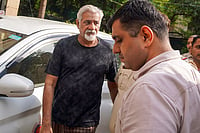

This is the second time the Police have claimed to have arrested a suicide bomber during the last two weeks, but they have not been able to extract any worthwhile information from them about the masterminds of the explosions, which have rocked Bangladesh since August 17, 2005. This is the second time the Udichi has been the target of jihadi terrorists. Pro-Taliban and pro-Al Qaeda jihadi terrorism started in Bangladesh with an explosion at a function organised by the Udichi on March 6, 1999, at Jessore, in which 10 persons were killed. Since then, there have been 33 bomb explosions and hand-grenade attacks by the jihadi terrorists in different parts of the country causing 179 fatalities.
The discovery of the dead body of a Hindu at the spot of the latest incident was sought to be exploited by the authorities to project theJuM as a criminal and not a jihadi terrorist organisation, which, according to them, had members from different religions. The police projected the dead Hindu as another suicide bomber, but this has been vehemently denied by many eye-witnesses and by the brother of the deceased. According to them, he was one of the onlookers who had rushed to the scene after the first explosion.
The police and the Rapid Action Battalion (RAB ) raided a fish farm at Delduar upazila in Tangail on December 9,2005, and claimed to have recovered 12.5 kgs of gunpowder kept in 25 packets, 10 kgs of iron-weights used in fishing nets, four detonators, one kg of explosive gel, two kgs of carbon powder, some batteries and two kgs of electric wire and switches. The details of the material seized as given out by the police would indicate that the terrorists, while being increasingly lethal, have so far been carrying out their terrorist strikes mainly with not so sophisticated, locally available material.
Mr.Lutfuzzaman Babar, the Bangladesh Home Minister,admitted on December 9,2005, that thegovernment faced a long battle to stop "dangerous, daring and mostly poor" Islamic suicide bombers. He added: "It’s not a thing we can do anything about overnight. It’s a big challenge". Mr.Khandaker Monirul Alam, a spokesman of the Home Ministry, said: "These suicide bombers are dangerous and daring. They are mostly poor, madrassa-educated and thoroughly brainwashed."
The latest suicide bombing has led to a public backlash against the terrorists.Tens of thousands of demonstrators all over the country protested against the "anti-Islamic" suicide bombings, following an appeal by Maulana Obaidul Haq, the chief cleric of Bangladesh’s Baitul Mukarram National Mosque, to Muslims to protest against the suicide bombings. He has denounced them as "against the basic tenets of Islam." He told a Friday religious congregation in Dhaka on December 9, 2005:"Suicide bombers are Islam’senemies. Islam prohibits suicide bombings. We have to be united to fight this evil force."
The secular and leftist political parties and non-governmental organisations under the leadership of Sheikh Hasina of the Awami League, the former Prime Minister, have mounted their own campaign against jihadi suicide terrorism as well as against thegovernment of Begum Khalida Zia for what they project as its collusion with Islamic fundamentalist parties and jihadi terrorist organisations.
The efforts of Begum Khalida Zia for an ostensible national united front against jihadi terrorism have failed to take off due to the huge trust deficit, from which she suffers. Her credibility continues to be very low amongst the secularforces--whether political or non-political. Her refusal to admit till the beginning of this year the spread of the virus of jihadi terrorism, the failure of the police to investigate vigorously acts of jihadi terrorism directed against her political opponents and to arrest the leaders of the three jihadi organisations banned this year after she reluctantly admitted the spread of jihadi terrorism and her continued association with Islamic fundamentalist parties, which have clandestine links with the jihadi terrorist organisations like the fundamentalist political parties of Pakistan, have come in the way of the secular forces of the country co-operating with her against jihadi suicide terrorism. Some members of her own political party are reported to be unhappy with her mollycoddling the fundamentalists and jihadi terrorists despite the escalating jihadi terrorism.


In her attempts to use the Islamic fundamentalists and jihadi terrorists to serve her political objectives, she has proved herself to be no different from President General Pervez Musharraf of Pakistan. As in Pakistan, so too in Bangladesh, action taken by thegovernment for the implementation of the UN Security Council Resolution No.1373 against international terrorism has been unsatisfactory.
Madrasas, funded by Saudi, Kuwaiti and Pakistani money, continue to mushroom without any check by thegovernment, there has been no meaningful action against the flow of funds to jihadi terrorists and jihadi terrorism volunteers from India, Myanmar and southern Thailand continue to enjoy sanctuaries in Bangladesh territory. Mosques and madrasas, allegedly funded by a Kuwait based NGO, Revival of Islamic Heritage Society (RIHS), have been an important recruiting ground for theJuM, the HuJI (B) and the Pattani terrorists of Southern Thailand.
It is time the UN Security Council, which monitors the implementation of UNSCR 1373, takes cognisance of the jihadi goings-on in Bangladesh territory and calls the localgovernment to account.
B. Raman is Additional Secretary (retd), Cabinet Secretariat, Govt. of India, and, presently, Director, Institute For Topical Studies, Chennai.