Iran and the United States exchanged heavy missile and drone strikes, with Tehran targeting U.S. military facilities across Gulf states and saying it had again closed the Strait of Hormuz.
The conflict disrupted commercial shipping.
It left one Indian national missing after a vessel was attacked off Oman.
The United States and Iran exchanged some of the heaviest missile and drone attacks of the war on Sunday, with Tehran striking U.S. military facilities across Gulf states and declaring it had once again closed the Strait of Hormuz, further escalating a conflict that has upended regional security and global energy markets.
The latest escalation followed days of retaliatory strikes between the two countries, prompting U.S. President Donald Trump to declare the collapse of a ceasefire that had been intended to halt the conflict that began with U.S. and Israeli attacks on February 28. Despite declaring the truce over, Trump has said negotiations with Tehran remain possible.
The fighting intensified after a series of attacks on commercial vessels in the Gulf. Iran said it closed the Strait of Hormuz after firing a warning shot that struck a ship travelling on what it described as an unauthorised route, and claimed to have disabled a second vessel on Sunday.
The Islamic Revolutionary Guard Corps said the waterway would remain closed until "the end of U.S. interference in this region."
However, the U.S. Central Command said commercial shipping continued through the strait, which before the war handled around one-fifth of global oil and liquefied natural gas (LNG) shipments.
Iran expands attacks across the Gulf
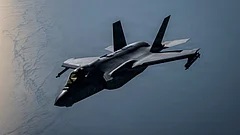
U.S. Central Command said American forces struck 140 Iranian military targets on Saturday, bringing the total to more than 300 targets hit over three nights. It said the campaign was intended "to degrade Iran’s ability to attack civilian mariners and commercial vessels freely transiting the strait."

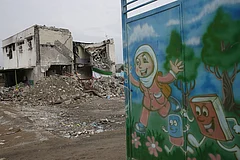

Iranian state media reported explosions in several port cities following the strikes.
In response, the Revolutionary Guards said they had destroyed a command-and-control centre and drone hangars in Jordan, targeted a U.S. radar installation in Kuwait, struck U.S. aircraft carrier support and refuelling facilities in Oman, and destroyed a jet maintenance centre and command facility in Qatar.
Qatar said three people, including a child, were injured by falling shrapnel from the attack.
The United Arab Emirates said its air defence systems intercepted Iranian missiles and drones, while warning sirens sounded in Bahrain and explosions were heard in Doha. The UAE later said the missile threats detected earlier were outside its borders.
Jordan's state news agency reported that three missiles fired from Iran landed in the country early Sunday, causing minor property damage but no casualties.
Oman's state news agency also reported drone attacks targeting sites in the Musandam region, without providing details on casualties.
India's Ministry of External Affairs said one Indian national remained missing after a commercial vessel, GFS Galaxy, came under attack off the coast of Oman.
"Of the 11 Indian nationals on board, 10 have been rescued so far, while one Indian National is reportedly missing," the ministry said, condemning the attack.
The strikes marked a significant escalation by Iran, which had previously warned that retaliation over attacks on commercial shipping would draw "a severe response."
Sunday's strike on Qatar was particularly significant because Doha has played a central role in mediating talks between Washington and Tehran. Qatar has previously said it would not continue mediation efforts while under attack.
The conflict has further destabilised the Gulf, while Iran's effective blockade of the Strait of Hormuz has driven up global energy prices, fuelling inflation and increasing political pressure on Trump ahead of November's congressional elections.
Ceasefire prospects dim
The latest exchange of attacks has cast fresh doubt on an interim agreement signed last month aimed at ending the conflict.
On Sunday, Iran's chief negotiator Mohammad Baqer Qalibaf wrote on X: "The era of one-sided deals is OVER. We told you: keep your word or pay the price. Reality is knocking."
The United States revoked the licence allowing sales of Iranian crude on Tuesday after commercial tankers from Qatar and Saudi Arabia came under attack earlier in the week, triggering a new round of retaliatory strikes.
Although Iran has not claimed responsibility for the earlier attacks on shipping, analysts say Tehran has used such incidents to increase pressure during negotiations.
Iranian Foreign Minister Abbas Araqchi discussed regional developments with Pakistani Foreign Minister Ishaq Dar, whose government has been acting as a key intermediary between Washington and Tehran, according to Iran's semi-official Tasnim news agency.
The talks followed a meeting on Saturday between Araqchi and Omani Foreign Minister Badr Albusaidi in Muscat focused on shipping and transit through the Strait of Hormuz.
Iranian foreign ministry spokesperson Esmail Baqaei said legal and technical delegations from Iran and Oman, joined by representatives from Qatar, discussed maritime security and agreed to continue political and technical negotiations to reach "a joint understanding." Oman's state news agency said the talks would continue "at the technical and political levels."
Meanwhile, a written statement issued on Saturday by Iran's new Supreme Leader, Ayatollah Mojtaba Khamenei, vowed revenge for the killing of his predecessor and father during the opening phase of the war. Iran's new leader has not appeared in public since the conflict began.