Trump said fresh US-Iran negotiations will begin on Monday after planned military strikes were put on hold.
Iran denied any direct talks were scheduled, saying there were no plans to receive a US delegation or send Iranians to Washington.
Oil prices fell after Trump's announcement, while uncertainty remains over the venue and participants for the proposed talks.
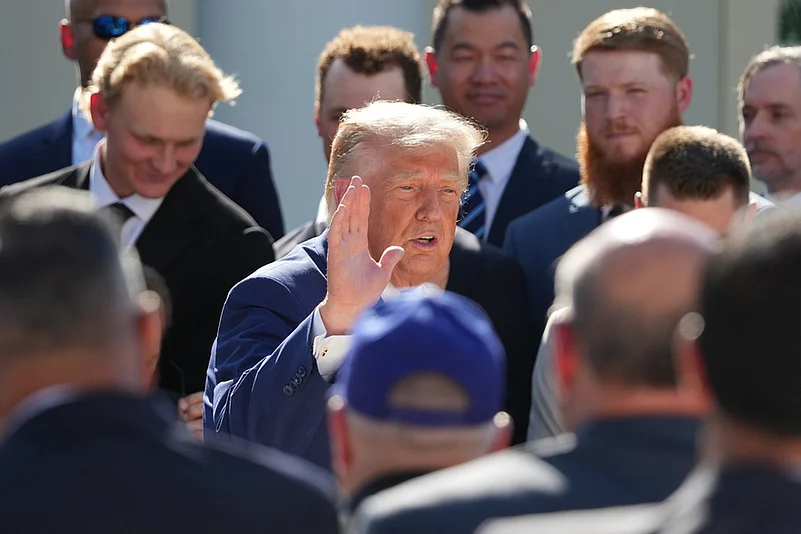
US President Donald Trump on Sunday said fresh negotiations with Iran will begin on Monday, claiming he had decided against launching planned military strikes after Gulf allies urged restraint and indicated that a deal with Tehran was within reach.
According to BBC, Trump has repeatedly said a negotiated end to the war is near, only for tit-for-tat strikes to resume. While Trump said talks would begin on Monday afternoon, Iran has denied that any direct meeting has been scheduled, leaving uncertainty over how the proposed negotiations will proceed.
Trump says Gulf leaders’ input weighed heavily in decision to hold off on ordering new Iran strikes
Speaking to reporters aboard Air Force One, Trump said the United States had been preparing for military action but was now pursuing negotiations instead.
"They knew the extent of the attack because they saw it forming," he said. "We're talking to them in the form of a negotiation. It begins tomorrow afternoon."
Earlier on Sunday, Trump wrote on Truth Social that Iran and US allies in the Middle East had asked him to "hold off" on any attack because the "perimeters" of a deal had been agreed.

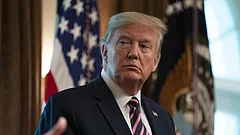

Iran's foreign ministry, however, said there were no plans to receive a US delegation or send Iranians to Washington. Earlier talks have been facilitated through mediators. The US president has repeatedly said a negotiated end to the war is near, only for tit-for-tat strikes to resume, BBC reported.
Asked aboard Air Force One whether he had set a deadline for reaching an agreement with Tehran, Trump said: "We'll just see how it is. We're ready to go anytime we want... I'm not looking to kill people."
The US president also said Saudi Arabia's Crown Prince Mohammed Bin Salman, along with US partners including the United Arab Emirates and Qatar, had urged him not to proceed with strikes over the weekend.
"We were all set to go," Trump said. "The reason they asked is [that] they think there's a deal," he said. "There's a deal on Hormuz, and there will be a deal on the nuclear."
Oil prices fell during Asian trading on Monday after Trump's announcement. Brent crude declined 4.5% to $83.98 (£62.26), while US-traded crude dropped 4.6% to $80.74 (£59.85).
According to BBC, energy prices have fluctuated since the conflict began on 28 February as traders responded to disruptions to shipping through the Strait of Hormuz. Around 20% of the world's crude oil and liquefied natural gas (LNG) normally passes through the waterway.
Iran's semi-official Mehr news agency denied that Tehran had asked the US to hold off on further military action, saying Trump's claims were "nothing but a new lie".
On Sunday, Iranian Foreign Minister Abbas Araghchi said negotiations with Oman on a deal concerning the Strait of Hormuz were "on track for finalisation", according to Iranian media.
Trump has not yet said where Monday's talks will take place or who the potential attendees will be.
Speaking aboard Air Force One, Trump said the planned operation would have been "the biggest attack since World War II" and said it could have derailed prospects of a negotiated end to the months-long war.
He declined to answer whether the planned strikes would have targeted Iran's energy infrastructure, which international law experts have said could constitute a war crime.
Iran's acting Defence Minister Majid Ibn al-Reza earlier said Tehran viewed every threat from its adversaries as "real and credible", even if it formed part of psychological warfare.
"We will neither be caught off guard nor remain passive," he added.
BBC reported that Trump has previously issued warnings to Tehran before later insisting that diplomacy was being given a chance.
In a Truth Social post on Saturday, he said the United States was "locked and loaded and ready to go against the Islamic Republic of Iran, at levels of Military Terror, Strength, and Power not seen since World War II".
He added that cancelling the attack would be "for the future benefit of the world and, likewise, the survival of a successful and prosperous Iran".
On 7 April, Trump warned that "a whole civilisation will die tonight" if Iran refused to engage in peace talks. At the time, he also threatened to destroy civilian infrastructure and power plants.
That threat resulted in historic face-to-face talks in Pakistan led by Vice-President JD Vance. However, the negotiations did not produce a deal.
The Trump administration has also largely dismissed polling showing the war and its economic impact are broadly unpopular with Americans, including many Republicans.
Those polls have prompted concern among some conservative strategists ahead of the November midterm elections.