As artificial intelligence transforms creative industries, questions around originality, cultural identity, and the future role of designers have become more relevant than ever. Ishita Aggarwal, a New York-based Brand Designer at Flowcode and mentor with the AIGA New York Applied Mentorship Program, believes the next generation of designers will be defined not by their ability to execute, but by their ability to think strategically, develop distinct perspectives, and connect creativity with business impact.
The creative industry is undergoing one of its most significant shifts in decades. As artificial intelligence becomes increasingly capable of generating layouts, illustrations, copy, and even brand identities, many are questioning what role human designers will play in the years ahead.
For Ishita Aggarwal, a New York-based Brand Designer at Flowcode, the answer lies not in competing with technology, but in evolving beyond execution.
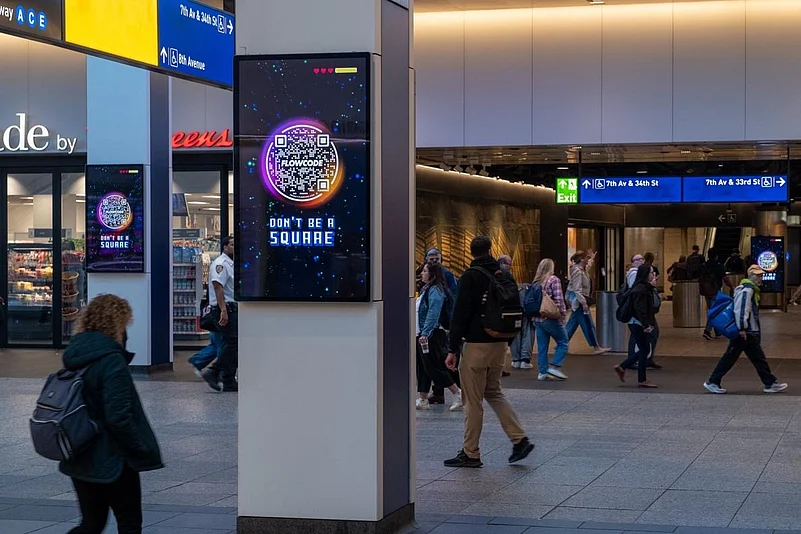
“AI is accelerating execution, but it can’t replace creativity,” she says. “We’re already seeing automation absorb many labour-intensive tasks, but once everything starts looking the same because the same tools are being used by everyone, the industry will inevitably course-correct.”
According to Aggarwal, the future belongs to designers who can think critically, make strategic decisions, and bring a distinct point of view to their work. “The role is evolving from maker to decision-maker,” she explains. “Designers who only execute will become less valuable. Designers who think strategically, culturally, and emotionally will become essential.”




That shift, she believes, will place greater importance on originality. While technology can generate countless variations, it cannot determine which idea is most meaningful for a brand or audience.
“Originality is a skill, not a gift,” she says. “You develop it by exploring, experimenting, being wrong, and staying curious long enough to discover your own perspective. The designers who stand out are the ones willing to pull on the thread that nobody else notices.”
Aggarwal sees this challenge play out regularly in her role as a mentor with the AIGA New York Applied Mentorship Program, where she works with emerging designers navigating an increasingly competitive landscape. Rather than encouraging them to simply perfect their craft, she pushes them to develop opinions and challenge assumptions.
“The hardest part for young designers is sharing a point of view before they feel completely ready,” she says. “But there’s no harm in being wrong early. The people who develop strong voices fastest are usually the ones who stop waiting for certainty and start participating in the conversation.”
At the same time, she believes the design world is experiencing a fascinating contradiction. On one hand, globalisation and technology have led to a degree of visual homogenisation. Similar design tools, typography choices, colour palettes, and aesthetics are appearing everywhere.
Yet on the other hand, brands are increasingly searching for ways to stand apart.
“Many companies are turning back to local traditions, regional visual histories, and cultural storytelling because audiences can immediately sense the difference between something authentic and something generic,” she says.
This renewed appreciation for cultural specificity is something Aggarwal welcomes. Having worked across both India and the United States, she has seen firsthand how cultural understanding can transform the effectiveness of a design solution.

“The principles of great design are universal,” she explains. “Clarity, resonance, and emotional connection matter everywhere. But how those principles are expressed depends entirely on cultural context.”
For her, designing across markets begins with curiosity rather than assumptions. “Research tells you facts, but it doesn’t tell you how something feels,” she says. “You have to talk to people, understand what matters to them, and learn how they see the world. Otherwise, even the most technically correct design can feel slightly off.”
Beyond culture, Aggarwal also sees storytelling as becoming increasingly important in a business environment dominated by performance metrics and data.
“Data tells you what is happening. Storytelling tells you why it matters,” she says. “The two are not in opposition. Data is often the starting point for great storytelling because it helps you understand who you’re speaking to and what needs to change in how they think or feel.”
This philosophy reflects her broader belief that design and business are becoming more deeply integrated than ever before. Working within a high-growth technology company has reinforced the importance of understanding commercial outcomes alongside creative expression.
“Designers need to be able to explain not just why something looks the way it does, but what it’s designed to make people feel, do, and ultimately convert into,” she says. “Creativity is important, but so is understanding how that creativity contributes to business goals.”
As the industry continues to evolve, Aggarwal remains optimistic about the opportunities ahead — particularly for young Indian designers seeking global careers.
“We’re often taught to assimilate and not stand out,” she says. “But today, companies are actively looking for diverse perspectives and distinctive voices.”
Her advice is straightforward: build strong technical foundations, learn the language of business, defend creative decisions with conviction, and embrace cultural identity rather than dilute it.
“More than ever, we need our voices to be heard,” she says. “The most valuable thing you can bring to the global stage is a perspective that only you can offer.”
In a world where technology is making creative execution increasingly accessible, that perspective may ultimately become the most powerful differentiator of all.