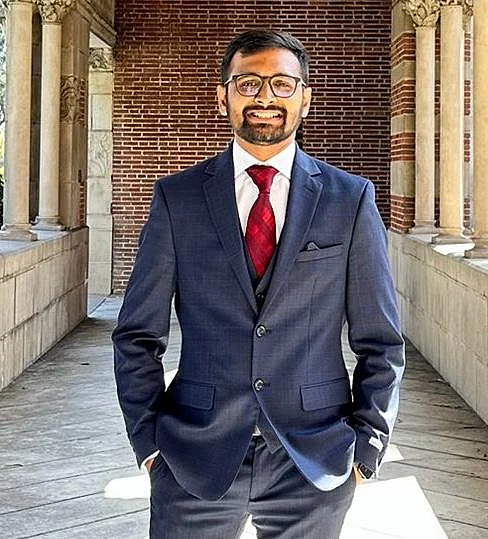
In a world where water security is not only industrial advancement but civic well-being, there are few who have married technical brilliance with humanity's purpose as harmoniously as Bhavik Shah. In a world plagued by pollution, drought, and regulation overload, his agenda is more than engineering brilliance — it is innovation grounded in conscience. Others' complex equations are the promise of sustainability and the prudent sense of responsibility for Shah.
His journey started not with big dreams, but with a single, unrelenting question: How can technology bring balance to something as essential as water? That question became a life's work — designing systems that go beyond complying with regulations, systems that mend ecosystems and safeguard communities. From optimizing treatment processes for sophisticated processes to leading innovations for radiological contamination, Bhavik's career has set the standard by which engineering responds to the world's most pressing environmental demands.
One of his landmark innovations — the design of a high-capacity, 800-gallon-per-minute reverse osmosis system — showcases both his precision and perspective. Balancing hydraulic modeling, energy efficiency, and strict regulatory compliance, Shah led a project that achieved remarkable cost-effectiveness while maintaining exceptional water quality. “Engineering, to me, has always been a conversation between what’s possible and what’s responsible,” he reflects. “When you build something that purifies water, you’re not just creating infrastructure — you’re safeguarding futures.”
His approach has always been technically grounded yet human in philosophy. In another pioneering effort, Shah led a pilot-scale project on uranium removal using ion exchange resin — a relatively uncharted application at the time. He didn't just rely on vendor data; he designed and carried out field experiments to get performance data directly. The outcome was a validated, scalable method that opened new possibilities for safe treatment of radiological contaminants. Colleagues recall his insistence on “proof through performance” — a mindset that elevated both the credibility and capability of his team. As one industry peer remarked, “Bhavik doesn’t chase innovation for applause; he chases it because people depend on clean water, and that’s reason enough.”



His work is defined by integration — of science and ethics, of design and regulation, of theory and practice. Where traditional approaches maintain design, procurement, and compliance in distinct silos, Bhavik combines them into a single process. His integrated project delivery approach has become the gold standard for effective water system implementation, reducing delays, maximizing budgets, and synchronizing engineering goals with regulatory requirements. His method isn't simply a technical advancement — it's cultural, redefining the way engineering teams work under conditions of the real world.
However, Bhavik's influence reaches far beyond blueprints and pipelines. He has ushered in updated spill-prevention and hazardous waste management procedures that have been implemented throughout industrial facilities, significantly enhancing environmental safety measures. His compliance strategy work has helped projects secure vital regulatory permits, allowing for smooth operations and public confidence. Even in research and academic collaborations, he has made a significant contribution — backing research on wastewater-based epidemiology and microplastic degradation. His analysis and data have shaped scientific knowledge of how wastewater serves as an early warning for public health hazards.
What truly distinguishes Shah is not just his technical literacy, but his emotional clarity. “When you work with something as elemental as water,” he says, “you realize that precision isn’t enough. You need empathy for the systems and the people that rely on them. Every design decision, every test result — it all comes down to human lives downstream.”
Those who have worked with him describe him as quietly relentless — someone who doesn’t just meet expectations but quietly redefines them. His colleagues often speak of his “rare balance of precision and patience,” his ability to translate complex science into tangible action, and his leadership through mentorship rather than command. “Bhavik has this way of making you care about the invisible parts of the system,” recalls a former project collaborator. “He reminds us that behind every pipeline there’s a purpose, behind every equation there’s a community.”
Today, Bhavik’s influence has reached well beyond his projects. His integrated engineering models are being studied and replicated across firms seeking to modernize their approach to sustainable infrastructure. His pilot testing frameworks have become reference points for emerging contaminant research. Even his practical insights from pharmaceutical wastewater management are now informing municipal systems design — a rare example of industrial lessons improving public infrastructure.
But perhaps the most enduring element of his legacy lies in his outlook. “Technology is powerful,” he often says, “but its real power lies in empathy — in designing with foresight, not just function.” This belief underscores every line he draws and every equation he balances. For him, engineering is less about machinery and more about meaning — a human craft that can build resilience into the very systems that sustain life.
As the world grapples with increasing issues of water quality, availability, and ecological deterioration, Bhavik Shah remains at the edge — not as an authority figure, but as a figure of responsibility. His work redefines what it takes to be an engineer today: accurate of mind, empathetic of intent, and unshakeable in the quest for solutions that transcend their authors. With science, compassion, and the quiet faith that progress must benefit human beings, he is constructing more than systems — he is constructing a future where water, and life itself, can flourish.