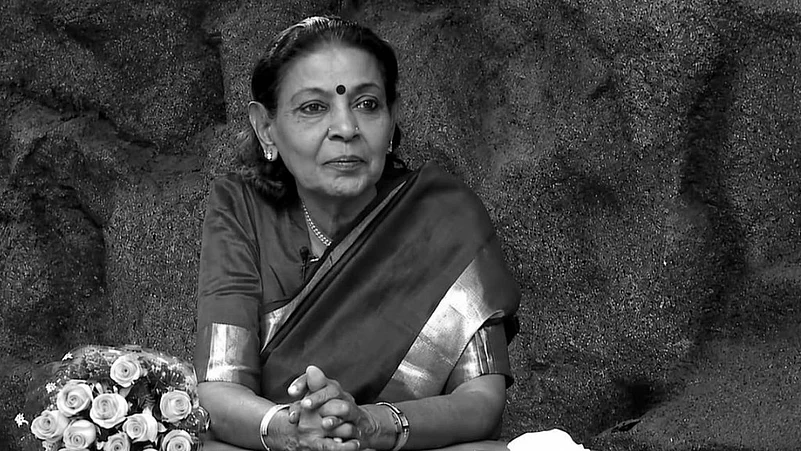
Jamuna Rani recorded thousands of songs across Tamil, Telugu and Sinhalese cinema.
The legendary playback singer remained one of South India's defining voices for over three decades.
Songs from Deivapiravi, Pasamalar and Nayakan continue inspiring generations of music lovers.
Jamuna Rani, was one of the defining voices of South Indian cinema's golden era, has died at the age of 88 in Bengaluru. The veteran playback singer, whose career stretched across more than three decades, became a familiar voice in Tamil, Telugu and Sinhalese films through thousands of recordings. Celebrated for her expressive singing, folk-inspired style and remarkable versatility, Jamuna Rani remained one of the most distinctive playback artists of the 1950s and 1960s, with many of her songs continuing to find new listeners decades later.
Jamuna Rani's unforgettable contribution to South Indian cinema
Jamuna Rani built an extraordinary career by lending her voice to some of the biggest stars of her era. She became closely associated with actors Lalitha and Padmini of the Travancore Sisters and performed memorable duets with leading playback singers, including TM Soundararajan, JP Chandrababu and PB Srinivas.
Among her most enduring songs are Kaalai Vayasu Kattana Manasu from Deivapiravi, Paattondru Ketten, Paravasam Aanen from Pasamalar, Kungumapoove Konjum Purave, Mama Mama Mama and Aathimanithan Kathalukkupin. Her expressive voice and effortless command over folk rhythms helped define an era of South Indian film music.


A musical legacy that continued across generations
Jamuna Rani joined Modern Theatres during the peak of her career, further expanding her repertoire across multiple languages. Although younger playback singers eventually came to dominate the industry, her influence remained unmistakable.
Composer Ilaiyaraaja later reintroduced her voice to younger audiences by inviting her to sing Naan Sirithal Deepavali alongside MS Rajeswari for Kamal Haasan's Nayakan. Many music enthusiasts have also noted that traces of her expressive vocal style can be heard in later singers such as LR Eswari.
Jamuna Rani continued recording into the 1980s before gradually stepping away from playback singing. Her passing marks the end of a remarkable chapter in Indian cinema, but the songs she left behind remain an enduring part of South India's rich musical heritage.