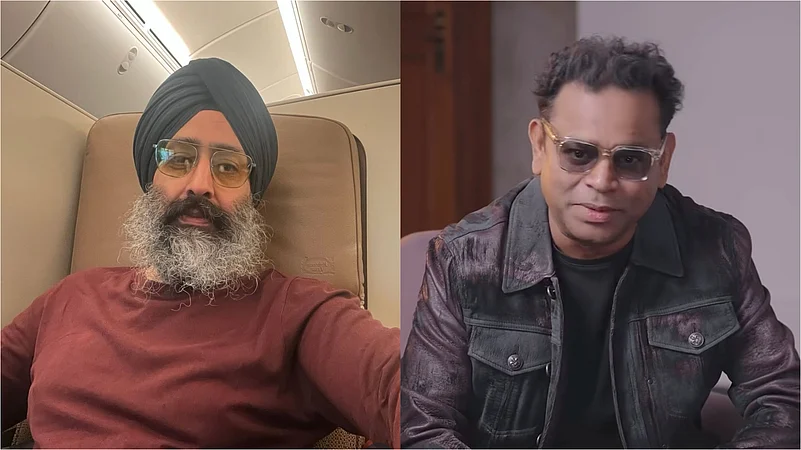
Singer Rabbi Shergill agreed with AR Rahman regarding communal bias in the Indian entertainment industry.
Shergill also opened up about the rise of propaganda cinema in India.
He cited high-grossing films like The Kashmir Files and The Kerala Story as examples of politically biased cinema.
Singer-songwriter Rabbi Shergill has agreed with the views of music composer AR Rahman on communal bias in the Indian entertainment industry.
The singer clarified he does not live in Mumbai and avoids daily interactions with the Hindi music industry. Shergill also connected Rahman's remarks to a broader transformation in political ideologies and movie funding.
Rabbi Shergill defends AR Rahman's communal bias remark
In an interview on The Life Savers Show, Shergill supported Rahman, saying the issue is impossible to ignore in the current climate.
"I don’t know in what context he said, but how can you deny that right now? How can you deny the communal angle?" said the Bullah Ki Jaana singer.
Shergill said a large amount of film financing supports what many term propaganda cinema. "I can’t specifically say it’s there in the music industry because I don’t live in Mumbai or interact with those people daily. But a lot of film financing has gone into what many would call propaganda cinema," he said.



He cited examples of The Kashmir Files and The Kerala Story as prime examples of this trend.
"These are political films, and they don’t necessarily present an unbiased view of things. So if Rahman is saying this, I think you have to take him at his word. It probably does exist, and that’s one of the biggest problems of our times. It’s not just India; it’s happening across the world," Shergill said.
Major shifts in ideology
"If you look back to the 1960s, left-leaning politics was influential across much of the world. Today, if you look around, you see right-wing governments and ideologies becoming more dominant in many countries. Maybe it’s cyclical and things will change again, but right now nobody is immune to these global currents," the singer said.
Observing similar shifts across Asia, Shergill added, "Just look around our neighbourhood. Pakistan has changed dramatically over the decades. China is deeply ideological. Sri Lanka too has become increasingly driven by ideology. It’s difficult not to conclude that politics everywhere is moving in this direction."

Shergill expressed admiration for Rahman as a "creative genius" but also opened up about his only issue with the Grammy award-winner.
He feels that after Rahman came, "the lyrics in the Hindi film industry became secondary and if lyrics become secondary, that means expression becomes secondary; it means that somewhere your humanity and existence become secondary," adding that "it's not his fault because Hindi is not his language and he doesn’t understand it."
"The stuff that he does in Tamil music is really representative of him. It is another ball game, at least that’s what I hear," he said further.