Chidambaram's 2026 Malayalam drama delivers an emotionally powerful first half.
Farzana Palathingal and Adhisheshan anchor the film with remarkable performances.
Sushin Shyam's haunting score elevates an uneven but affecting coming-of-age story
There are films about survival that rely on spectacle and there are films that understand survival as something far quieter and more exhausting. It is not always about outrunning danger. Sometimes, it is about waking up every morning and inventing a new version of yourself just to make it through another day.
Chidambaram's Balan: The Boy belongs firmly in the second category. Following the global success of Manjummel Boys, the Malayalam filmmaker returns with a deeply personal story about identity, motherhood and the invisible scars left by a life spent running. The film, which had a market screening at the Marché du Film during the 2026 Cannes Film Festival, arrives with considerable expectations and an intriguing premise.
At its heart, Balan: The Boy is a story about a young boy searching for his missing mother. Yet beneath its mystery-driven surface lies something far more affecting: an exploration of what happens when survival becomes a way of life.
The film follows Balan, played as a child by Adhisheshan and later as a teenager by Muhammed Zinaan. He lives with his mother, portrayed with remarkable conviction by Farzana Palathingal. The pair move from place to place, changing names, inventing backstories and avoiding any sense of permanence. The reasons for their constant movement are gradually revealed, but it is clear from the beginning that they are fleeing more than just poverty. They are running from a past that refuses to let go.



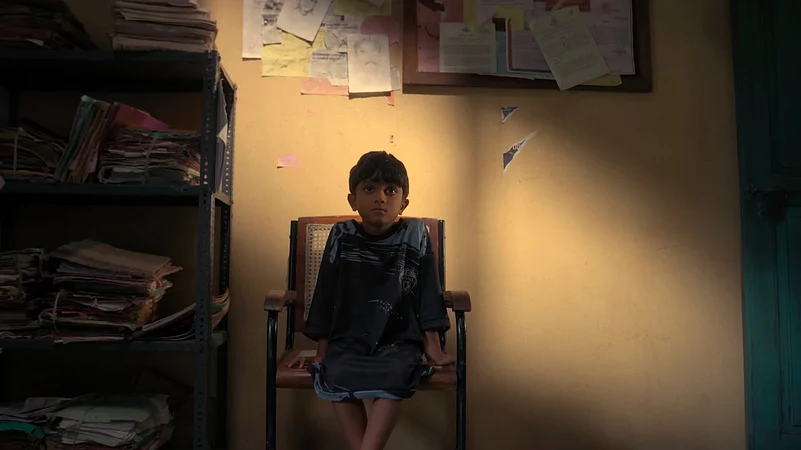
Their fragile existence takes a temporary turn when Balan's mother finds work caring for an elderly woman in an isolated hillside home. The arrival of this new environment brings a brief sense of stability, warmth and belonging. But the past eventually catches up with them, forcing a separation that shapes the rest of Balan's life.
The strongest aspect of Balan: The Boy is its first half. Chidambaram and writer Jithu Madhavan build tension through restraint rather than revelation. The film never rushes to explain itself. Instead, it allows small details, fleeting expressions and everyday interactions to gradually reveal the emotional reality of its characters.

Farzana Palathingal is extraordinary as Balan's mother. She plays the role as someone who has learned to manipulate situations not out of malice but out of necessity. Her character is fiercely protective, deeply flawed and constantly alert to danger. There is an unpredictability to her performance that keeps the audience invested.

Adhisheshan is equally impressive. Much of the film's emotional weight rests on his shoulders and he handles it with remarkable maturity. His scenes with Farzana feel authentic because they capture the complicated bond between a mother determined to protect her child and a boy who does not fully understand the cost of that protection.
Dolly June brings unexpected warmth to the role of the elderly woman under Balan's mother's care. Their relationship adds humour and tenderness to an otherwise sombre narrative.
Visually, the film is stunning. Shyju Khalid's cinematography creates a world that feels both beautiful and unsettling. The landscapes are breathtaking, yet they never offer comfort. Instead, they emphasise the characters' isolation. The framing often places Balan and his mother within vast spaces, reinforcing their sense of displacement.
Sushin Shyam's score deserves equal praise. The music lingers long after scenes end, adding an emotional texture that words cannot fully express. There is something deeply haunting about the way the score accompanies Balan's journey, particularly during moments of separation and longing.

Unfortunately, the film struggles to maintain this emotional clarity after its time jump.
When Balan returns as a young adult, the narrative shifts gears abruptly. The transition itself is effective, particularly through the recurring imagery of the bus stop, but the emotional continuity begins to weaken.
Muhammed Zinaan delivers a sincere performance as the older Balan, conveying the confusion and emptiness of a young man shaped by absence. However, the screenplay never allows the audience to connect with him in the same way they connected with the child version of the character.
The introduction of Abbas, played by Tovino Thomas, and the growing conflict involving police officer Pavithran, portrayed by Jean Paul Lal, significantly alter the film's tone. While Tovino brings warmth and dignity to his role, the relationship between Abbas and Balan lacks the emotional depth needed for its later developments to land effectively.
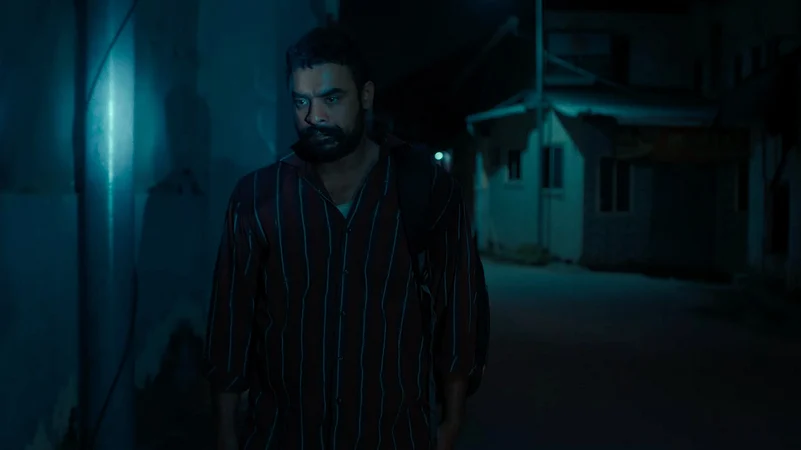
Jean Paul Lal is suitably menacing as Pavithran, a police officer driven as much by personal revenge as professional duty. Yet the character feels underdeveloped and the film never fully explores his motivations.
The second half increasingly prioritises plot mechanics over emotional truth. Relationships become less clearly defined, character decisions feel rushed and important developments arrive without sufficient build-up.

As a result, certain twists lose their impact.
There are moments when it becomes difficult to understand what the film wants to be. The psychological drama of the first half gradually gives way to a more conventional thriller structure. The shift is not seamless and the two halves often feel as though they belong to different films. Even the ending, while emotionally satisfying in parts, stretches credibility.
Yet despite these shortcomings, Balan: The Boy remains compelling because of its central relationship. The bond between mother and son gives the film its emotional foundation and Chidambaram never loses sight of that connection entirely.
This is a story about a child growing up without certainty, searching not only for answers but for a sense of belonging. Balan: The Boy may stumble in its second half, but its emotional sincerity, strong performances, and haunting atmosphere make it worth experiencing. It is an ambitious Malayalam drama that asks difficult questions about identity, memory, and the lengths people will go to in order to survive.

The film does not always have the answers. But it understands something essential: when survival becomes your entire life, the idea of home can begin to feel like a mystery in itself.