A major Karnataka project to divert surplus monsoon water from Western Ghats streams to supply drinking water to several drought-prone eastern districts
Faced with fierce opposition from environmentalists and downstream communities over forest destruction, biodiversity loss, and fears of river depletion
Execution has been delayed for over a decade, causing the initial project costs to nearly double due to design changes and land acquisition challenges
The Karnataka government's ambitious Yettinahole Integrated Drinking Water Project has remained one of the state's most debated infrastructure schemes for over a decade. Conceived to supply drinking water to the drought-prone districts of central Karnataka, the project has also triggered opposition from environmentalists, farmers and neighbouring Kerala over concerns about river diversion, ecological damage and rising costs. Although parts of the project are already operational, the full scheme is still under implementation.
What Exactly Is The Yettinahole Project?
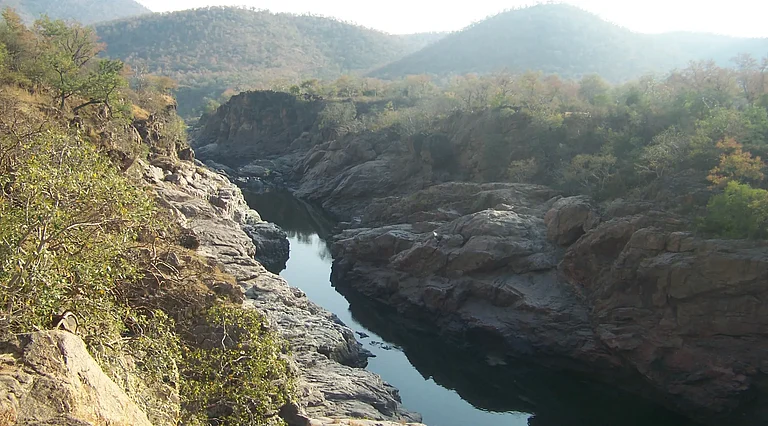
The Yettinahole Project aims to divert a portion of the west-flowing streams originating in the Western Ghats to the water-scarce districts of eastern Karnataka. Water is proposed to be lifted from streams feeding the Netravathi river basin near Yettinahole in Dakshina Kannada district and transported through a network of pipelines, reservoirs, pumping stations and canals.
Initially approved in 2014, the project was designed primarily as a drinking water scheme rather than an irrigation project. Karnataka has maintained that only surplus monsoon water will be diverted, ensuring that downstream river flows remain unaffected.


Which Districts Will Get Drinking Water?
The project is expected to benefit several drought-prone districts, including Kolar, Chikkaballapur, Bengaluru Rural, Tumakuru, Hassan and parts of Chitradurga. These regions have historically faced groundwater depletion, erratic rainfall and recurring drinking water shortages.
Officials estimate that millions of residents across thousands of villages and several towns will receive piped drinking water once the entire network becomes operational. Some completed phases have already begun supplying water to selected areas, while the remaining infrastructure is still under construction.
Why Was The Project Conceived In The First Place?
Large parts of eastern Karnataka depend heavily on groundwater, with many villages experiencing severe water scarcity during summer months. Successive governments argued that local water sources were insufficient to meet growing domestic demand.
The Yettinahole Project was conceived as a long-term solution to reduce dependence on depleting borewells and provide a reliable source of drinking water. The government has consistently maintained that ensuring safe drinking water is a priority and that the project is not intended for large-scale irrigation or commercial use.

Why Environmentalists Oppose The River Diversion
Environmental groups have questioned the government's assessment that surplus water is available for diversion. They argue that the Western Ghats is an ecologically sensitive region and that altering the natural flow of streams feeding the Netravathi river could affect biodiversity, groundwater recharge, agriculture and fisheries downstream.
Critics have also expressed concerns over forest land diversion, habitat fragmentation and the long-term impact of climate change on river flows. Farmers in coastal Karnataka and groups in neighbouring Kerala have repeatedly opposed the project, claiming it could reduce water availability in downstream areas.
Why Costs Have Nearly Doubled Over The Years
The project's estimated cost has risen substantially since its initial approval due to inflation, design revisions, land acquisition, compensation payments, additional engineering works and delays in execution.
Construction of pumping stations, balancing reservoirs, extensive pipelines and electricity infrastructure has also contributed to escalating expenditure. Multiple revisions to the implementation schedule have further increased the financial burden on the state.
When Will The Entire Project Be Completed?
The Karnataka government has stated that work is progressing in phases, with several components already commissioned. However, portions involving reservoirs, pumping systems and distribution pipelines remain incomplete.
Officials have indicated that the remaining works are expected to be completed over the next few years, subject to funding, land acquisition and environmental clearances. Until then, the Yettinahole Project is likely to remain both a crucial drinking water initiative and one of Karnataka's most closely watched environmental controversies.