BJP insiders say the issue evolved from an examination scandal into a crisis of public trust, making Dharmendra Pradhan's resignation politically unavoidable.
Party leaders feared sustained student protests and growing social media outrage could erode support among aspirational young voters and their families.
After initially ruling out any ministerial exit, the BJP accepted Pradhan's resignation to defuse the crisis, restore confidence in the examination system and regain control of the political narrative.
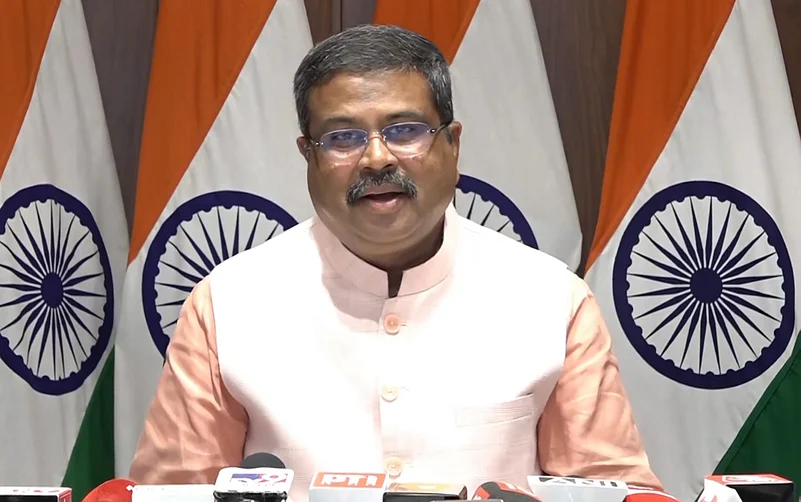
Giving in to weeks of nationwide agitation, Dharmendra Pradhan resigned as Union Education Minister on Saturday amid mounting pressure over the National Eligibility-cum-Entrance Test (Undergraduate) paper leak controversy. He said he would not allow “the youth of the country to get trapped in a vicious cycle of confusion” or let “anti-national forces take advantage of the situation”.
The Odisha-born Bharatiya Janata Party leader from Sambalpur had served as education minister since 2021 and retained the portfolio after the party’s victory in the 2024 Lok Sabha election. The controversy began after allegations of a paper leak in the NEET-UG 2026 examination, held on May 3. Investigators later found that a document circulated among students weeks before the test as a ‘guess paper’ contained numerous questions that closely matched those in the final examination. The National Testing Agency cancelled the exam on May 12, and the government referred the case to the Central Bureau of Investigation for a full investigation.
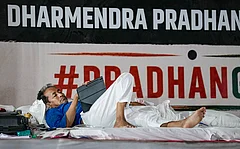


Inside the BJP, however, the political calculus had shifted rapidly. Senior functionaries admit that the pressure had mounted. The anger was no longer confined to students preparing for competitive examinations. It had begun spilling onto the streets, finding resonance across social media, and threatening to reshape the political narrative.
“The youth were simply not ready to listen anymore,” said a senior party source. “There was a flashpoint. The narrative was turning against the government. His resignation letter gives the answer. We could not let other forces take over the narrative. We know who all were mostly protesting.”
The timing of the protests couldn’t have been worse. Parliament was in session and the government was working to pass important legislations. There was a worry within the leadership that the rising tensions surrounding the examination scandal would take centre stage all through the session and disrupt its agenda. “During the first week of this session, no work was done. There is much that needs to be done in this session,” another source commented. “We could not allow the entire session to be washed out.”
The first priority of the party, according to insiders, was to quell the rising popular resentment before it transformed into Opposition to the government itself. Most importantly, there was a political reality that the leadership could not afford to ignore.
"Who are the people directly affected by the NEET examination leak?" asked a senior party functionary. “They are our own voters. Many of these families have supported the BJP. These are aspirational young people who believe in the system. If they begin to lose faith, it has consequences.”
Pradhan, who is reportedly known to be part of Union Home Minister Amit Shah’s core group, had served as Union Education Minister since 2021 and was reappointed after the party returned to power in the 2024 Lok Sabha elections. For much of his tenure, Pradhan was seen as one of the government's key doers and reformers, entrusted with steering the implementation of the National Education Policy (NEP), a long-standing ideological priority for both the BJP and the Rashtriya Swayamsevak Sangh (RSS).
Within the BJP, leaders insist that the government's response was driven not only by political compulsions but also by the need to preserve public confidence. “There is a reason we are not like some of our neighbouring countries,” a Sangh functionary said alluding to Bangladesh and Nepal. “We are a popular government. We have to listen when people have genuine grievances.”
Party sources argue that Pradhan accepted responsibility not because he had personally failed. They point out that Pradhan had accepted responsibility and worked to ensure all issues were taken care of. The investigation was transferred to the CBI, officials linked to the alleged irregularities were removed, those responsible were identified and arrested, and the ministry oversaw the successful conduct of a fresh examination for affected candidates.
“Administratively, there was little more that could have been done,” one party functionary said. “Every possible corrective measure was taken.”
Even so, several insiders acknowledge that the political challenge had grown larger than the administrative response. The issue had ceased to be merely about an examination leak. It had become a question of public trust, fuelled by widespread student protests and an increasingly hostile political narrative.
A senior party insider observed that the Education Ministry has historically been one of the most demanding portfolios in government because it deals directly with the aspirations of India's youth. “Show me one education minister who had an easy tenure,” he said. “Did Murli Manohar Joshi have a controversy-free term between 1998 and 2004? Arjun Singh also faced major agitations during his time. This ministry deals with the ambitions of millions of young people. Every decision affects future prospects.”
As protests spread across cities, the leadership became increasingly conscious of the public mood. “Emotions were rising,” another senior leader said. “When emotions are running high, politics changes quickly. We had to keep a watch on public sentiment. We could not allow the narrative to slip away from us.”
What makes Pradhan's resignation particularly significant is that it came after days of categorical denials from senior ministers and BJP leaders. Throughout the week, the party maintained that there would be no resignations. Leaders repeatedly argued that the BJP believed in ministers accepting moral responsibility while correcting mistakes rather than stepping down under pressure. “Resignation is not the solution,” one senior government functionary had insisted.
The NEET crisis in June was the latest in the making. In January, the government was forced to withdraw the “Promotion of Equity in Higher Institutions Regulations, 2026” after it was notified because it had caused a backlash from the upper-castes, who form the government’s core political base.
This was followed, again in May, by the launch of the CBSE Class XII On-Screen Marking (OSM) evaluation system, which was tainted by blurred answer scripts, mismatch of answer books, and the crash of the portal several times. Some of the students were said to have been allocated wrong answer books for marking, which led to their scoring of fewer marks. The company that had won the tender also faced similar allegations in Telangana earlier.
In 2024 too, Pradhan had faced flak over the National Eligibility-cum-Entrance Test (Undergraduate) 2024 results, and allegations of a paper leak. He had then explained that the leak affected only a limited number of students, and cancelling the exam would affect lakhs of students who cleared the examination rightfully.
Widely regarded as one of the party's tallest OBC leaders from Odisha, party insiders insist his resignation should not be read as a verdict on his overall performance. Instead, they describe it as a political decision taken to defuse mounting public anger, restore confidence in the examination system and prevent a prolonged confrontation with India's youth from overshadowing the government's wider agenda.
As the resentment continued to mount and the issue threatened to overshadow both Parliament and the agenda of the government, the resignation became the sign that the leaders knew the extent of the resentment.