Nilekani panel revives debate over unfinished NEET reforms and accountability gaps.
Radhakrishnan Committee proposed 101 measures to strengthen NTA's examination framework.
India's exam crisis highlights challenges of implementation, governance and institutional trust.
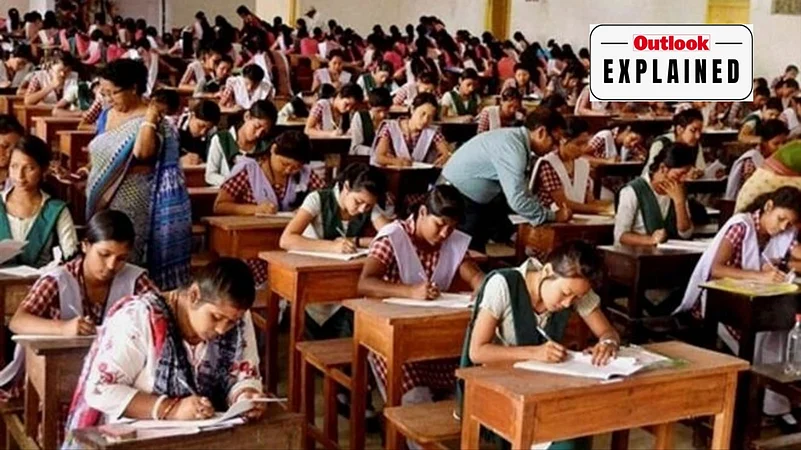
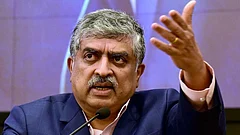
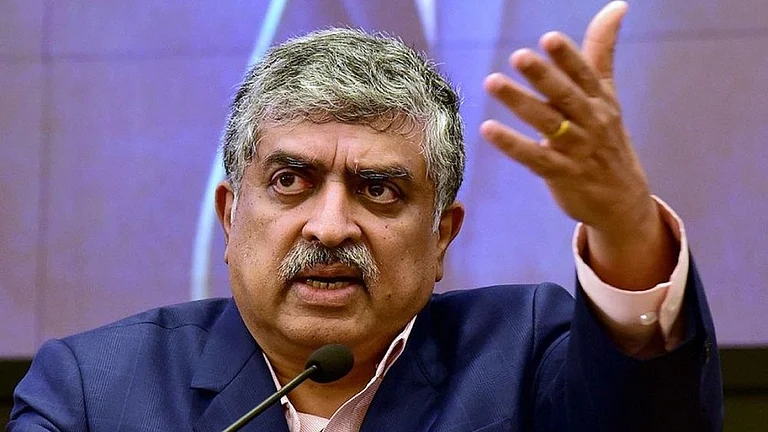
The Supreme Court on Monday heard petitions seeking changes to the conduct of the NEET examination following the 2026 paper leak controversy. During the hearing, the Centre informed the court that it had constituted a high-powered committee under entrepreneur and Infosys co-founder Nandan Nilekani to recommend the next phase of examination reforms.
On the same day, the government introduced the Public Examinations (Prevention of Unfair Means) Amendment Bill in the Lok Sabha to strengthen the anti-paper leak law and increase penalties for those involved.
The announcement has also renewed attention on an earlier reform blueprint, the K. Radhakrishnan Committee report. Constituted in 2024 after the NEET-UG paper leak controversy, the committee proposed 101 recommendations to overhaul the National Testing Agency (NTA).
The report, prepared under former ISRO chairman Dr K. Radhakrishnan, was based on extensive consultations, including more than 37,000 responses from students and parents. It envisioned transforming the NTA into "a nimble, zero-error, adaptive and integrative process".

Why Was The Committee Constituted?
The K. Radhakrishnan Committee was constituted in 2024 amid widespread concerns over the integrity of entrance examinations following the NEET-UG paper leak controversy. Initially, it was tasked with improving examination processes, strengthening data security and reviewing the National Testing Agency's (NTA) functioning. Following directions from the Supreme Court in Vanshika Yadav vs Union of India, its mandate expanded to include examination security, technological safeguards, governance, staff training and student welfare, as Indian Express reported.
The committee found that paper leaks were not isolated failures but symptoms of systemic weaknesses across the examination process- from question paper handling and candidate verification to examination centres and grievance redressal. It also concluded that the NTA's institutional capacity had not kept pace with the scale of its operations, recommending a comprehensive organisational overhaul.
The Blueprint For Reform
Among its principal recommendations was the introduction of Computer-assisted Secure Pen-and-Paper Testing (CPPT). Under this model, encrypted question papers would be transmitted digitally to secure servers at examination centres and printed shortly before the examination, eliminating the need to transport physical papers over long distances and reducing opportunities for leaks during transit.
The committee also proposed a digital authentication framework known as DIGI-EXAM, modelled on Digi Yatra. The system envisaged continuous verification of candidates through Aadhaar, biometrics and artificial intelligence-based analytics across the application, examination and admission stages, replacing one-time identity verification on the day of the examination.
Institutionally, the report argued that technology alone would not resolve the NTA's shortcomings. It recommended reducing dependence on outsourced agencies, restructuring the governing body into an empowered apex institution headed by a Director General, and creating dedicated verticals for information security, vigilance, research, testing infrastructure and forensic functions.
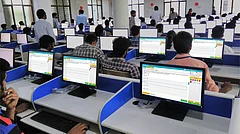
To strengthen examination infrastructure, the committee proposed establishing at least 1,000 secure testing centres in government institutions across the country, alongside mobile examination centres for remote regions. It also recommended moving towards multi-session examinations, exploring multi-stage testing for NEET-UG, and, over time, adopting Computer Adaptive Testing.
Alongside technological and administrative reforms, the report advocated greater emphasis on student welfare through dedicated mental health services, AI-enabled grievance redressal and greater oversight of coaching institutes.
Recognising that reform reports frequently remain unimplemented, the committee proposed creating a high-powered steering committee under the Ministry of Education to supervise implementation in a time-bound manner and regularly monitor progress.
Why A New Committee Now?
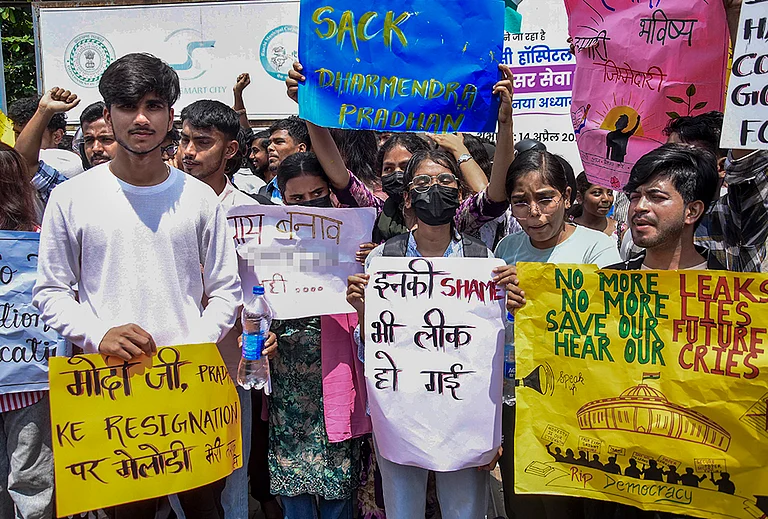
On July 25, 2026, Education Minister Dharmendra Pradhan resigned following weeks of protests over the 2026 NEET paper leak. The following day, Prime Minister Narendra Modi announced a six-member high-powered task force chaired by Nandan Nilekani to recommend the next phase of examination reforms and future-proof the NTA.
The composition of the panel reflects an emphasis on technology, institutional security and operational governance. Nilekani brings experience from leading Aadhaar, India's biometric identity programme, with expertise in designing secure digital infrastructure and implementing large-scale public technology systems.
Former ISRO chairman S. Somanath contributes experience in managing highly secure, technically complex national operations. Former Intelligence Bureau director Tapan Deka brings expertise in organised networks and operational security, reflecting concerns that examination leaks are facilitated by coordinated criminal enterprises rather than isolated acts.
Senior IAS officer Amrit Lal Meena contributes experience in logistics and public administration, while former Education Secretary Anita Karwal offers institutional knowledge of education governance and implementation. IIT Madras Director V. Kamakoti provides technical expertise in secure digital systems and scalable examination technologies.
The formation of the new committee has also prompted questions over the implementation of the Radhakrishnan Committee's recommendations. Congress leader Jairam Ramesh has argued that the earlier committee had already produced a comprehensive reform blueprint comprising 101 recommendations, which the Centre had informed the Supreme Court would be implemented.
The renewed focus on examination reforms therefore raises a broader question, whether India's recurring examination crisIs stem from the absence of policy, or from the failure to implement reforms already proposed.

The Structural Challenge
The Radhakrishnan Committee acknowledged that examination reform extends beyond technology.
Scholars such as Mark Bovens have argued that accountability weakens when responsibility is dispersed across multiple institutions—a challenge reflected in India's examination ecosystem. Economist Mancur Olson observed that corruption persists when benefits are concentrated but costs are widely shared, while sociologist Pierre Bourdieu viewed educational credentials as gateways to social mobility, raising the stakes of competitive exams.
International experience suggests that secure technology must be matched by institutional capacity, accountability and diversified assessment systems if public trust is to be restored.
The Lok Sabha was adjourned till 2 pm on Monday, delaying the discussion on the government’s proposed anti-paper leak legislation. The Bill seeks stricter punishment for examination fraud, including imprisonment of up to 10 years and fines of up to ₹10 crore. It is being introduced amid the continuing fallout from the NEET examination controversy and demands for stronger safeguards against paper leaks. Speaker Om Birla urged members to allow discussion and dialogue, saying Parliament should send a positive message that different views can be expressed through debate.