Nandan Nilekani, Aadhaar architect and Infosys co-founder, appointed to lead India’s examination reform efforts.
His technology expertise and digital infrastructure experience will guide reforms after NTA credibility concerns.
Government task force aims to make competitive examinations more transparent, secure and technology-enabled.
Nandan Nilekani, who served as the founding chairman of the Unique Identification Authority of India (UIDAI) under the Congress-led United Progressive Alliance (UPA) government, has now been entrusted by the BJP-led Centre with leading efforts to reform the country's examination system.
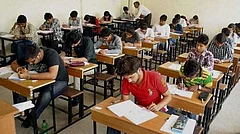
His appointment comes at a time when the government is seeking to restore public confidence in competitive examinations following the National Testing Agency (NTA) controversy.
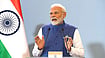
Prime Minister Narendra Modi has indicated that technology will be central to the proposed reforms, with the task force expected to recommend measures to make examinations more transparent, credible and technology-enabled.

From Infosys To Aadhaar
One of India's best-known technology leaders, Nandan Nilekani is the co-founder of Infosys and the founding chairman of UIDAI, the statutory body that implemented Aadhaar, the world's largest biometric identity programme.
Born in Bengaluru in 1955, Nilekani graduated in electrical engineering from the Indian Institute of Technology (IIT) Bombay before joining Patni Computer Systems, where he met N.R. Narayana Murthy.


In 1981, the two, along with five others, founded Infosys, which went on to become one of India's largest information technology services companies and a global technology firm. Nilekani served as the company's Chief Executive Officer between 2002 and 2007 before becoming its Co-Chairman.
In 2009, he left Infosys after being appointed the founding chairman of UIDAI by the then UPA government.
He oversaw the rollout of Aadhaar, India's biometric identity programme aimed at providing every resident with a unique identity number. Over the years, Aadhaar became the backbone of several government welfare schemes, digital payments, banking, taxation and identity verification services.
His work on digital public infrastructure has earned recognition in India and internationally.
Nilekani returned to Infosys in 2017 as its Non-Executive Chairman, helping steer the company through a period of leadership transition and corporate governance challenges.

Why The Government Chose Him
Nilekani's relevance to the examination crisis lies in the technological dimension of the challenge. The shortcomings exposed at the National Testing Agency have been linked to the handling of question papers through systems with insufficient encryption, inadequate access controls and limited audit trails.
His experience in delivering one of India's largest technology projects has placed him at the centre of the government's reform plans. Aadhaar, conceived during the Manmohan Singh government, enrolled more than a billion Indians under his leadership at UIDAI between 2009 and 2014.
He also brings bipartisan acceptability. Having served under the Congress-led government and now appointed by the BJP-led Centre, Nilekani occupies a position that is expected to withstand political scrutiny as the task force prepares its recommendations.
Although the government has not released the detailed terms of reference for the panel, the Prime Minister has said it will focus on making India's examination system more transparent, credible and technology-enabled. The task force is expected to examine technology-based measures while recommending broader reforms to strengthen the integrity of examinations.

Focus On Examination Reforms
The announcement comes as the Centre seeks to reinforce public confidence in competitive examinations.
Addressing the issue, Prime Minister Modi said those responsible for compromising students' futures had already been sent to jail and that the government was moving ahead with tougher legal provisions to deal with examination-related offences.
He also said Parliament would take up stronger legislative measures while emphasising that preventing future irregularities remained the government's priority.
"The report of this task force will help ensure the credibility of upcoming examinations at the earliest," the Prime Minister said.