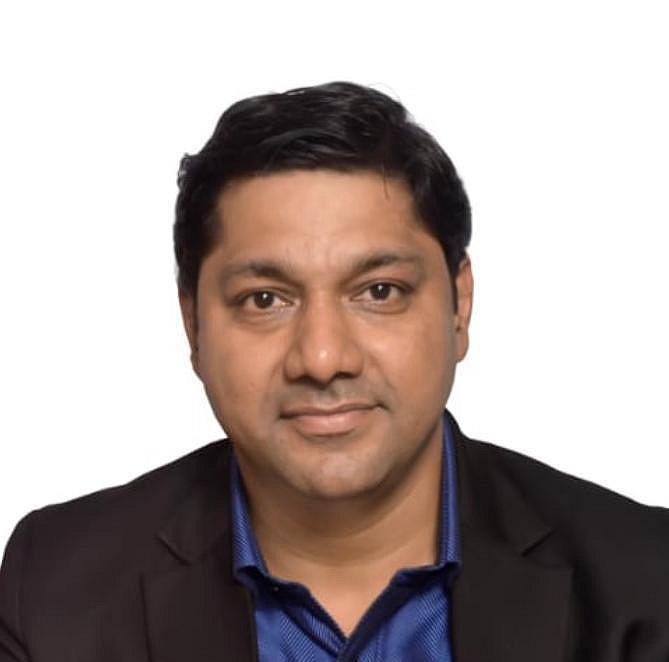
India’s insurance sector is undergoing a gradual but significant transformation. What was once viewed primarily as a safety mechanism is increasingly being discussed as a long-term financial planning and wealth preservation tool. Among the industry voices advocating this shift is Swapnil Hasbe, who believes the future of insurance lies in advisory-led financial planning rather than transactional policy selling.
As the Co-Founder and CEO of UrbaneTek Insurance Broking Pvt. Ltd., Hasbe has built the company around the idea that insurance should form an integral part of every investor’s portfolio. Under his leadership, UrbaneTek has positioned itself as an advisory-first insurance brokerage focused on financial security, retirement planning, and long-term wealth structuring.
In this conversation, Swapnil Hasbe shares his perspective on financial discipline, insurance awareness, women’s financial independence, and the evolving role of advisors in India’s growing insurance ecosystem.
1. What inspired you to establish UrbaneTek, and what gap did you identify in the insurance market?
When we looked at the industry, we realised most people associated insurance only with protection. If there is a medical emergency or an accident, insurance helps financially. That understanding is correct, but incomplete.
We believed insurance had the potential to play a much larger role in wealth creation and long-term financial planning. Certain insurance products offer guaranteed income structures for decades, including retirement-focused products that can create long-term financial certainty. Very few investors truly understand that aspect.


That is what led to the foundation of UrbaneTek. We wanted to bridge the gap between how insurance is perceived and what it can actually deliver financially over time.
2. How would you define your philosophy towards financial planning?
Our philosophy is centred around balance. Wealth creation should not come at the cost of financial security.
At UrbaneTek, we believe a strong portfolio should combine both growth-oriented and protected instruments. We generally advocate a balanced approach where a portion of investments remains protected while another portion participates in market-linked growth.
The objective is not to chase unrealistic returns. It is to create stable, inflation-beating growth while ensuring that the client’s core financial foundation remains secure.
Insurance products, in many ways, act as the stabilising element within a portfolio, similar to how people traditionally view gold.
3. Many people still see insurance only as protection. How do you address that perception?
We do not completely reject that perception because insurance is absolutely a protection tool. The issue is that most people stop the conversation there.
We encourage clients to think about diversification. If someone is investing across multiple asset classes, why would they not allocate a portion towards instruments that offer guaranteed protection and long-term certainty?
Once clients understand concepts like guaranteed income, tax efficiency, and disciplined long-term compounding, they begin to see insurance differently. It becomes part of a broader financial strategy rather than just a backup plan during emergencies.
4. How is an advisory-led insurance model different from a transactional approach?
The biggest difference is personalisation.
Transactional platforms focus primarily on speed and convenience. They help consumers compare premiums and purchase policies quickly. That works for simple purchases.
But financial planning is deeply personal. The right financial structure for a young professional will look completely different from that of someone approaching retirement.
An advisor understands the client’s life stage, responsibilities, goals, risk appetite, and long-term aspirations. That level of understanding cannot be replicated through a generic platform alone.
We also strongly believe advisory does not end after the sale. Ongoing support, portfolio reviews, claim assistance, and long-term relationship building are equally important.
5. How do you ensure objectivity while working with multiple insurance partners?
Objectivity has to be embedded into the organisation’s culture.
At UrbaneTek, we conduct multiple internal education sessions every week focused on wealth planning, portfolio structuring, and client suitability. Advisors are trained to think like long-term financial planners rather than policy sellers.
Our focus is always to understand the client first and recommend products later.
In the long run, trust-based advisory creates stronger relationships and more sustainable growth than commission-driven selling.
6. How do you view financial awareness among younger professionals today?
The reality is that most young professionals still postpone insurance and financial planning because they believe they have enough time.
What they often fail to realise is that starting early creates enormous long-term advantages. Health insurance becomes easier to maintain, premiums remain lower, and long-term investments benefit significantly from compounding.
Many people eventually regret delaying financial planning. That is why we focus heavily on financial education, especially for younger audiences.
The earlier someone understands these concepts, the stronger their financial future becomes.
7. You have spoken about financial independence for women. Why is this important?
Financial independence is closely connected to dignity, confidence, and personal freedom.
Whether someone is a working professional or a homemaker, having financial assets in their own name creates security and choices. It allows individuals to make decisions independently and confidently.
We strongly encourage women to actively participate in financial planning and wealth creation. Financial security should never be dependent entirely on someone else’s income.
For us, this is not simply a financial conversation. It is a long-term quality-of-life conversation.
8. What role do you think human advisors will play in an increasingly digital insurance ecosystem?
Technology has improved accessibility significantly, and that is a positive development for the industry.
However, human advisory becomes even more valuable when financial planning becomes complex. India has thousands of insurance products, and selecting the right combination requires understanding a person’s specific financial situation and long-term goals.
Technology can simplify transactions, but trust, context, and personalised guidance still require human involvement.
We see technology as an enabler for advisors, not a replacement for them.
9. What insights have you gained while expanding across different Indian markets?
Every city has a different financial culture.
Mumbai tends to move quickly when it comes to financial decisions. Ahmedabad is extremely disciplined and savings-oriented. Hyderabad has emerged as a highly receptive and financially aware market.
Despite these differences, the core aspiration remains the same everywhere. People want security, stability, and the freedom to live comfortably without financial stress.
That aspiration is universal across markets.
10. What is your long-term vision for UrbaneTek?
Our vision is to become one of the most trusted financial advisory brands in India.
We are not focused only on scale or visibility. We want to build long-term credibility by prioritising client outcomes and financial wellbeing.
At a broader level, we also want to contribute towards changing how insurance is perceived in India. Insurance should not only be associated with fear or emergencies. It should also represent financial freedom, security, and opportunity. We also envision insurance becoming a compulsory portfolio component for every individual as part of long-term financial planning and wealth security.