Software releases have become routine. Users expect banking applications to update without downtime, cloud platforms to roll out enhancements continuously, and AI systems to refresh models in production without breaking services. Yet behind this convenience lies a complex reality: modern software delivery has become one of the most sensitive points of operational risk.
Today’s enterprise applications are no longer shipped from a single controlled repository. They are assembled from open-source packages, container images, third-party components, automated build systems, and distributed infrastructure. In this environment, speed is not the only requirement-trust becomes the harder problem.
A single altered artifact, a compromised dependency, or an unverified deployment package can trigger widespread failures. Even worse, it can open the door to security exposure across environments. This is where Sai Raghavendra Varanasi has focused his innovation: building delivery systems that do not simply push changes into production, but can verify integrity, enforce authenticity, and block unsafe releases before damage begins.
Rather than relying on assumptions, manual sign-offs, or post-release firefighting, his approach reflects a new direction in enterprise reliability: pipelines that can prove what they are deploying and regulate themselves at scale.
The hidden risk inside modern release pipelines
For years, many organizations treated release processes as engineering logistics: compile, test, package, deploy. If automation worked and the pipeline passed, the release was assumed to be safe.
But software supply-chain risk has changed that foundation. In modern delivery ecosystems, dependencies can shift silently, artifacts can be altered between environments, container images can drift across versions, and packages can be manipulated as they move across stages. Even pipelines that look mature on paper can become fragile without a reliable mechanism to verify what is being promoted and whether it matches what was originally approved.




As software release velocity increases, the question is no longer only whether code passed tests. The more critical question becomes whether the pipeline can verify authenticity and prevent integrity compromise before production exposure occurs.
Engineering trust into the release lifecycle
One of Varanasi’s key technical contributions addresses this trust gap through a Germany-registered invention, with Sai Raghavendra Varanasi listed as a co-inventor, focused on secure deployment verification.
The framework introduces a release model in which software artifacts are cryptographically signed and supported by immutable verification records. Every promotion stage independently validates the artifact before it can move forward. If integrity checks fail, the system blocks deployment automatically, preventing unauthorized or compromised packages from reaching production.
This approach transforms the pipeline into a verification engine. Instead of trusting that artifacts are safe because they passed tests, the system establishes authenticity as a rule, strengthening security, compliance readiness, and operational stability without slowing delivery speed.
When trust becomes automatic, releases become safer
This approach has demonstrated practical value in performance-sensitive environments. A U.S.-based AI infrastructure company evaluated and adopted the framework and integrated it into deployment validation and workload scheduling workflows.
Following implementation, the organization reported improved release consistency across environments, fewer failed deployments caused by integrity-related issues, and stronger audit readiness supported by verifiable deployment logs. In high-stakes systems where availability and governance must coexist, this kind of automated trust layer reduces the gap between security expectations and delivery acceleration.
In addition to this patented method, Varanasi’s UK-registered design innovations extend a similar reliability vision into machine learning operations and multi-cloud execution, supporting stability in environments where continuous change is the norm.
Extending reliability into machine learning delivery
Modern reliability threats are not limited to application releases. AI systems introduce a different instability pattern: models drift as real-world data changes. Traditional monitoring often identifies risk only after degradation becomes visible through system behavior or production outcomes.
One of Varanasi’s UK-registered design innovations, with Sai Raghavendra Varanasi listed as a co-inventor, introduces a reliability-driven view of machine learning pipelines. The design embeds state awareness into pipeline stages, enabling early anomaly detection and supporting mitigation actions when operational thresholds are exceeded.
By integrating diagnostic intelligence into the pipeline itself, the workflow becomes less dependent on constant manual review and better equipped to preserve stability as models and datasets evolve over time.
Anticipating performance drift in multi-cloud execution
Enterprise workloads increasingly run across multi-cloud and hybrid environments. This introduces new reliability pressure, as performance conditions shift dynamically due to network variability, region-level congestion, infrastructure constraints, and distributed execution behavior.
A second UK-registered design innovation, also developed with Sai Raghavendra Varanasi listed as a co-inventor, introduces an adaptive orchestration approach that evaluates real-time conditions and anticipates degradation. Instead of reacting after latency increases, workloads can be repositioned proactively to prevent slowdowns before users experience disruption.
This predictive execution strategy improves consistency and reduces regional instability without requiring constant manual rebalancing across environments.
The future of delivery is verifiable and self-regulating
When delivery systems work well, users never notice them. Updates happen seamlessly, and services remain stable. But when pipelines fail, the consequences are immediate-broken releases, outages, rollback storms, and escalating operational risk.
That is why self-verifying delivery systems are becoming essential. As software delivery accelerates through automation and AI, the next generation of reliability will depend not only on speed, but on delivery mechanisms that can validate, protect, and adapt intelligently before failures surface.
Through integrity-proven artifacts, self-stabilizing ML pipelines, and predictive multi-cloud orchestration, Sai Raghavendra Varanasi’s work reflects a clear direction in modern enterprise engineering: building systems that move quickly without losing trust.
About Sai Raghavendra Varanasi
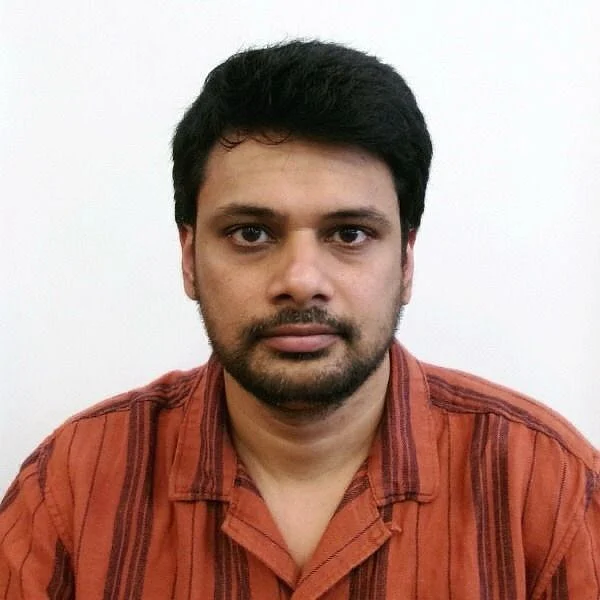
Sai Raghavendra Varanasi is a software change and release management professional with 14 years of experience driving structured, high-confidence delivery across enterprise platforms spanning on-premises, cloud, and hybrid environments. His work centers on building disciplined release execution models that minimize operational risk while enabling faster deployment velocity, particularly in complex cloud migration programs. By combining DevOps automation with AI-driven delivery intelligence, he has helped optimize unified build, test, and deployment workflows adaptable to large-scale hybrid infrastructures.
Varanasi’s delivery approach integrates automated validation, AI-enabled code and deployment analysis, and predictive risk assessment to improve release quality across both legacy and cloud-native application stacks. During migration initiatives, intelligent automation supports dependency mapping, environment replication, and end-to-end readiness validation reducing downtime while safeguarding stability and data integrity. He has also applied AIOps capabilities for automated incident detection, triage support, and faster root cause direction, while strengthening SRE practices through intelligent runbooks and self-healing release automation aligned with compliance and governance needs.
In addition to industry delivery, Varanasi contributes to the broader technology community through publishing and professional recognition. He has authored multiple research papers in modern software engineering and intelligent automation, serves as a Co-Editor with Taylor & Francis publications, and has been invited as a speaker at international forums including ICCTRDA. He is also an IEEE Senior Member, reflecting his standing within the global engineering community. His contributions support enterprises in achieving consistent delivery outcomes while reducing operational risk across hybrid and cloud platforms.