







The opening of Navi Mumbai International Airport (NMIA) was not marked by spectacle alone, but by intent, and that sentiment found resonance in the reflections shared by two of India’s most respected sporting icons, Sunil Chhetri and Suryakumar Yadav. While the inauguration itself drew attention for the scale and ambition of the project, what lingered in the aftermath were quieter observations about purpose, planning, and people. Rather than focusing on grandeur or visual flourish, both athletes chose to speak about what the moment represented—an inflection point shaped by patience, vision, and collective effort.
Taking to Instagram after the inauguration, Indian football legend Sunil Chhetri described the experience as being “part of something special,” highlighting both the sheer scale of the airport and the thoughtfulness behind its creation. His words focused less on the ceremony and more on the journey, acknowledging the effort, planning, and foresight that have gone into building NMIA over the years. For Chhetri, the airport was not just a new piece of infrastructure, but a symbol of what sustained intent and careful execution can achieve when aligned with a long-term national vision.
“I’d like to congratulate Gautam Adani on leading something that will stand the test of time,” Chhetri wrote, adding that what stood out most was the consistency of leadership and the choice to let the work speak for itself. His post reflected a quiet appreciation for long-term thinking over momentary applause, underscoring the value of patience in projects of national importance. The understated tone of his message mirrored the spirit of the launch itself—measured, grounded, and confident without being performative.
Cricketer Suryakumar Yadav echoed a similar sentiment, describing the opening day as “special, but in a very simple way.” For him, the defining feature of the NMIA inauguration was not excess, but balance. He observed how Maharashtra’s culture, people, and energy came together organically, creating an atmosphere that felt authentic rather than staged. The simplicity of the occasion, he suggested, allowed the essence of the place and its people to take center stage.


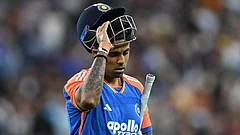
What left a lasting impression, Yadav noted, was the warmth and respect extended to everyone present, regardless of role or recognition. “It felt that everyone was treated with respect and warmth,” he shared, pointing to a celebration that consciously prioritised people, culture, the nation, warriors, and everyday contributors. His gratitude extended to Gautam Adani and Jeet Adani for allowing him to be part of a moment that, in his words, truly mattered—not because of visibility, but because of values.
Both posts underline a common thread: NMIA’s opening was not driven by noise or celebrity spotlight, but by principle. Athletes, veterans, workers, and contributors were brought together on equal footing, reinforcing the idea that national infrastructure is ultimately about the people it serves. The absence of hierarchy in how the moment was experienced spoke volumes about the intent behind the event.
By choosing to highlight inclusion, cultural grounding, and contribution over spectacle, the NMIA launch set itself apart from conventional inaugurations. As Chhetri and Yadav’s reflections suggest, the day wasn’t about individual prominence or personal milestones; it was about collective pride, shared ownership, and a sense of purpose that extended beyond the event itself.
In an era where launches often chase visibility and virality, NMIA’s beginning, as seen through the eyes of its attendees, chose meaning instead. The airport opened not just as a gateway for travel, but as a statement of how enduring institutions are built—with restraint, respect, and a clear focus on the future.
The above information does not belong to Outlook India and is not involved in the creation of this article.















