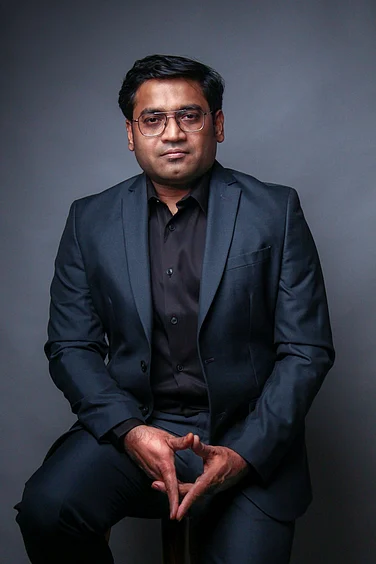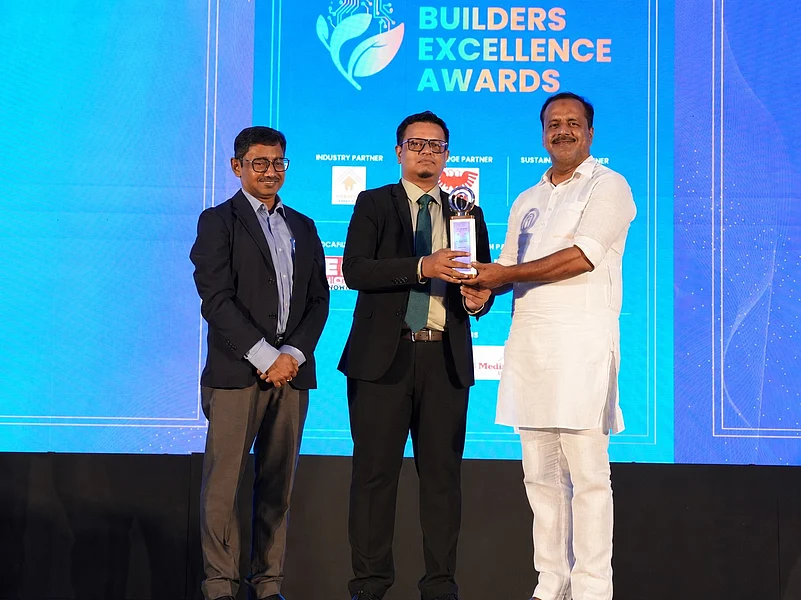
When the Outlook Business Spotlight Nation Builders Excellence Awards 2026 named its Entrepreneur of the Year in Medical Robotics, the honour went to Saurya Mishra, Founder and Chief Executive Officer of Articulus Surgical. The recognition marks a company that set itself an unusually pointed goal at its founding in 2021: to build world-class surgical robotics in India, for India. Mishra, who trained in manufacturing and robotics at IIT Kharagpur and grew up in a family of surgeons, brings an uncommon pairing of engineering depth and clinical familiarity to a field long shaped by imported systems.
Articulus Surgical was founded in 2021, and its purpose has stayed narrow and deliberate rather than sprawling. Where much of medical robotics has grown up around expensive platforms sold to a small number of elite institutions, the company has framed its work around a different question: how to make advanced surgical technology available beyond the wealthiest hospitals. Mishra describes healthcare as inseparable from the health of the nation, arguing that the gains from new technology should not be confined to a narrow band of patients and providers.
That thesis is rooted in the founder's own background. Raised in the small town of Cuttack, Odisha, in a family of surgeons, Mishra topped the state in Applied Electronics during his intermediate years at Ravenshaw University before training in manufacturing and robotics at IIT Kharagpur — a small-town grounding that, by his own account, shaped a conviction that world-class technology can and must be built in India, for India. The result is a clinical-first mindset — an approach in which engineering choices are measured against the realities of surgical practice rather than the other way round.
The path to Articulus ran through more than a decade in medical devices. Mishra began at Philips Healthcare in 2012, among the first fifty hires for the company's India R&D function, and spent seven years working across radiology platforms — diagnostic radiography systems, C-arms, cath labs, mammography machines, and CT scanners — deployed in over 130 countries, with stints representing Indian R&D in China, Germany and Italy. In 2019 he moved to Morphle Labs, a Y Combinator-backed robotic microscopy and digital pathology startup, as Director of R&D. In 2020, motivated by his family's surgical background, he left to travel across India, meeting surgeons and hospitals directly — a year on the road that convinced him surgical robotics, dominated globally by companies based outside India, needed a strong indigenous alternative built for Indian realities. Articulus followed in 2021.

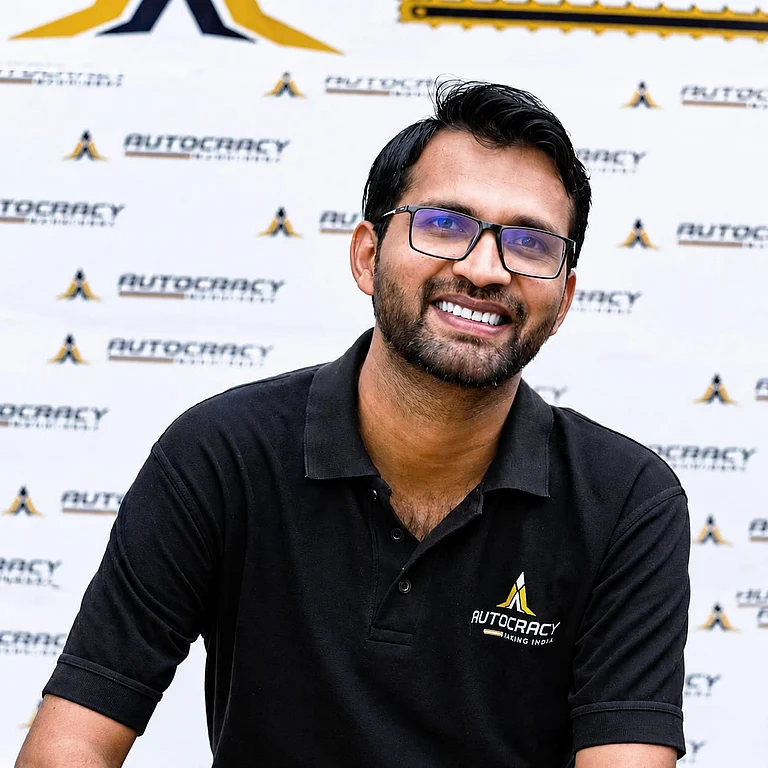
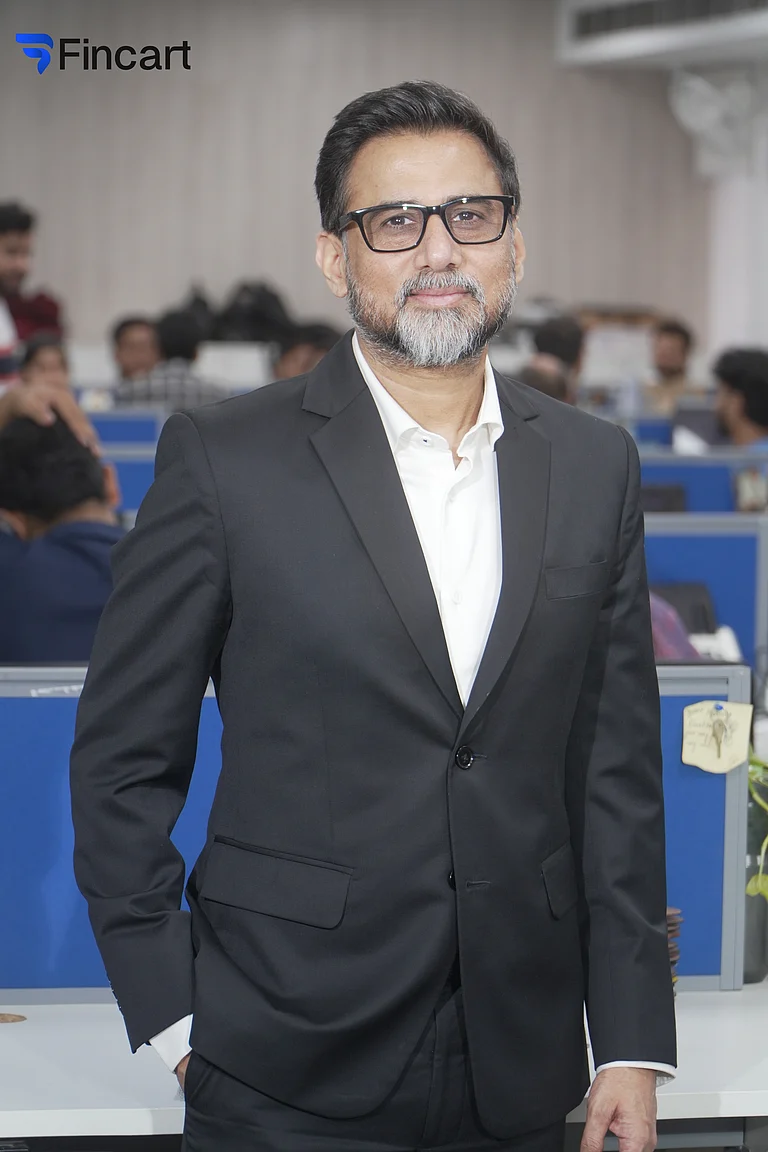

The company's ambition, as Mishra frames it, extends past its own products. Articulus positions surgical robotics as part of a larger effort to establish India as a serious force in manufacturing, medical devices and deep technology – treating the domestic development of complex systems as a national capability worth building, not merely a commercial opportunity.
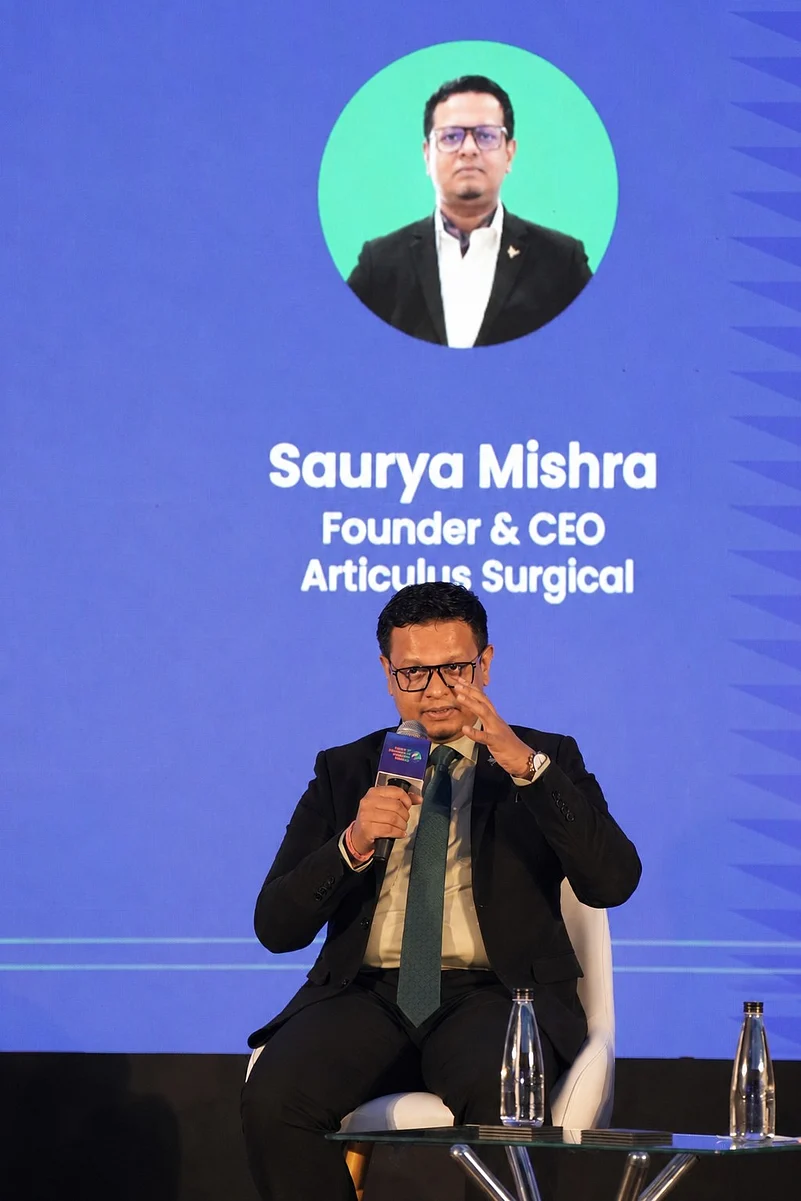

Asked what advice he would offer the next generation of entrepreneurs, Mishra's answer leaned on temperament rather than tactics. The counsel was to take on the hardest problems available rather than picking a direction by watching what others do. "Problems are only as hard as your own resilience," Mishra told the interviewer — a line that reads as much as a personal operating principle as it does as advice. The same conviction ran through the rest of the exchange: a belief that collective effort can crack problems usually treated as intractable, and a refusal to be deterred easily. "Never take no for an answer," Mishra said, adding a call to keep "striking while the iron is hot". It is a philosophy that favours difficulty over comfort and persistence over consensus, and it aligns closely with the decision to compete in a technically demanding field rather than an easier adjacent one.
The Outlook Business award places Mishra among a group of founders recognised for building enterprises with national significance, and the Medical Robotics category itself signals how far the field has moved into mainstream industrial attention. At the same event, Mishra took part in a panel discussion titled "The Leadership Mandate: Creating Impact in an Era of Constant Disruption", sharing a platform with figures drawn from academia, industry and entrepreneurship. The conversation turns on leadership, resilience, innovation and nation building — themes that map neatly onto the arguments Mishra makes about his own company. For a business built on the premise that such systems can be designed and built within India rather than sourced from abroad, that recognition carries a secondary weight: it lends visibility to a domestic-capability argument the founder has placed at the centre of the enterprise.
Looking ahead, Mishra frames the company's priorities around two linked commitments. The first is reach: ensuring the benefits of advanced technology "percolate across economic barriers" rather than settling with the top one or two percent of the population, in his words. The second is national capability — the aspiration for India to become a technology leader in manufacturing and deep tech and for Articulus to be counted as part of that shift. Asked how the organisation hopes to be remembered, Mishra returned to those same two ideas, suggesting they function less as messaging than as the standard against which the company measures itself.
Whether Articulus can convert that conviction into lasting scale remains, as with any young company, an open question. What the Outlook Business award recognises not a finished story but a clear one: a founder attempting to build a technically difficult product on home ground and insisting its value be judged by how widely it reaches. In a field where ambition is common, that particular framing is worth watching.