The Bihar Bandh on July 25 is the culmination of an escalating confrontation between student organisations and the Bihar government over the alleged NEET paper leak and the police crackdown on subsequent protests. What began as demonstrations seeking accountability over the alleged NEET paper leak has evolved into a statewide agitation, with student groups and Left organisations arguing that the issue now extends beyond examination integrity to the handling of democratic protests.
The shutdown, called by the All India Students' Association (AISA), follows several days of protests, police action and arrests in Bihar. As The Hindu reported, the agitation has spread across multiple districts, prompting heavy security deployment while drawing political backing from the Communist Party of India (Marxist-Leninist) [CPI(ML)] and other Left organisations. By framing the police response as a suppression of democratic rights rather than merely a law-and-order issue, the party broadened what began as a student-led campaign into a wider political challenge centred on policing, accountability and the government's response to public dissent.
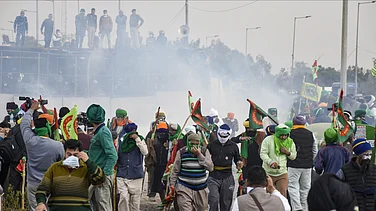
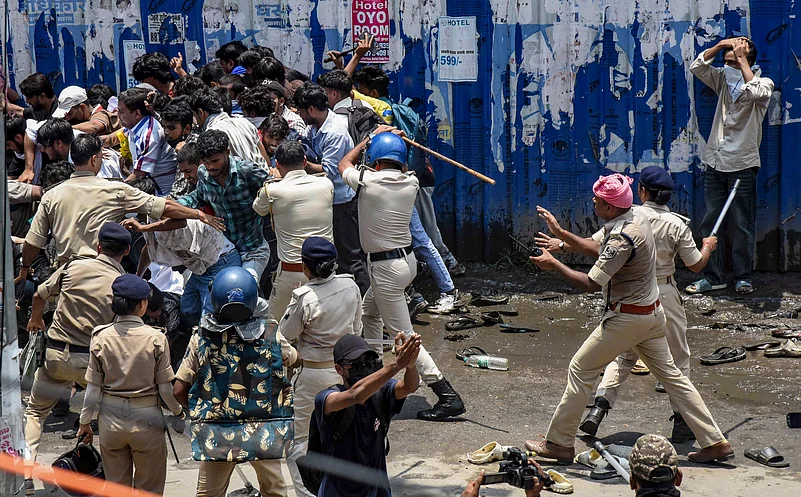
The immediate trigger for the bandh was the police action against students protesting over the alleged NEET paper leak in Patna on July 22. Demonstrators were also demanding the resignation of Union Education Minister Dharmendra Pradhan. The Hindu reported that clashes broke out after protesters attempted to march through the city, leading to lathi-charge, arrests and allegations by student organisations that the authorities had used excessive force. The confrontation was followed by demonstrations across the State.
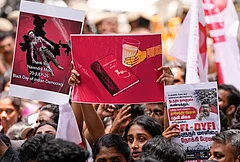
Rather than subsiding, the movement gathered momentum over the following days. Protest marches and dharnas were reported in Vaishali, Muzaffarpur, Khagaria, Darbhanga, Bettiah, Supaul, Jamui, Samastipur, Madhubani and Buxar, with demonstrators carrying banners, posters and placards demanding Mr. Pradhan's resignation. In Vaishali, protesters also burnt effigies of Prime Minister Narendra Modi and the Union minister.
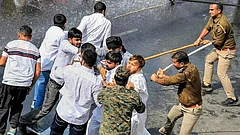
In Jehanabad, tensions escalated after protesters allegedly pelted stones at the District Magistrate's official residence, prompting police to open 20 to 30 rounds of fire to disperse the crowd, according to The Hindu. The district police later released photographs of more than 100 people, appealing to the public to help identify those accused of violence. Patna Police also published photographs of people allegedly involved in vandalising public property and assaulting police personnel, media workers and civilians during the July 22 protests.
AISA responded by calling for a statewide bandh on July 25. Extending its moral support, the CPI(ML) alleged that police action had been taken against student protesters in 18 districts and accused the government of responding with repression instead of addressing students' concerns. According to The Hindu, the party also claimed that AISA State Secretary Dipankar Mishra and State Vice-President Saba Afrin had been arrested in Patna and alleged that their whereabouts had not been disclosed. It further alleged that criminal cases had been filed against several student leaders and activists, including CPI(ML) MLC Shashi Yadav and MLA Sandeep Saurabh. Calling the police response a violation of democratic rights, the party appealed to students, parents and citizens to support the bandh while urging protesters to keep the movement peaceful and within the law.
The bandh has also been backed by the Revolutionary Youth Association (RYA) and other Left organisations. On Saturday, protesters blocked the Samastipur-Patna main road by burning tyres and raising slogans against the government. The protesters also demanded the resignation of the Union education minister. At JP Chowk in Siwan, AISA, RYA and other Left organisations staged demonstrations. Speaking there, former MLA and CPI(ML) leader Amarjeet Kushwaha alleged that students protesting in both Delhi and Patna had faced brutal police action, including women protesters, and accused the government of adopting a dictatorial approach, The Hindu reported.
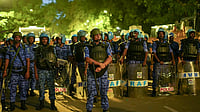
As the protests spread, the administration focused on preventing further unrest. Heavy police deployment, flag marches and continuous patrolling were carried out in Patna, Siwan, Jehanabad, Sheikhpura, Rohtas and other districts. Jehanabad Superintendent of Police Kota Kiran Kumar led a flag march with around 300 personnel and said police from all stations were patrolling major intersections. Authorities also directed private schools in Patna to remain closed during the bandh as a precaution. Police, however, said the shutdown had little impact on normal life in the State capital.
The Bihar Bandh reflects more than a one-day shutdown. It marks the point at which concerns over examination integrity merged with allegations of excessive policing, turning a student-led campaign into a broader political confrontation over accountability, democratic rights and the government's response to public protest.