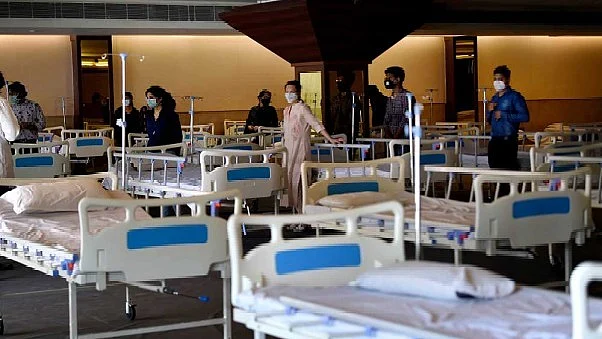
Gujarat reported 22 child deaths amid the latest Chandipura virus outbreak.
Thirty-five infections were confirmed among 184 suspected cases across the state.
Sandfly-borne Chandipura can rapidly cause encephalitis, seizures, coma and organ failure.
Gujarat is battling a fresh outbreak of the Chandipura virus, an insect-borne infection that can progress from an apparently routine fever to severe brain inflammation within a short period.
At least 22 children have died during the current monsoon season, while seven others are undergoing treatment, Gujarat Health Minister Praful Pansheriya said on Monday, August 3. The state has reported 184 suspected cases, of which 35 have tested positive for the virus. Results from 11 samples are still awaited.
All the affected patients are below 15 years of age. Children are receiving specialised treatment at civil hospitals in Gandhinagar, Himmatnagar, Patan, Rajkot and Bhavnagar, according to the minister.
The cases have been reported from different parts of Gujarat and are not concentrated in a particular village. Health authorities have stepped up insect-control measures and directed hospitals to immediately admit children showing symptoms to intensive care units equipped with oxygen and ventilator support.
.jpg?auto=format%2Ccompress&fit=max&format=webp&w=768&dpr=1.0)
What Is Chandipura Virus?
Chandipura virus, also known as CHPV, belongs to the Vesiculovirus genus of the Rhabdoviridae family. It is an arbovirus, which means it is transmitted mainly through infected blood-feeding insects.



.jpg?auto=format%2Ccompress&fit=max&format=webp&w=240&dpr=1.0)
The infection can cause acute encephalitis syndrome, a condition involving inflammation of the brain. Although an infected child may initially develop symptoms resembling a common viral illness, the condition can deteriorate rapidly.
The virus was first identified in 1965 in Chandipura village in Maharashtra’s Nagpur district. Since then, India has experienced several outbreaks, particularly in western and central states.
The largest outbreak in two decades was recorded in 2024, when India reported 245 cases of acute encephalitis syndrome and 82 deaths. Of these, 64 cases were confirmed as Chandipura virus infections.
The recurring outbreaks indicate that the virus can return when weather and environmental conditions support the insects responsible for transmission.
How Does It Spread?
The National Centre for Disease Control identifies sandflies as the main vectors associated with Chandipura virus transmission. Other blood-feeding insects may also play a role, but sandflies remain the principal concern during outbreaks in India.
Sandflies are extremely small insects that commonly breed or rest in damp, dark and poorly maintained surroundings. They may be found in cracks in mud walls, cattle sheds, houses with poor sanitation and areas containing animal waste or organic matter.
Monsoon conditions can favour an increase in insect populations, raising the risk of transmission. The virus spreads when an infected sandfly bites a person.
The Chandipura virus is not known to spread directly from one person to another. During the 2024 outbreak, the World Health Organization reported that no human-to-human transmission had been identified.
This means families do not generally face infection through routine contact with an affected child. Instead, preventing insect bites and controlling sandfly populations remain the main methods of reducing transmission.
In Gujarat, health teams are carrying out pesticide spraying in areas with animal husbandry activity and other places where sandflies may breed.
Why Are Children Most At Risk?
Chandipura virus outbreaks have primarily affected children below 15 years. ICMR-National Institute of Virology describes CHPV as a “highly pathogenic virus” that mainly causes acute encephalitis syndrome among children.
The exact reason for this age-specific vulnerability is not completely understood. Children may face greater exposure to insect bites while playing outdoors or spending time near cattle sheds and poorly maintained surroundings. Their immune response may also differ from that of adults.
The virus is particularly dangerous because the gap between the initial symptoms and severe neurological illness can be very short.
A child may first develop fever, vomiting or diarrhoea, leading families to assume that it is a routine seasonal infection. However, the virus may rapidly attack the brain, causing convulsions, altered consciousness or coma.
Reported case-fatality rates have ranged between 55% and 77%, according to ICMR-NIV. The high mortality is linked partly to the speed of progression and the limited time available for medical intervention.
What Are The Warning Symptoms?
The early symptoms of Chandipura virus infection may include sudden fever, headache, vomiting, diarrhoea and flu-like illness.
As the infection progresses and causes encephalitis, more serious warning signs can appear. These may include convulsions, unusual drowsiness, confusion, irritability, altered consciousness, weakness or unconsciousness.
In severe cases, the child may slip into a coma or develop complications such as multiple organ failure.
The NCDC says severe cases can progress rapidly, with death occurring within 48 to 72 hours of hospitalisation. This makes early recognition and immediate treatment extremely important.
Parents should not wait for a child’s condition to deteriorate before seeking medical assistance. Sudden fever accompanied by vomiting, convulsions, confusion, unconsciousness or unusual sleepiness should be treated as a medical emergency during an outbreak.
The Gujarat Health Department has directed government and private paediatric hospitals to immediately admit suspected cases to intensive care units with oxygen and ventilator support.

Is There A Vaccine Or Specific Treatment?
There is currently no approved vaccine or specific antiviral treatment for the Chandipura virus.
Treatment is supportive, meaning doctors focus on controlling symptoms and maintaining the patient’s vital functions while the immune system fights the infection.
Medical care may include controlling fever and seizures, maintaining oxygen levels, supporting breathing and blood circulation, managing brain inflammation and preventing multiple organ failure.
Early diagnosis and intensive hospital care can improve the chances of survival. However, because the infection can progress quickly, delays in reaching a properly equipped hospital can prove dangerous.
Research into vaccines and antiviral treatments is continuing, but no preventive vaccine or targeted medicine is currently available for routine use.
How Can Families Protect Themselves?
Families can reduce the risk by preventing insect bites and eliminating places where sandflies may breed or rest.
Homes, cattle sheds and surrounding areas should be kept clean. Cracks and gaps in mud walls should be repaired, while animal waste, damp organic material and accumulated rubbish should be removed.
Children should wear full-sleeved clothes when possible, particularly during the monsoon. Insecticide-treated bed nets, window screens and suitable insect repellents can provide additional protection.
Families should also cooperate with government spraying, surveillance and sanitation drives.
Most importantly, parents should seek immediate hospital care when a child develops sudden fever along with vomiting, seizures, confusion or unconsciousness. With no vaccine or specific cure available, early recognition, rapid hospitalisation and effective insect control remain the strongest safeguards against Chandipura virus.