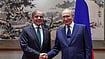
Smriti Irani (2014-16) rolled back DU’s four-year course, started work on the NEP, and faced heat over the JNU and Rohith Vemula cases.
Prakash Javadekar (2016-19) gave IIMs more autonomy, created the NTA, and ended the no-detention policy, but saw the 2018 CBSE paper leak.
Ramesh Pokhriyal (2019-21) announced the NEP 2020, yet left many top university and IIT posts vacant before resigning on health grounds.
Over more than a decade in power, the NDA government has appointed four ministers to the education portfolio (earlier called Human Resource Development). Only one, Dharmendra Pradhan, held the post for longer than three years. He stepped down on 25 July 2026 after sustained protests linked to multiple examination paper leaks. His roughly five-year tenure was the longest; the three ministers who preceded him each served significantly shorter terms.
Here is a concise look at those earlier tenures and how they ended.
Smriti Irani (26 May 2014 to 5 July 2016)
Smriti Irani was the first education minister of the Modi government. One of the most visible decisions of her term was the rollback of Delhi University’s Four-Year Undergraduate Programme. The University Grants Commission, supported by the ministry, maintained that the university had introduced the course in 2013 without following the required legal provisions. Student and teacher protests over infrastructure and implementation issues also played a role.
During her time in office the process of drafting a new National Education Policy began, and the National Institutional Ranking Framework was launched. Controversies, however, marked the later part of her stint. She faced sharp criticism in Parliament over the handling of the JNU sedition case and the arrest of the university’s student-union president. Scrutiny also followed the Rohith Vemula case in early 2016. In July 2016 she was shifted to the Textiles Ministry after about two years in the education role.


Prakash Javadekar (5 July 2016 to 30 May 2019)
Prakash Javadekar succeeded Irani. A major legislative achievement was the Indian Institutes of Management Act of 2017, which designated the IIMs as Institutions of National Importance and gave them greater autonomy over fees, appointments and internal decisions, reducing the need for repeated ministerial clearances.
His tenure also saw the creation of the National Testing Agency, intended to centralise and professionalise national entrance examinations and move many of them online. The Right to Education Act was amended to end the mandatory no-detention policy up to Class 8; states were left free to decide whether to retain it.
Two controversies stood out: the leak of CBSE Class 10 and 12 question papers in 2018, and the inclusion of the then-yet-to-be-established Jio Institute among the first Institutions of Eminence. Javadekar remained in the post until the end of the first Modi government in 2019, after which he moved to other portfolios. He left the Union Cabinet in July 2021.
Ramesh Pokhriyal ‘Nishank’ (30 May 2019 to 7 July 2021)
Ramesh Pokhriyal’s period in office is remembered chiefly for the formal announcement of the National Education Policy 2020 on 29 July 2020. Much of the preparatory work had been completed under Javadekar, but the policy was approved and unveiled during Pokhriyal’s term. Implementation on the ground, however, proceeded slowly.
Administrative delays were noticeable: roughly half of the central universities, including several high-profile ones, remained without vice-chancellors for extended periods, and a number of IITs lacked full-time directors. Pokhriyal tested positive for COVID-19 in May 2021 and later spent nearly a month in hospital with post-COVID complications. He resigned on health grounds on 7 July 2021 and was among the first senior ministers dropped in the subsequent reshuffle.
The longer Pradhan years
Dharmendra Pradhan took charge after Pokhriyal and stayed for approximately five years, the only education minister under the NDA to cross the three-year mark. He defended the National Education Policy, emphasised mother-tongue and multilingual education, and promoted schemes such as PM-SHRI. At the same time, repeated allegations of paper leaks, exam cancellations and questions over the National Testing Agency eroded public confidence and ultimately contributed to the protests that preceded his resignation.