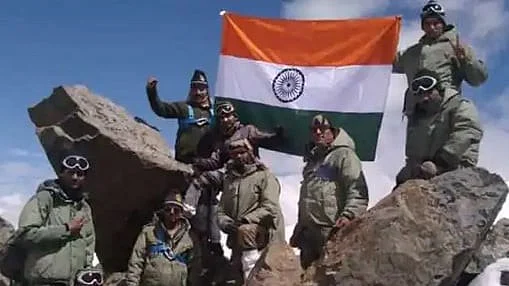
27 years after India declared victory in the Kargil War, the country on Sunday once again paused to remember one of the defining chapters in its military history. Every year on July 26, India observes Kargil Vijay Diwas to commemorate the successful culmination of Operation Vijay, the military campaign that drove Pakistani intruders from the icy heights of Kargil in Ladakh after nearly three months of intense fighting.
The day honours the more than 500 Indian soldiers who lost their lives during the conflict and celebrates the courage, sacrifice and unwavering resolve of the Armed Forces. It also serves as a reminder of how the war reshaped India's defence preparedness and strategic outlook.

When Courage Conquered The Peaks
The Kargil War remains one of the most remarkable military campaigns in independent India's history. Fought across some of the world's most inhospitable terrain, it tested the endurance, courage and determination of Indian soldiers operating at altitudes exceeding 5,000 metres.
The conflict began in May 1999, months after the Lahore Declaration had raised hopes of improved relations between India and Pakistan. Those hopes were short-lived. Pakistani forces, disguised as militants under Operation Badr, crossed the Line of Control (LoC) and occupied several Indian positions that had been vacated during the harsh winter.


Their objective was to dominate the strategic Srinagar-Leh highway, isolate Indian forces deployed on the Siachen Glacier and force India into negotiations over Kashmir.
On May 3, 1999, local residents first reported suspicious movement in the Kargil sector. Reconnaissance patrols and aerial surveillance soon revealed the scale of the infiltration, prompting one of India's most challenging military operations.
Operation Vijay
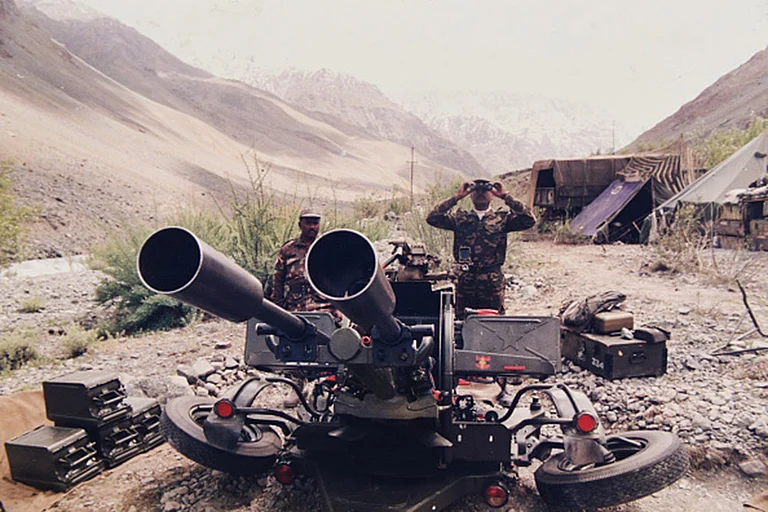
India responded by launching Operation Vijay, with clear political instructions that the Line of Control would not be crossed. The objective was straightforward but enormously difficult: reclaim every occupied Indian position.
The Indian Air Force joined the campaign through Operation Safed Sagar on May 26, while the Indian Navy deployed in strength to reinforce India's strategic posture. Together, the three Services mounted a coordinated military campaign.
Following the strategy of contain, evict and deny, additional troops, artillery, engineers and specialised equipment were rapidly moved into the theatre. Indian soldiers climbed near-vertical cliffs under relentless enemy fire while battling freezing temperatures, thin air and unforgiving terrain.
After more than two months of fierce fighting, Indian forces successfully recaptured the occupied heights. On July 26, 1999, the Indian Army announced the successful completion of Operation Vijay, declaring victory.
A Lasting Legacy
The victory reaffirmed India's determination to defend every inch of its territory and strengthened public confidence in the Armed Forces.
The conflict also transformed India's military preparedness. Lessons from Kargil influenced defence planning, surveillance capabilities, intelligence coordination and procurement priorities in the years that followed.
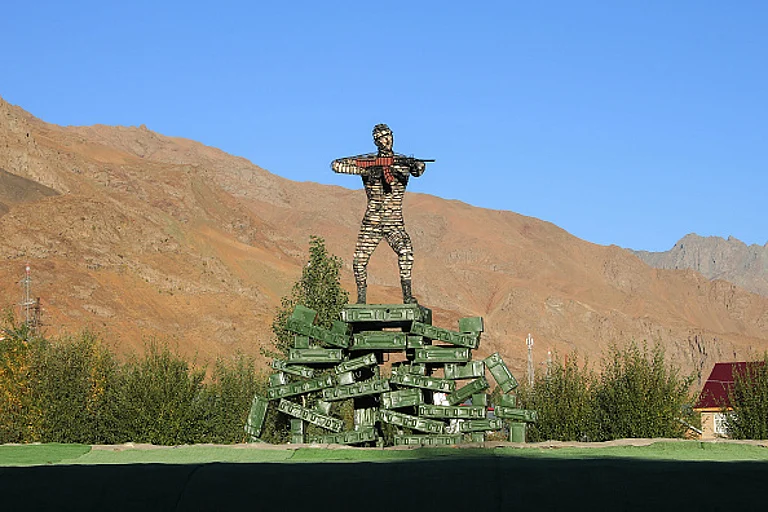
Kargil Vijay Diwas today commemorates not only military success but also the enduring legacy of those who laid down their lives defending the country's sovereignty.

The Heroes Of Kargil
The victory was built upon countless acts of extraordinary courage. Among the soldiers whose bravery became synonymous with the conflict were Captain Vikram Batra, Grenadier Yogendra Singh Yadav, Captain Vijyant Thapar and many others whose actions inspired the nation.
The war also witnessed one of the highest recognitions of gallantry in recent Indian military history.
A total of four soldiers received the Param Vir Chakra, India's highest wartime gallantry award. Nine were awarded the Maha Vir Chakra, while 55 received the Vir Chakra. Other decorations included the Sarvottam Yudh Seva Medal, Uttam Yudh Seva Medal, Yudh Seva Medal, Sena Medal and Vayu Sena Medal, recognising exceptional courage, leadership and service during the conflict.
National Leaders Pay Tribute
Prime Minister Narendra Modi, in a post on X, said the nation saluted the extraordinary courage of the soldiers who secured India's victory.
"On Kargil Vijay Diwas, our nation expresses gratitude to the brave soldiers for their extraordinary courage and commitment towards securing India. Their valour in the face of the most formidable conditions will forever remain a source of national pride. Their unwavering patriotism and devotion to duty will continue to inspire generations."
President Droupadi Murmu also paid homage to the fallen soldiers, describing their courage, determination and patriotism as enduring examples of the Armed Forces' glorious traditions.
Rajnath Singh's Message From Drass
Speaking at the Kargil Vijay Diwas commemorations in Drass, Defence Minister Rajnath Singh combined remembrance with a strong national security message.
He warned Pakistan against any future misadventure, saying any such action would invite a response "beyond their imagination." Singh also ruled out bilateral talks with Pakistan unless they concerned Pakistan-occupied Kashmir (PoK).
Referring to Operation Sindoor, he said it had demonstrated the consequences for those involved in terrorism.
Singh also argued that India's armed forces had always possessed the capability to defend the country, adding that what had changed was the government's political resolve.
He said the present government had given the armed forces the freedom to take decisive action in the interest of national security and assured soldiers that there would be no shortage of political will in the future.
Highlighting India's defence manufacturing ambitions, Singh said the country had significantly reduced its dependence on imported military equipment.
According to him, nearly 65 per cent of India's defence equipment is now manufactured domestically, with indigenous systems such as the Akashteer air defence control system, Akash missile, Pinaka multi-barrel rocket launcher, Prachand and Dhruv helicopters, Tejas fighter aircraft, Arjun tank, modern drone systems and INS Vikrant strengthening India's military capabilities.
Invoking Captain Vikram Batra's iconic words, "Yeh Dil Maange More," Singh said India would continue developing next-generation weapons, submarines, fighter aircraft and missile systems.
'Indian Soldiers Can't Be Matched'
Army Chief General Dhiraj Seth said Kargil Vijay Diwas renewed his sense of pride and energy every year.
Paying tribute to the soldiers who died in the conflict and their families, he said the Indian Army's soldiers were superior to those of any other army in the world and assured the nation that the Army would continue contributing to India's progress while defending its borders.
A Legacy Of Courage
More than two decades later, Kargil Vijay Diwas continues to occupy a unique place in India's national memory.
It commemorates a hard-fought military victory, honours the sacrifices of hundreds of soldiers and reminds the country of the price paid to protect its sovereignty.
Every year, the Tricolour flying over the mountains of Kargil symbolises not merely a battlefield triumph but the enduring values of courage, sacrifice and national resolve that continue to inspire generations of Indians.