






Iran's Islamic Revolutionary Guard Corps launched retaliatory strikes on US allies in the Gulf on Saturday, July 18, 2026, following a seventh night of US airstrikes.
A missile and drone strike on a Kuwaiti power generation and water desalination plant triggered a fire, forcing the shutdown of several power units.
Kuwait International Airport suspended all operations due to repeated threats, while authorities worked to contain the plant fire and restore services.
Tehran struck US allies on Saturday, July 18, 2026 after a seventh straight night of US airstrikes against Iranian military installations, Reuters reported.
One strike hit a major utility facility igniting a fire at the electricity and water desalination plant, forcing the shutdown of multiple power units, Kuwaits Ministry of Electricity, Water and Renewable Energy informed.
Meanwhile, Kuwait International Airport suspended all services following persistent drone and missile threats. Meanwhile, emergency crews worked to control the utility plant fire and restart the offline units, the ministry informed.

IRGC Claims Base Strikes
Iran's Islamic Revolutionary Guard Corps (IRGC) took responsibility for strikes on Camp Arifjan, a US military support base in Kuwait. The paramilitary force also stated it destroyed a radar installation at Ali Al Salem Air Base.
State media in Tehran reported that the IRGC struck an intelligence data hub and a location housing US warplanes at Sheikh Isa Air Base in Bahrain.

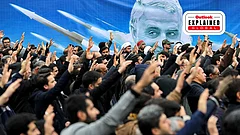

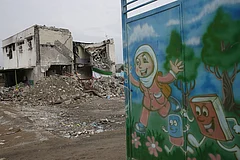
The IRGC justified the strikes as retaliation. "Since there is no international institution to prevent the savagery of the US military, we have no path before us except the Quranic command: 'Whoever attacks you, attack it in the same manner'," the group informed in a statement. The paramilitary force warned of potential future strikes against American allies in the region.

Unilateral US Campaign
Over seven nights, unilateral US forces targeted Iranian surveillance infrastructure, including a maritime observation tower at Chah Bahar's Shahid Kalantari Port. The strikes hit military logistics, underground weapons storage and air defences across Bandar Abbas, Jask, Sirik, Qeshm Island, Ahvaz, Yazd and Tehran.
Transit bridges collapsed in Hormozgan province. The American bombardment also damaged an airport in Iranshahr, local media reported. Meanwhile, regional partners Jordan and Kuwait launched defensive operations to block Iranian retaliatory fire.
The sea war began with Washington imposing a naval blockade in the region. Meanwhile, Tehran stated it targeted ships violating transit rules in the Strait of Hormuz, a waterway carrying 20% of global oil.















