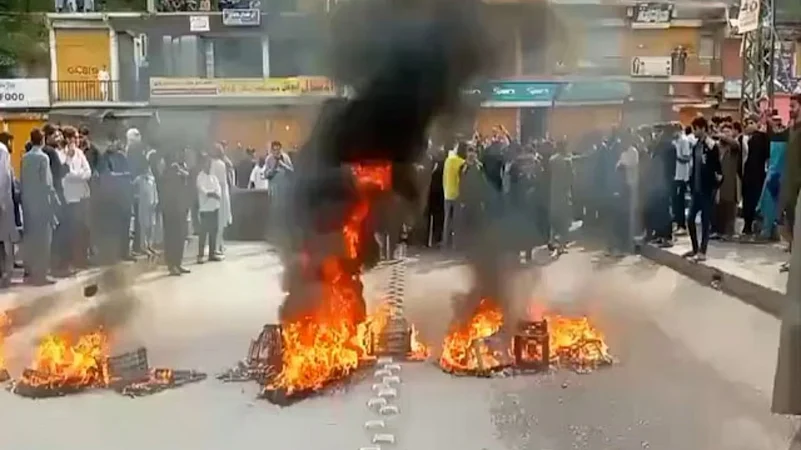
PoK elections are taking place amid violent clashes between security forces and JAAC protesters.
JAAC has alleged civilian deaths during the crackdown, while Pakistani authorities dispute the claims.
Political disputes over reserved seats, governance and economic grievances remain central to the unrest.
Pakistan-occupied Kashmir (PoK) is witnessing a tense election process as legislative assembly polls move ahead amid violent clashes between security forces and protesters, with the Joint Awami Action Committee (JAAC) claiming that more than 30 civilians have been killed during clashes with security forces.
The violence has overshadowed the three-phase election process that began on July 27, with competing claims over casualties, allegations of excessive force, communication restrictions and electoral manipulation adding to concerns over the credibility of the polls. The unrest has been driven by demands for political reforms, economic relief and opposition to a system of reserved assembly seats that protesters say weakens local representation.
The JAAC, a coalition of civil society groups, has accused Pakistani security forces of firing on protesters during a long march from Rawalakot to Muzaffarabad. Authorities have rejected the allegation, claiming that armed groups were involved in the clashes and that security personnel were attacked.
Clashes erupt as JAAC’s long march meets security action
The latest violence broke out as the first phase of voting was held in the Mirpur division on July 27. The JAAC had organised a march towards Muzaffarabad during the polling period, leading to confrontations with law enforcement agencies.
According to PTI, the JAAC claimed that more than 30 civilians were killed and over 33 injured during the crackdown. The group has demanded an independent investigation by the United Nations Human Rights Council (UNHRC) and international rights organisations, alleging unlawful killings and excessive use of force.


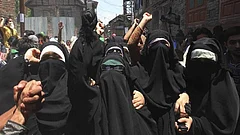
The claims have not been independently verified. Pakistani authorities have disputed the figures and accused protesters of attacking security personnel. Officials said members of the security forces were also killed and injured during the clashes.
The casualty figures could not be independently verified because internet and communication services had been disrupted in parts of the region. Authorities said a security official was killed and others were injured during confrontations.
Pakistan Defence Minister Khawaja Asif ruled out dialogue with the protesters and accused them of acting against the interests of the state.
“There will be no dialogue with the protesters. I bracket them with India. I put them in the same category as India and consider them as enemies of Pakistan,” Asif said.
Prime Minister’s Adviser Rana Sanaullah, meanwhile, said the government had engaged with JAAC representatives and that the group had submitted a 38-point list of demands.
The protests began over several issues, including rising living costs, shortages of subsidised wheat and medicines, electricity shortages and allegations of political exclusion. The movement gained momentum after authorities banned JAAC under anti-terror laws.
The group has also demanded changes to the assembly’s electoral structure, arguing that it does not adequately represent local interests.
Election results raise questions over government formation
Despite the unrest, voting continued in the first phase of the election covering 13 seats in the Mirpur division.
Pakistan Muslim League-Nawaz (PML-N) won nine seats, while the Pakistan Peoples Party (PPP) secured four seats in the first phase of polling. The Pakistan Tehreek-e-Insaf (PTI), which won the previous election in 2021, boycotted the polls, alleging electoral irregularities.
The election was originally planned as a single-phase exercise but was divided into three rounds because of security concerns. The remaining voting phases are scheduled for August 2 and August 10.
The PoK legislative assembly has 53 seats, including 45 directly elected seats and eight reserved seats. The 12 refugee seats have become a major political issue, with local groups alleging that they influence government formation.
Protesters have also raised broader concerns over governance, resource allocation and economic hardship. They have argued that despite PoK’s contribution to Pakistan’s hydropower production, residents continue to face long power cuts and high electricity costs.
The PTI boycott has left PML-N and PPP as the main contenders in the election. However, allegations of rigging and violence during polling have affected confidence in the process.
The formation of the next government could also become complicated if the winning party requires support from representatives elected through the disputed seats. Political analyst Hasan Askari told Reuters, “But when their government is dependent on those 12 controversial seats, how would it be able to find a solution for this issue?”
UN calls for probe as rights concerns grow
The unrest has drawn reactions from India and international rights bodies, with concerns centred around alleged civilian casualties and restrictions on information flow.
India’s Ministry of External Affairs has accused Pakistan of failing to address public grievances in PoK and described the protests as a result of economic exploitation and denial of rights. MEA spokesperson Randhir Jaiswal said, “The ongoing protests in Pakistan-occupied Jammu & Kashmir are a direct consequence, and indeed evidence, of decades of exploitation, the denial of fundamental rights, and administrative repression under Pakistan’s illegal and forcible occupation of the region.”
Pakistan has rejected India’s comments, maintaining that PoK is under its administration and that the unrest is a domestic issue.
The Office of the United Nations High Commissioner for Human Rights has also raised concerns over the violence.
Amnesty International also called reports of lethal force against protesters “disturbing” and urged an investigation into the deaths. The rights group said the ban on JAAC did not justify the use of deadly force and called for restoration of communication access and allowing independent observers into the region.
On July 17, the UN rights office called for “prompt, thorough and impartial investigations into all deaths that have occurred due to the unrest”.
Meanwhile, restrictions affecting internet, communication, banking and road services have continued in parts of PoK, limiting access to information from areas affected by clashes. JAAC has accused authorities of using the restrictions to prevent scrutiny of the crackdown, while officials have defended the measures on security grounds.
As the remaining phases of voting approach, the election outcome will determine the next regional government, but the unrest has left questions over political representation, governance and the credibility of the electoral process.