


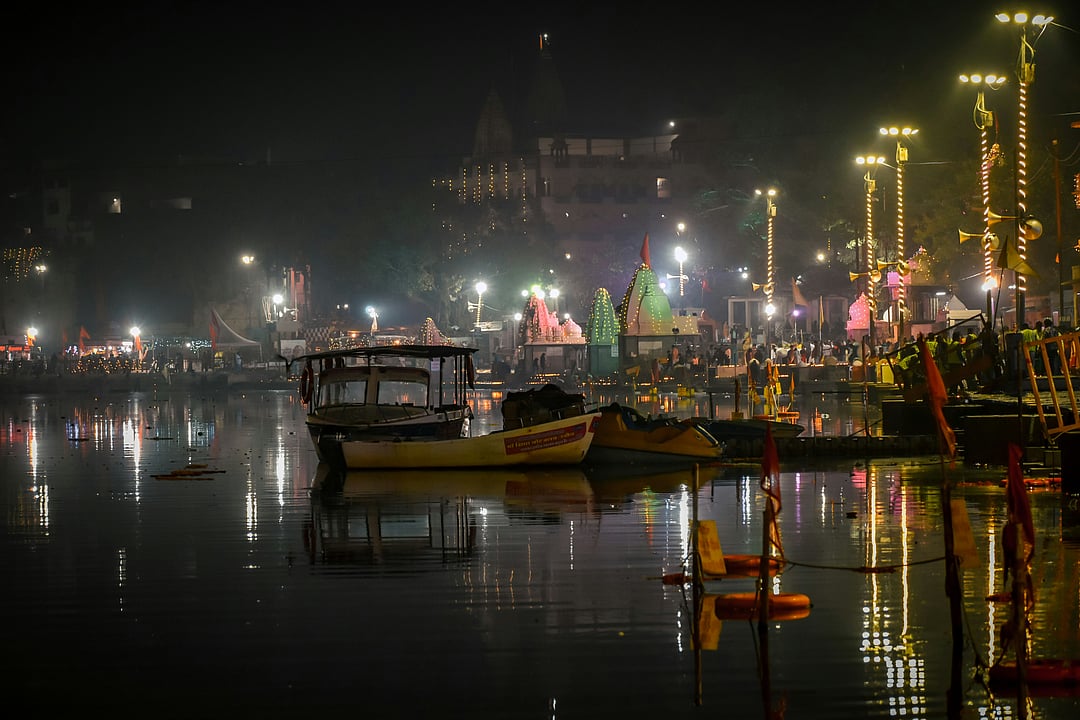

If time had a smell in Malwa, it would be river water mixed with roses and incense. The kind of scent that walks ahead of you as you wind your way to a ghat or a temple. In this part of Central India, I realised, time isn’t a ticking clock with a schedule, but a rhythm you learn by letting your breath slow and your expectations unclench. And so, consciously leaving my watch behind, I walked into the days guided by stone steps and old walls, by rivers carrying the hours and eons rather than counting them.
In Ujjain, the rhythm felt inevitable. Gentle but persistent, like a heartbeat you only hear when everything else quiets. The city didn’t make an entrance; it simply unfolded around me through glimpses and chants, and the patient flow of people moving toward something deeper than a destination. At the centre stands Mahakaleshwar Temple, one of India’s twelve sacred Jyotirlingas and a site revered not simply with devotion but as a pulse that has informed how India marks time. Locals speak of Ujjain as the place of origin of the Panchang calendar, an ancient system that still defines festivals, new beginnings, and the horoscope of every newborn baby.