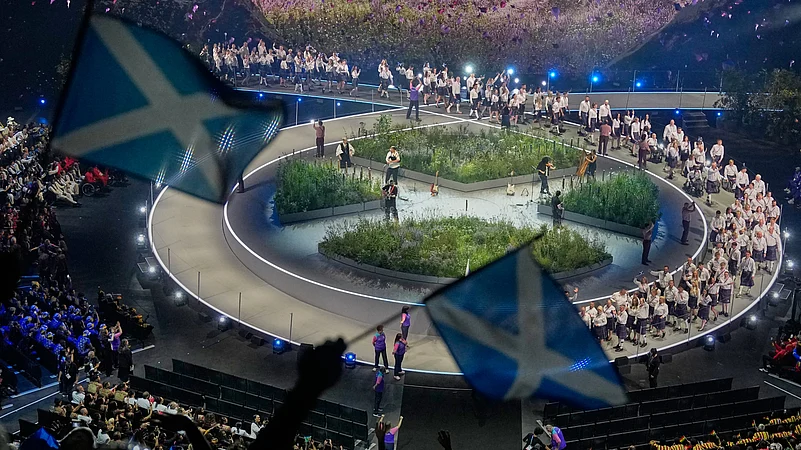
Glasgow 2026 is widely regarded as the most sustainable CWG, thanks to its reuse-first approach and low-carbon event model
Existing venues, no athletes' village and a compact 10-sport programme have significantly reduced costs and environmental impact
The Games are setting a new blueprint for affordable, sustainable and future-ready mega sporting events
For decades, the Commonwealth Games have faced a growing challenge. While the event has produced memorable sporting moments, it has also become increasingly difficult to host. Rising costs, expensive new infrastructure and concerns over environmental impact have forced several potential hosts to reconsider their bids.
Victoria, Australia, withdrew from hosting the 2026 Games in 2023 after projected costs ballooned beyond expectations, putting the future of the event in doubt.
Glasgow stepped in to rescue the Games, but instead of replicating the traditional model, it chose to reinvent it. The result is a leaner, greener and significantly cheaper edition that many experts now believe could become the blueprint for the future of major sporting events. Rather than asking whether the Games can be bigger, Glasgow has asked a more important question: Can they be smarter?
A 'Reuse, Not Rebuild' Philosophy
The biggest reason Glasgow 2026 stands apart is its commitment to existing infrastructure.
Unlike previous editions that required new stadiums, athletes' villages and large-scale construction projects, Glasgow has relied almost entirely on venues already used during the successful 2014 Commonwealth Games.




Competition is being staged across just four existing venues, Scotstoun Stadium, Emirates Arena (including the Sir Chris Hoy Velodrome), Tollcross International Swimming Centre and the Scottish Event Campus (SEC).
This dramatically reduces construction-related carbon emissions while also eliminating the risk of creating costly "white elephant" venues that often remain underused after mega events.
No Athletes' Village, A Radical Cost Saver
One of Glasgow's boldest sustainability decisions is the absence of a traditional athletes' village.
Instead of constructing a temporary residential complex, around 3,000 athletes from 74 nations and territories are staying in existing hotels and accommodation hubs close to competition venues. The arrangement encourages walking and cycling between venues while reducing transport requirements and construction waste.
Similar accommodation models were successfully used during Birmingham 2022 and several recent international championships hosted in Glasgow.
The move is both environmentally and financially significant, proving that world-class sporting events do not necessarily require billion-pound infrastructure projects.
A Smaller Games With a Bigger Purpose
Glasgow 2026 features 10 sports instead of the 19 contested in Birmingham 2022, making it one of the most compact editions in Commonwealth Games history. While some sports were left out, organisers argue that the streamlined programme has allowed them to reduce operational costs without compromising athlete experience.
Importantly, the Games also boast the largest fully integrated Para-sport programme in Commonwealth Games history, reinforcing that sustainability is not only environmental but also social and inclusive.
Sustainability Beyond Carbon Emissions
Glasgow's sustainability strategy extends far beyond venue selection.
The organising committee's "Story of Change" framework is built around four pillars:
Delivering a greener Games by reducing waste and carbon emissions.
Hosting the most inclusive Commonwealth Games through expanded Para sport.
Creating community benefits through volunteering, skills development and cultural programmes.
Demonstrating a financially responsible model that future host cities can realistically afford.
Organisers have also encouraged spectators to use existing public transport, walking routes and cycle paths instead of private vehicles, further lowering the event's environmental footprint.
A Blueprint for the Future?
Perhaps Glasgow 2026's greatest achievement is not what it has built, but what it has deliberately avoided building.
The Games are being delivered on a budget reported at around £150 million, a fraction of the nearly £778 million spent on Birmingham 2022. By reducing costs while maintaining international standards, Glasgow has demonstrated that the Commonwealth Games can remain viable in an era when many cities are reluctant to host expensive mega events.
Commonwealth Sport itself has described Glasgow 2026 as a bridge to "a new era" of financially responsible, place-based and sustainable Games that more nations can realistically host in the future.
So, Is It the Most Sustainable Commonwealth Games Ever?
Based on the evidence available today, yes, Glasgow 2026 is arguably the most sustainable Commonwealth Games ever staged.
Its sustainability credentials are not built around futuristic technology or headline-grabbing environmental promises. Instead, they stem from practical decisions: reusing venues, eliminating unnecessary construction, replacing an athletes' village with existing accommodation, encouraging active travel, reducing operational costs and ensuring infrastructure continues to benefit local communities.
In many ways, Glasgow has redefined success. Rather than measuring the Games by how much is built, it has measured them by how little needs to be built. If future hosts, including Amdavad 2030, follow this model, Glasgow 2026 may be remembered not just as the Games that saved the Commonwealth movement, but the one that gave it a sustainable future.