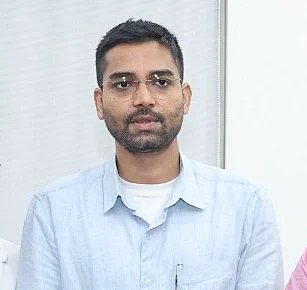
The Supreme Court is examining whether Bihar minister Deepak Prakash's reappointment complies with Article 164(4) of the Constitution.
The case centres on whether an unelected minister can be reappointed after failing to enter the legislature within six months.
The ruling could clarify how future governments appoint ministers who are not members of the legislature.
Can a minister who fails to get elected within six months be reappointed to the Cabinet after a new government takes office? That is the constitutional question before the Supreme Court in a case involving Bihar minister Deepak Prakash. During a recent hearing, the court questioned the Bihar government on how an unelected minister could continue in office beyond the six-month period permitted under the Constitution, putting the spotlight on the scope of Article 164(4).
The case is not just about one minister's appointment. It asks whether the Constitution's six-month rule is meant to operate as a one-time exception or whether governments can effectively restart the clock by swearing in the same person after a change in ministry. The Supreme Court's eventual ruling could determine how Article 164(4) is interpreted by governments across the country when appointing ministers who are not members of the legislature.
Why has the Supreme Court questioned Bihar?
Deepak Prakash, a Rashtriya Lok Morcha (RLM) leader who serves as Bihar's Panchayati Raj Minister, was first appointed to the post in November 2025 despite not being a member of either the Legislative Assembly or the Legislative Council. Under Article 164(4), a minister who is not an MLA or MLC must become a member of the legislature within six consecutive months or cease to hold office.



According to The Indian Express, Prakash did not become a member of the legislature during his first tenure as minister. Before he could do so, the Nitish Kumar government fell. When a new government led by Samrat Choudhary assumed office, he was sworn in again as a minister, giving rise to the present constitutional challenge.
The petition before the Supreme Court argues that the second appointment effectively allows an unelected minister to continue in office without meeting the constitutional requirement of becoming a legislator. During the latest hearing, the Bench asked the Bihar government how an unelected minister could remain in office beyond the six-month period envisaged under Article 164(4), The Indian Express reported.
The Bihar government has defended the appointment by arguing that Prakash became a minister under a new Council of Ministers after the previous government ceased to exist. The Supreme Court has not yet ruled on whether that argument is constitutionally valid.
What does Article 164(4) say?
Article 164(4) states that a minister who is not a member of the state legislature for any period of six consecutive months shall cease to be a minister at the end of that period.
The provision allows a chief minister to induct someone into the Cabinet even if that person has not yet been elected to the Assembly or the Legislative Council. This offers governments some flexibility while ensuring that ministers ultimately remain accountable to the legislature by obtaining an electoral or legislative mandate within six months.
The dispute before the Supreme Court is not about whether a non-legislator can become a minister. The Constitution permits such appointments, provided the individual becomes a member of the legislature within six months. Instead, the question is whether the six-month period can begin afresh simply because a new ministry has been formed and the same individual has been appointed again.
What have earlier Supreme Court judgments said?
The Supreme Court's earlier ruling in S.R. Chaudhuri v. State of Punjab (2001) is expected to play a central role in deciding the case.
In that judgment, the Supreme Court held that Article 164(4) is an exception to the general rule that ministers should be members of the legislature. The court said the provision could not be used repeatedly to bypass that requirement by appointing the same individual again after the six-month period had expired without that person becoming a legislator.
The Supreme Court had earlier recognised in Har Sharan Verma v. Tribhuvan Narain Singh (1971) that appointing a non-legislator as a minister is constitutionally valid, provided the six-month condition is fulfilled. In B.R. Kapur v. State of Tamil Nadu (2001), it also underlined that constitutional qualifications for holding ministerial office cannot be diluted through executive action.
As reported by The New Indian Express when the court issued notice on the petition in June, these earlier decisions form the basis of the challenge to Prakash's reappointment and will be central to the court's final decision.
What could the judgment mean for future governments?
The outcome of the case could influence how governments interpret Article 164(4) in the future. Similar provisions exist for ministers at the Union level under Article 75(5), making the ruling relevant beyond Bihar.
If the Supreme Court concludes that every new Council of Ministers allows a fresh six-month period, governments could have greater flexibility to retain unelected ministers following political changes. However, if it rules that the constitutional clock cannot be reset through reappointment, it would reinforce the principle that the six-month window is a temporary exception rather than a mechanism for extending a minister's tenure without legislative membership.
The judgment is expected to clarify the balance between executive discretion and democratic accountability. At its core, the case will determine whether Article 164(4) is a limited constitutional exception or whether successive governments can effectively restart the six-month period by reappointing an unelected minister. The ruling is likely to guide how future governments across India exercise their power to appoint ministers.