Our policy makers must look at both nutrition and climate resilience when designing future agricultural policies.
India has the largest school meal programme in the world. It is a great opportunity to improve child nutrition.
If we want a health system that is responsive, adaptable, focused on outcomes and constantly improving itself, the only way is through research and learning.
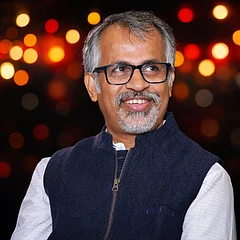
India stands at a critical public health crossroads. While the country has succeeded in bringing down fertility rates and reducing child undernutrition, it continues to grapple with a complex mix of challenges; from anaemia, tuberculosis and persistent malnutrition to rising obesity, diabetes and other non-communicable diseases. At the same time, climate change, air pollution and rapid urbanisation are reshaping health risks in ways that demand new policy responses. In an exclusive interview with Mrinalini Dhyani, public health expert and former WHO Chief Scientist Soumya Swaminathan reflects on the implications of India's declining fertility rate, argues for a nutrition agenda that extends beyond maternal and child health, calls for a more nuanced understanding of anaemia and its drivers, and outlines why tackling malnutrition, tuberculosis, air pollution and non-communicable diseases will require a stronger focus on social determinants, evidence-based policymaking and multi-sectoral action.
India's fertility rate has recently fallen to 1.9 children per woman. How should India read this development?
Soumya Swaminathan: I think it reflects decades and decades of implementing family planning and population control measures, because one of our biggest challenges was supposed to be the population that we have, with limited geographic space. Basically, it shows that these efforts have been very successful. Mainly, it is because of the education of women, the availability of reproductive health choices, family planning choices, and their understanding of them. It shows that women have access to contraception and that they are making decisions based on their own priorities and what they want. So, it is a very strong indication that women are able to make decisions and that they are empowered.
What it means, of course, is that our population growth rate is slowing down quite fast. We will be peaking, and our population may peak before 2060 and then start to decline. We have a young population as of now, which may continue for another two decades. But beyond that, we will start ageing like every other country.


India is simultaneously battling anaemia, stunting, obesity and diabetes. Do you think we fundamentally require a nutrition framework as well?
Soumya Swaminathan: Yes. I do think that nutrition is quite at the heart of all our health problems, and it is connected to diet. It really needs a comprehensive life-course approach. What we have now is Poshan Abhiyaan, which is addressing pregnant women, young children below the age of six, and adolescent girls. So, it is looking at the reproductive age group and their children. Now, probably what we need is access to healthy and nutritious diets for the entire population, regardless of age and sex, because it is also linked to non-communicable diseases.
The latest Household Consumption Expenditure Survey showed that the percentage of household income spent on ultra-processed food has gone up in both rural and urban areas. Around 10 per cent of household income is spent on that. So, it requires a major change on the part of the population, but it also requires the availability and affordability of nutritious food. Both the supply and the demand side have to be looked at.
You can use different mechanisms to achieve that. Parts of it could be through regulation of ultra-processed foods. But it also means that the Public Distribution System (PDS), school meals and ICDS programmes can relook at the quality of nutrition being provided and see where they can strengthen it.
What is the biggest implementation gap you see in India's nutrition programmes?
Soumya Swaminathan: I think it is the lack of convergence. Nutrition is determined by many departments and, most importantly, by the agriculture ministry. What farmers grow is ultimately what we are going to eat. The incentives for what farmers grow determine the food system. Unless it is economically viable, you cannot expect farmers to switch crops. If we begin with what we want on our plates, then that should determine how we incentivise farmers. Subsidies, MSPs and related policies should be aligned to produce more nutritious food. I think that is a big gap.
We also have climate change to think about. So, we should look at both nutrition and climate resilience when designing future agricultural policies. India has the largest school meal programme in the world. It is a great opportunity to improve child nutrition. We recently conducted a study of Poshan Abhiyaan and identified both strengths and weaknesses. It is very possible to plug many of the existing gaps. Some are related to infrastructure and supply chains, but many involve human capacity and the ability to deliver quality services. We also need to move away from measuring inputs and outputs towards measuring outcomes. You could have distributed tablets, but if anaemia does not improve, then something is wrong. You could have thousands of anganwadi centres operating, but if nutritional markers are not improving, then there is a problem. At the same time, we have seen improvements in stunting and wasting. They have come down, which means we are on the right track. But we can accelerate progress by filling the existing gaps.
What are the challenges that remain for India in dealing with Tuberculosis?
Soumya Swaminathan: We still have a very large burden and a long way to go. We need to use data to inform our strategies. We collect a lot of data. The Nikshay portal contains a lot of data. Can we use it smartly, using AI and analytics, to target interventions? TB exists all over the country, but we know that tribal areas have more TB. Wherever there is poverty, there is more TB. The programme has focused on identifying vulnerable groups and screening them. It has also successfully scaled up molecular diagnostics, which are now the gold standard.
One of the major findings is that TB is a disease of poverty. It is linked with malnutrition. The RATIONS trial showed that if you provide nutritional support to families, you can reduce new TB cases. There is evidence that addressing malnutrition has multiple benefits, including reducing the TB burden. But that is not something the TB programme alone can roll out. Nutritional support has to come through broader government systems such as the PDS. Again, we need to look at the broader social determinants of TB. This is not a disease where you can simply give a vaccine and get over it. It requires a multi-sectoral approach. We also need a patient-centred approach to reduce TB mortality. We still have too many TB deaths. Every individual needs to be treated as a patient, evaluated properly, given a complete assessment and admitted to hospital if necessary. One gap is that because TB is an infectious disease, patients are often not admitted to regular hospitals and are turned away. State governments need to ensure there are enough TB beds and infectious disease beds in public hospitals.
There is a lot of research being generated. How can India better connect research findings with policymaking?
Soumya Swaminathan: The main issue is that state health departments must treat research findings as a very important input into policy. That should become routine, not just for TB but for all health programmes.
If you want a health system that is responsive, adaptable, focused on outcomes and constantly improving itself, the only way is through research and learning. Departments of health should have strong relationships with researchers at both the central and state levels. There is a lot of operational research taking place in the country and a great deal of knowledge being generated by researchers and academics. But it is not always translated into policy. ICMR has mechanisms for doing this, but we need much more of it. It should not be limited to ICMR alone. Even at the state level, programmes under the National Health Mission should be constantly learning. Earlier, there used to be innovation meetings every year. That kind of culture is important.
Despite progress, how can India bridge the urban-rural health care divide?
Soumya Swaminathan: We need a complete redesign of urban health care. The National Health Mission was designed for rural areas, and we are trying to use the same template in urban areas. It doesn't work. The same applies to TB. Urban TB is a very different problem. There is a large private sector, migrant populations, vulnerable communities living in urban settlements and multiple work-related challenges. We need to rethink urban health systems completely.
The recent NFHS data did not include anaemia estimates because the government is moving towards a biomarker-based survey. Do you think current anaemia programmes focus too much on iron deficiency, even though it accounts for only part of the burden?
Soumya Swaminathan: Absolutely. You need iron for haemoglobin, but you also need protein and other micronutrients. The idea that you can have a poor diet and just give iron and hope to solve the anaemia problem is not going to work. Iron has to be given along with other nutrients. It has to be bioavailable, absorbed well, and consumed in adequate amounts. We may also have other causes of anaemia. I think the ICMR survey, when it comes out, will give us much more detailed information on different micronutrients and how they are contributing. It may also point us towards solutions. For example, exposure to lead also causes anaemia. In some states, surveys are showing very high exposure to lead among young children. Lead exposure is happening mainly through batteries, improper recycling, contamination and adulteration of turmeric and spices, and also through paints. Though we have regulations on lead content, not all companies follow the rules. Similarly, chronic inflammation also leads to anaemia. Many chemicals that we are exposed to, including PM2.5 from air pollution, set up inflammatory responses in the body. So, there are multiple causes of anaemia. Iron deficiency is not the only one. Therefore, we will have to take a more comprehensive and holistic approach to solving the problem of anaemia. We need to wait for the ICMR survey to come out. That should come soon.
What do you think is the biggest misconception about anaemia that continues to shape policy today?
Soumya Swaminathan: One is this focus on iron alone. When we think about nutrition by breaking it down into individual elements, there are misconceptions that people have. For example, many people think tea is healthy and consume it with meals, but it actually results in less absorption of iron. On the other hand, if you take a citrus fruit, or have a little lemon, guava or orange with your meal, it enhances the absorption of iron. When vitamin C and iron are taken together, absorption improves. So, I think there are science-based dietary changes and pieces of advice that we need to give people. Small changes in the diet can help whatever iron they are taking be absorbed better.
Beyond supplements, how important are factors like diet, affordability and gender norms in addressing anaemia?
Soumya Swaminathan: It's true. Women's nutritional needs change according to the phase of life they are in. An adolescent girl, a pregnant woman, a breastfeeding woman and an older post-menopausal woman all have different nutritional requirements. There is very poor awareness and very little that's done in terms of public awareness of nutrition. And yes, gender issues do come into play. Even now, in many families, women are the last to eat, after feeding the children and the men in the family. So, she may or may not be getting adequate quantity or quality of food. We also know that migration and seasonal variations affect diets, especially in farming families. There are lean seasons when people have less to eat. This is where a more advanced understanding of diets and nutrition can help government programmes become more responsive to the needs of people in different parts of the country, rather than adopting a one-size-fits-all approach. There are many parts of India where millets are still a staple. People like to eat millets. But what do they get in the PDS? They get rice or wheat. If you could procure millets from local farmers and make them available through the PDS, it would be good for farmers and consumers. Consumers would get a healthier product that they like. It would also cut down on the carbon footprint. Today, food is procured in some states and then shipped across the country. There is a huge carbon footprint involved in moving food around. Moving towards more local supply chains would be good for the climate, good for farmers and good for consumers. If you did that, you could also include fresh fruits and vegetables in the PDS because local produce can be consumed quickly. You could offer pulses and locally grown oils rather than importing palm oil. There could be many innovations. The cost may go up a little because pulses and quality oils are more expensive, but the health gains in the long run would be substantial. We would save money on health care.
Otherwise, we are simply driving up non-communicable diseases. We need to take a longer-term view and look at cost-effectiveness. Investments may be higher initially, but the health gains will also be very high.
How can India better address the growing burden of non-communicable diseases such as diabetes, hypertension and cancer?
Soumya Swaminathan: A healthier diet is a very big factor. The other is pollution. We have to reduce air pollution. It is driving many of these NCDs by setting up inflammatory responses in the body.
What do you consider India's biggest public health challenge today that is not receiving enough attention?
Soumya Swaminathan: Access to universal health care. That should be our goal, and that has been the goal of the Ayushman Bharat programme. We are on a journey towards achieving it. I cannot pick out any one disease or condition, but as we discussed, diet and nutrition are at the heart of many of our health problems. Food is at the heart of many of our health challenges. Within the health system, I would say improving access is critical. Out-of-pocket expenditure has come down, but it is still very high. We are still on the journey towards universal health coverage. Once you have that, you are taking care of many public health problems. The other point I would mention is that the National Health Policy of 2017 stated that every state should have a public health cadre. You cannot really have good public health without people who are trained in public health. That would be the first thing I would tell states to do.