US Supreme Court expands Trump's power over independent federal agencies
Court preserves Federal Reserve independence by protecting Governor Lisa Cook
Landmark ruling overturns 91-year-old precedent limiting presidential removal powers
Decision reshapes US presidential authority while safeguarding central bank autonomy
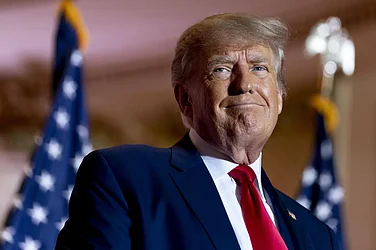
The US Supreme Court delivered a seismic ruling on presidential power on Monday, granting Donald Trump the authority to fire the heads of independent agencies at will while simultaneously erecting a constitutional firewall around the Federal Reserve, a split decision that dramatically reshapes the balance of power in Washington.
In a 6-3 ruling, the court overturned the 91-year-old Humphrey's Executor precedent, declaring that the president can remove Federal Trade Commission (FTC) commissioners without cause. "The FTC's for-cause removal provision is contrary to the separation of powers enshrined in the Constitution," Chief Justice John Roberts wrote for the majority. "Subordinates who exercise the president's power are subject to removal by him. Then, and only then, can they remain accountable to the president, and the president to the people."

The case arose after Trump fired the FTC's two Democratic appointees, Rebecca Slaughter and Alvaro Bedoya, shortly after beginning his second term in January 2025. He did not cite any cause under the statute, instead telling them their "continued service on the FTC [was] inconsistent with [his] Administration's priorities." Slaughter sued, and a federal district court ruled in her favour, citing the 1935 precedent. The Supreme Court reversed that ruling, effectively wiping out protections that had shielded independent agencies from presidential interference for nearly a century.
The ruling affects more than two dozen independent agencies, including the Consumer Product Safety Commission, the Equal Employment Opportunity Commission, the National Labor Relations Board, and the Nuclear Regulatory Commission.


A Carve-Out For The Central Bank
But in a surprising twist, the court simultaneously blocked Trump's unprecedented attempt to fire Federal Reserve Governor Lisa Cook – the first such removal effort in the central bank's 111-year history.
In a 5-4 decision, the court ruled that Cook is entitled to procedural protections under the Federal Reserve Act, which allows governors to be removed only "for cause." Chief Justice Roberts, writing for the majority again, was joined by the court's three liberal justices and conservative Justice Brett Kavanaugh.
"To accept any of those arguments would in effect transform the Federal Reserve's for-cause protection into at-will employment," Roberts wrote. Such a step would be "out of step with the statute Congress enacted and our nation's tradition of central banking protected from political interference."
The court emphasised the Fed's "unique structure and history," describing it as possessing "a long tradition of independent central banking." Roberts noted that the Fed's governors "do not serve at the president's pleasure — they instead serve staggered 14-year terms."
Trump had targeted Cook in August 2025 over unproven allegations of mortgage fraud, which she denied and called a pretext for removing her over monetary policy differences.
The Dissent
In the FTC case, the court's three liberal justices dissented forcefully. Justice Sonia Sotomayor warned that the majority was creating a "presidency unchecked by law," while Justice Elena Kagan accused the majority of "rewriting" the Constitution's separation of powers.
Justice Samuel Alito dissented in the Fed case, arguing the court was premature in taking it up.

What it Means
The twin rulings create a dramatic legal distinction: the president now has near-total control over regulatory agencies that shape American economic life, but the Federal Reserve – the institution responsible for setting interest rates and managing inflation – remains insulated from political pressure.
"Any change in that scheme must come from Congress, not the courts," Roberts wrote of the Fed's protections.
Trump celebrated the FTC decision on his social media platform, calling it "one of the most important ever given with respect to Presidential Powers." He has not yet commented on the Cook ruling but could still seek to remove her through the lower courts.