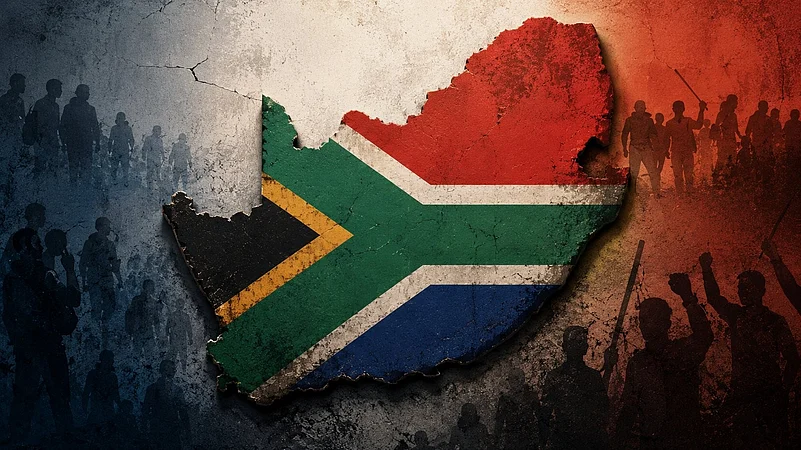
Anti-immigrant protests shut businesses and displaced thousands across South Aftica
At least 5 killed since April; 103 criminal cases opened against vigilantes
Police and military deployed with R600m budget for June 30 demonstrations
2.4M international migrants (4% of SA population) amid unemployment tensions
Workers stayed home, shops were shuttered and buses sat idle across South Africa on Tuesday as demonstrators gathered in several cities for anti-immigrant marches, with many fearing the protests would descend into violence.
In parts of Johannesburg and the port city of Durban, dozens of protesters, some armed with wooden sticks, gathered to demand that undocumented migrants leave the country. "People are not working, the jobs are being taken by illegal foreigners. It's not fair," Silindile Xaba, 31, said among a group of women chanting anti-migrant slogans in central Durban, according to a report by Reuters.
Thousands of foreign nationals from elsewhere in Africa stayed away from work, and many had already fled ahead of the June 30 "deadline" set by demonstrators for all undocumented migrants to leave, according to Reuters.

Violence Against Migrants
At least five people have been killed in violence since protests began in April, with thousands driven from their homes or seeing their businesses and property vandalised. Landlords in Durban and Johannesburg were illegally evicting foreign tenants for fear of their buildings being vandalised.
"All these people, they were chased out by their landlords," Mabako Majole, a leader of the Congolese community, told Reuters, standing beside around 100 people sleeping rough in downtown Durban. "All these people are legal. They have documents."



The campaign group March and March, run by a former radio presenter behind the latest protests, denies encouraging violence but says it cannot be held responsible for spontaneous acts of anger by South Africans towards undocumented migrants.
Government Response
Thousands of police were deployed and military personnel were on standby on an emergency budget of 600 million rand ($36.6 million), a military spokesperson told Reuters.
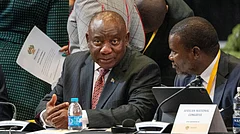
President Cyril Ramaphosa, in a statement on Monday, acknowledged the concerns of South Africans while condemning violence. "South Africans' ... deep concerns about illegal immigration ... are real and they deserve to be heard," he said. "But the right to protest ... does not allow people to threaten or intimidate others, or to engage in acts of vandalism or violence."
In a separate statement earlier this month, Ramaphosa addressed the root causes of the tensions. "In conditions of unemployment and poverty, crime, violence and service delivery challenges, people often direct their frustrations at those perceived to be competitors for jobs and resources," he said.
He outlined the government's Comprehensive Approach for Migration Management, which includes deploying more resources and technology to secure borders, stamping out corruption, introducing legislation allowing quotas for foreign nationals in different sectors, and ensuring informal businesses are properly registered.
"Together we can manage migration and stay true to our shared humanity," Ramaphosa said.
Migration Statistics
According to Statistics South Africa's 2022 Census, there are more than 2.4 million international migrants in the country, equating to just below 4% of the total population. Since 1996, Mozambique and Zimbabwe have consistently been the leading countries of origin for migrants entering South Africa.
Gauteng province, which includes Johannesburg, is expected to experience the largest inflow of migrants between 2021 and 2026, with approximately 1.4 million people moving into the province, according to Stats SA. The Western Cape is projected to receive the second-highest inflow, with an estimated 500,347 people expected to move into the province during the same period.
"Statistics enable us to move beyond perceptions and anecdotal evidence," Statistician-General Risenga Maluleke said at a migration symposium. "They provide a factual basis for understanding migration trends and their impact on society."
Deputy National Commissioner for Policing Tebello Mosikili said 103 criminal cases had been opened against anti-foreigner vigilantes since March, Reuters reported.
"The state has the duty and obligation to ensure that those that are demonstrating do so peacefully," she told a news conference.