Multi-phase voting for the PoK assembly begins amid violent protests, hundreds of arrests, and reported civilian deaths.
Demonstrators are demanding the abolition of 12 reserved migrant seats, protesting severe power cuts and ration shortages.
India and the UN have called for accountability and impartial probes into the ongoing systemic oppression and excessive force.
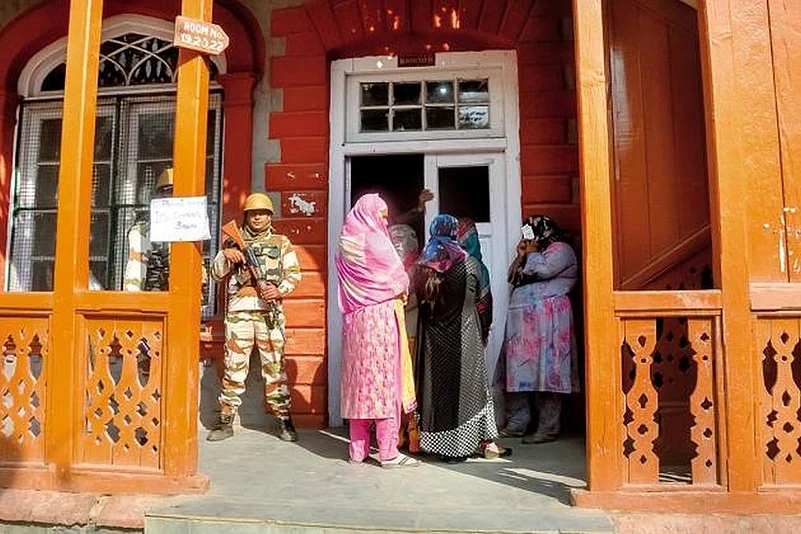
Voting commenced on Monday for the legislative assembly in Pakistan-occupied Kashmir (PoK) across three phases concluding on August 10, taking place against a backdrop of violent clashes, police crackdowns, and mounting public anger against Islamabad.
The multi-phase elections come amid widespread turmoil spearheaded by local civil society groups protesting against severe economic hardship, political marginalisation, and systemic oppression. With at least 20 people killed in recent violence alone and over 600 activists detained, the unrest has drawn international concern, prompting calls from the United Nations for impartial investigations into civilian deaths.
At the heart of the regional discontent lies the electoral structure of the 53-seat PoK legislative assembly. While eight seats are reserved for women, technocrats, and clerics, 12 of the remaining 45 seats are set aside specifically for refugees and migrants residing across Pakistan. According to Indian Express, security sources indicated that these 12 reserved non-resident seats are widely viewed as a manipulative mechanism employed by the federal administration in Islamabad to plant loyalists and dilute authentic local representation.
This setup has historically ensured that whichever political party governs Islamabad wins power in PoK—including the Pakistan People’s Party in 2011, the Pakistan Muslim League-Nawaz in 2016, and Imran Khan’s Pakistan Tehreek-e-Insaf in 2021. Local residents have consistently demanded the complete abolition of this reservation system.



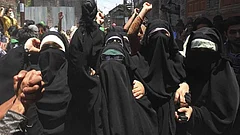
The demonstrations, primarily driven by the now-banned Joint Awami Action Committee (JAAC), stem from a combination of administrative failure and severe economic grievances. Indian Express reported that sources monitoring regional developments attributed the escalating unrest to a total collapse of local governance, exacerbated by an economic blockade that has triggered acute shortages of subsidised wheat and essential medicines.
Protesters have also raised concerns over "economic extraction," particularly regarding power distribution. Hydroelectric dams in PoK produce electricity well in excess of the local requirement of roughly 400 MW; however, residents endure up to 15 to 20 hours of daily load shedding while being charged tariffs several times higher than the actual cost of generation. A 38-point charter released by demonstrators directly challenges financial corruption and the unchecked privileges enjoyed by the ruling elite.
Tensions escalated further after Islamabad weaponised anti-terrorism legislation to outlaw the JAAC and arbitrarily detain over 600 civil rights activists and local leaders. Following the ban, JAAC leader Sardar Aman Khan appealed for assistance from India, stating in a widely circulated video: “We need India’s help. There is a shortage of rations…”.
While news agency PTI reported at least 20 fatalities in recent election-related violence, security sources cited by Indian Express placed the overall death toll from indiscriminate firing by security forces on peaceful protesters at 150. On July 17, the Office of the United Nations’ Human Rights Commissioner took note of the situation, calling for “prompt, thorough and impartial investigations into all deaths that have occurred due to the unrest”.
Additionally, anger has been fuelled by resource exploitation in the region. Pakistan Army Chief Asim Munir has been promoting a projected "$6 trillion mineral dream" centered on Gilgit-Baltistan, where an army-linked enterprise was caught extracting ore without local approval in 2025.
Reiterating its position that PoK remains an integral part of India under illegal occupation, New Delhi attributed the unrest to Islamabad’s long-standing policies. Ministry of External Affairs (MEA) spokesperson Randhir Jaiswal stated on July 14: “The ongoing protests in Pakistan-occupied Jammu & Kashmir are a direct consequence, and indeed evidence, of decades of exploitation, the denial of fundamental rights, and administrative repression under Pakistan’s illegal and forcible occupation of the region.”
“Instead of addressing the legitimate grievances of the local population, the authorities there have resorted to excessive police brutality,” Jaiswal added, noting that security actions targeted vulnerable civilians, including women and children. “We expect the international community to hold Pakistan accountable for these grave human rights abuses.”