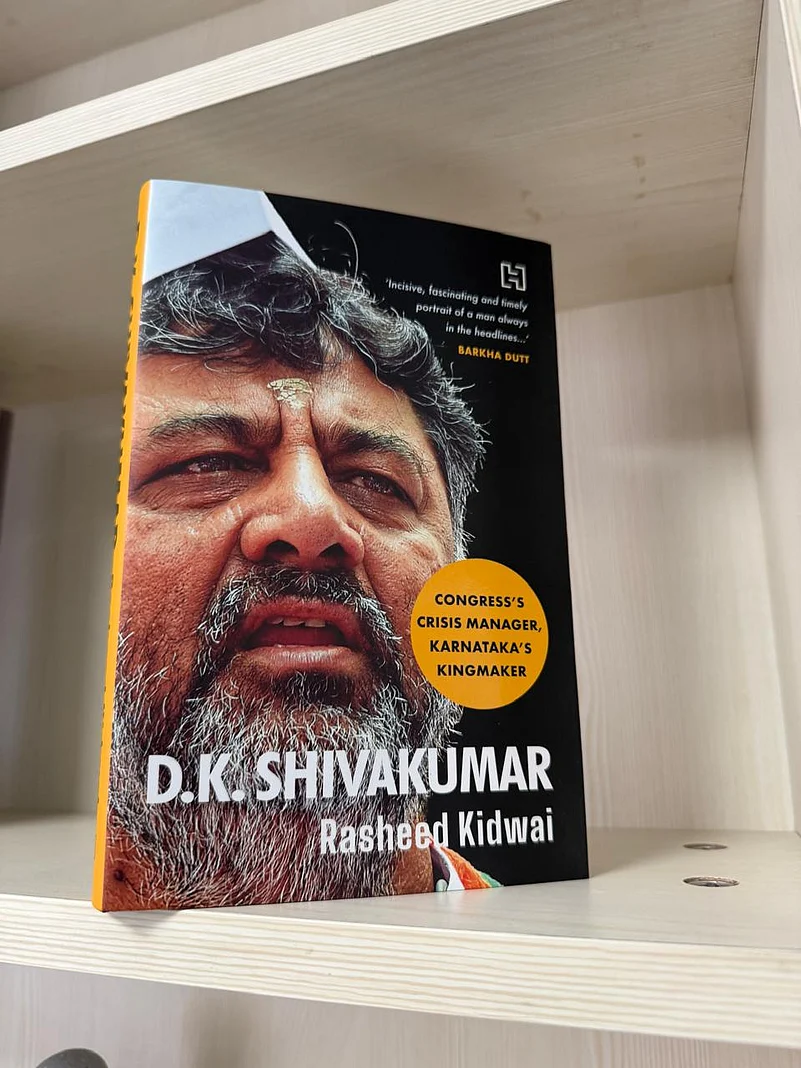
Kidwai's book portrays Shivakumar as Congress's indispensable organiser and crisis manager
Explores coalition-building, resort politics and internal party negotiations in Karnataka
Examines Congress's evolving approach to religion and secularism through Shivakumar's choices
“Shivakumar’s political journey is akin to the story of Ekalavya— a capable and hardworking ‘outsider’ who overcame hurdles to access the closer cable of India’s power elite,” writes author Rasheed Kidwai in his book D.K. Shivakumar: Congress's Crisis Manager, Karnataka's Kingmaker.
Political biographies of contemporary leaders often fall into one of two traps: they either become celebrations of their subjects or reduce them to a catalogue of controversies. In this book, Kidwai attempts to do both by tracing the Karnataka leader's journey from student politics to becoming one of the Congress's most recognisable organisational figures.
The outcome is a compelling political story that works best when it explains the workings of party organisation, election strategy and coalition politics. Spread across ten chapters, the book follows his evolution against the backdrop of Karnataka's changing political landscape and the Congress party's own internal transformations.
Kidwai adds in his book, “Shivakumar arrived on the political landscape of Karnataka and India— he was fresh, raw and unencumbered. But he refused to pay obeisance to any Dronacharya.”
Politics Beyond Elections
Kidwai's main point is evident right away: Shivakumar's significance cannot be determined solely by the positions he has held. He has an impact on events that take place away from the spotlight, including forming coalitions, keeping leaders united, settling factional conflicts and making sure governments weather unstable times.

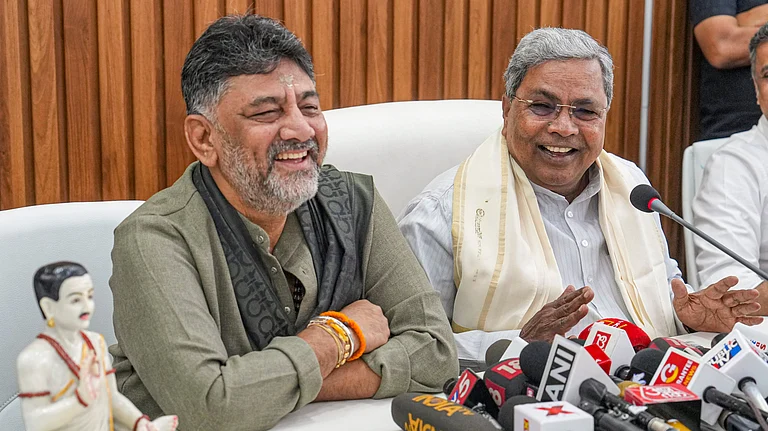
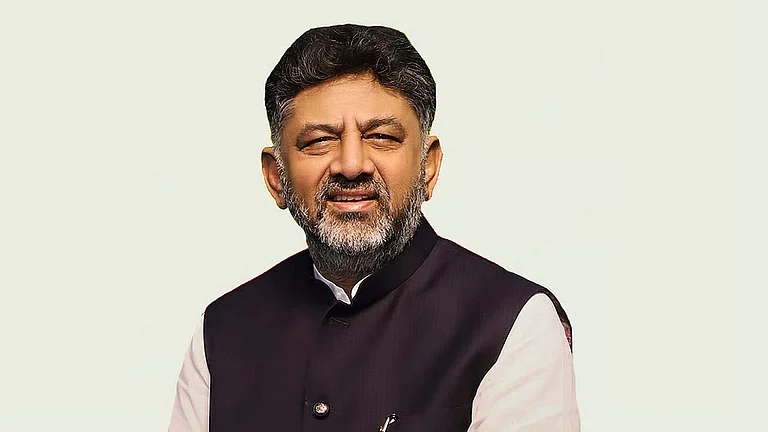
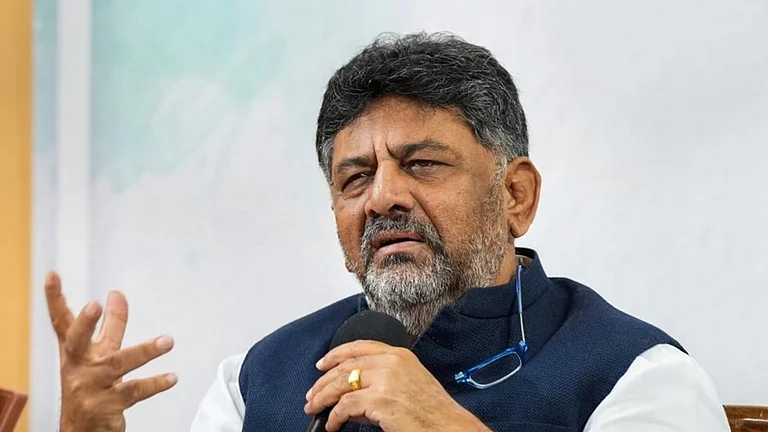
The author recounts the incidents that gave Shivakumar his reputation as the Congress's crisis manager in chapters like ‘The Troubleshooter’ and ‘Ace Political Strategist and Campaigner '. The book portrays him as the leader who was frequently called upon when political arithmetic grew precarious, from defending lawmakers during the Maharashtra political crisis to overseeing the Gujarat Rajya Sabha election and assisting the Congress in navigating Karnataka's tumultuous coalition politics.
These are some of the most important parts of the book. Legislative negotiations, resort politics and defections, topics that can quickly become boring, are explained clearly. Kidwai's understanding of how regimes are frequently maintained not simply by ideology or public support but also by organisational discipline and political bargaining is clear from his extensive experience reporting on national politics.
However, rather than examining political incidents, the focus is still squarely on rebuilding them. The story goes into great depth about how Shivakumar handled unstable times, but it takes relatively little time to look at the wider ramifications of these incidents for coalition politics or the evolving party organisation culture.

The Making Of A Political Organiser
Connecting Shivakumar's early student activism with his later organisational style is one of the book's more successful narrative decisions. At first glance, a lengthy story about friends fixing his ancient Yezdi motorcycle seems like a nostalgic exercise. However, Kidwai utilises it to introduce a recurrent theme: Shivakumar's political career would be defined by the traits that were evident in his early years, especially his capacity to create networks and inspire loyalty. Although the symbolism often seems exaggerated, it serves to humanise a politician who is more often discussed in terms of election results and court cases.
Interestingly, the book also looks at the Congress's changing stance on religion and secularism, and it gets more engaging. The writer frames Shivakumar’s public recitation of the RSS prayer or temple visits not as isolated events but as part of a much longer debate within the Congress.
Revisiting conversations with the party's high command, he shows how the party has struggled for decades with the question of how to reconcile its secular identity with changing electoral realities. It is this historical context that is one of the book’s greatest strengths. This prevents the ongoing debates about “soft Hindutva” from looking entirely new. Yet this is also where the biography stops short. Kidwai does a decent job of chronicling the contending points of view within the Congress but does not really question whether Shivakumar’s political choices are a sign of tactical pragmatism, ideological ambiguity or a larger transformation of the party itself.
Controversies Without Investigation
No political biography of Shivakumar can afford to ignore his long list of legal and political controversies and to Kidwai’s credit, they are not left undiscussed. The story has income tax raids, enforcement directorate investigations, CBI cases, allegations of disproportionate assets, money laundering charges and criticism over constitutional remarks.
Opposition perspectives appear only intermittently, while many of Shivakumar's political decisions are interpreted primarily through the Congress's internal logic. Readers expecting a more detached or investigative biography may therefore find the book more explanatory than interrogative. It is less interested in judging Shivakumar than in explaining why he matters.
However, this is not a flaw that takes away from the things presented in this book, but it certainly limits its analysis. The political anecdotes and institutional memory give the book an authenticity that only a reporter with decades of access could provide.
Notably, stands out most prominently in D.K. Shivakumar: Congress's Crisis Manager, Karnataka's Kingmaker, which is the analysis of political organisation. It explains, with considerable detail, how coalition governments are run, how parties deal with crises and how organisational management is as crucial as electoral charisma.