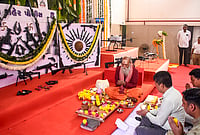
Basant Panchami is a festival that feels bright, gentle, and full of hope and the colour yellow lies at the heart of it. Everywhere you look on this day, yellow stands out in clothes, flowers, food, and rituals. This is not a coincidence. The importance of yellow on Basant Panchami comes from deep spiritual meaning and a strong connection with nature and the changing season.
Yellow and Goddess Saraswati
Basant Panchami is dedicated to Goddess Saraswati, the goddess of knowledge, wisdom, music, and learning. She is traditionally shown wearing a yellow saree and adorned with yellow flowers. This colour represents clarity of thought, enlightenment, and purity of the mind. Yellow is believed to reflect the light of wisdom and the calmness needed for learning.
By wearing yellow on Basant Panchami, devotees symbolically invite these qualities into their lives. It is a way of expressing respect for knowledge and seeking the goddess’s blessings for intellectual growth and creativity.
The Astrological Secret: Yellow and Planet Jupiter
Beyond tradition, there is a cosmic reason for this color choice. In Vedic astrology, the color yellow represents Jupiter (Brihaspati), the planet that governs knowledge, wisdom, and speech.
Since Vasant Panchami is dedicated to Saraswati (the deity of wisdom), wearing yellow is believed to strengthen the influence of Jupiter in one’s horoscope. This is said to bring:
Clarity in decision-making.
Success in exams and academic pursuits.
Enhanced communication skills.
The 'Yellow Tikka' Ritual
If you cannot wear a full yellow outfit, you can still channel the energy of the day through a simple ritual.
Mix Turmeric (Haldi) with a little saffron and sandalwood paste.
Apply this Yellow Tikka on the forehead of the Goddess first, and then on your own "Agnya Chakra" (between the eyebrows).
This point is the center of intuition and focus, and the yellow paste is believed to cool the mind and awaken the intellect.
The Psychology of Learning
Scientifically, yellow is the most visible color in the spectrum. Psychologists believe that bright yellow stimulates the left side of the brain, which handles logic, analysis, and memory. This makes it the perfect color to wear on a day dedicated to education and new studies.
A Colour That Welcomes Spring
Yellow is also closely linked to the arrival of spring. As winter fades away, mustard fields bloom in brilliant yellow, filling the countryside with warmth and life. The sun shines brighter, days grow longer, and nature begins to renew itself.
This seasonal change gives yellow its meaning of freshness, renewal, and optimism. Celebrating Basant Panchami with yellow reflects harmony with nature and hope for new beginnings, growth, and prosperity.
Yellow in Clothes, Décor, and Food
On Basant Panchami, people dress in yellow to reflect joy and positivity. Men often wear yellow kurtas or kurta-pajamas, while women choose yellow sarees or salwar suits. Children too are dressed in cheerful yellow outfits.
Homes and temples are decorated with marigold flowers and mango leaves. The idol of Goddess Saraswati is dressed in yellow attire and decorated with golden ornaments. These visual elements are not just decorative, they are meant to invite auspiciousness and divine blessings.
Food also follows this theme. Yellow-coloured dishes such as kesari halwa, motichoor ladoo, boondi ladoo, turmeric-flavoured rice, kheer, and kesari bhaat are prepared. These foods symbolise abundance, happiness, and gratitude for nature’s gifts.
Yellow Offerings to Goddess Saraswati
Offering yellow items to Goddess Saraswati is an important ritual of Basant Panchami. These offerings represent devotion, gratitude, and a commitment to learning.
Flowers - Marigolds are the most commonly offered flowers. Their bright yellow colour is believed to please the goddess and bring good fortune.
Sweets - Yellow sweets like besan ladoo, motichoor ladoo, and kesari halwa are offered as prasad, symbolising joy and celebration.
Rice - In some regions, yellow rice cooked with turmeric is offered, representing nourishment, wisdom, and prosperity.
Clothes - Yellow sarees or garments are offered to the goddess and later donated, reflecting generosity and the sharing of blessings.
The Deeper Meaning of Yellow
More than just a festive colour, yellow on Basant Panchami stands for joy, knowledge, hope, and new beginnings. It reminds us to clear our minds, welcome learning, and step into the new season with positivity.
In essence, yellow rules Basant Panchami because it beautifully brings together devotion, nature, and the human desire to grow, learn, and begin again.
Frequently Asked Questions (FAQs)
Q: Can I wear white instead of yellow on Vasant Panchami?
A: Yes, White is also Goddess Saraswati’s favorite color as it symbolizes purity and peace. Many people combine yellow and white in their outfit for the Puja.
Q: What is the 'Basanti' color exactly?
A: Basanti is not neon yellow; it is a deep, warm yellow with a slight tint of orange/saffron, resembling the color of mustard flowers or marigolds.
Q: Why do we eat yellow rice (Meethe Chawal) today?
A: Eating yellow rice is a way to internalize the color of the festival. It represents consuming the "energy" of the sun and the harvest, bringing prosperity from the inside out.